
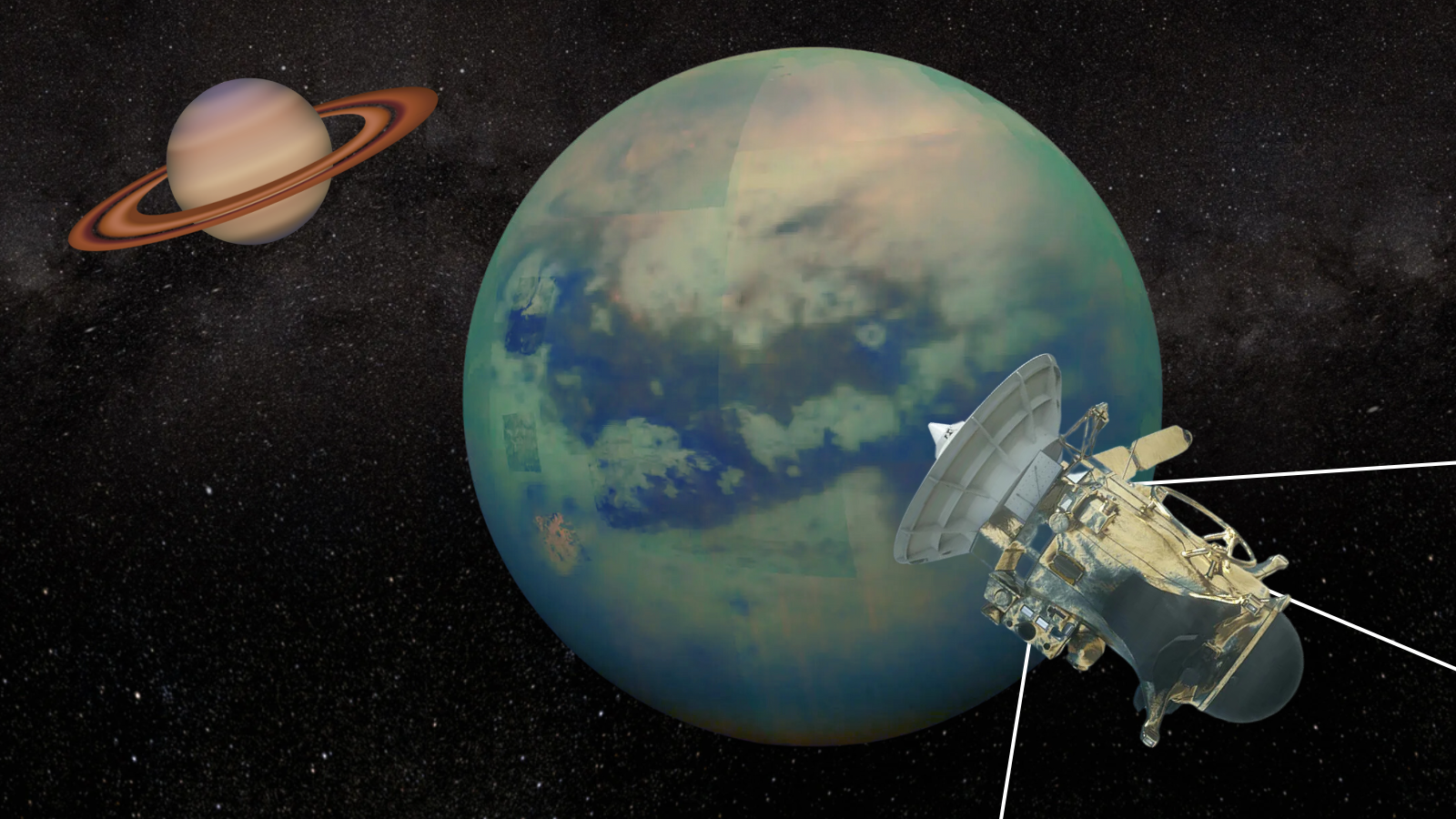
NASA's Cassini-Huygens spacecraft may have dramatically ended its 20-year mission to explore Saturn's neighborhood seven years ago, when it plunged to into the gas giant, but it is still delivering the scientific goods.
Using radar data collected by Cassini, astronomers from Cornell University have gathered fresh information about the liquid ocean of Saturn's largest moon, Titan, which is comprised of hydrocarbons, a class of organic chemicals made up of carbon and hydrogen. For instance, that class includes chemicals like methane and ethane.















