Get all your news in one place.
100's of premium titles.
One app.
Start reading
PC Gamer
PC Gamer
Joshua Wolens

Baldur's Gate 3 writer says its Dragon-Agey rep system is there to stop you totally breaking the NPCs, but it 'becomes a dice roll' at points to keep romance natural

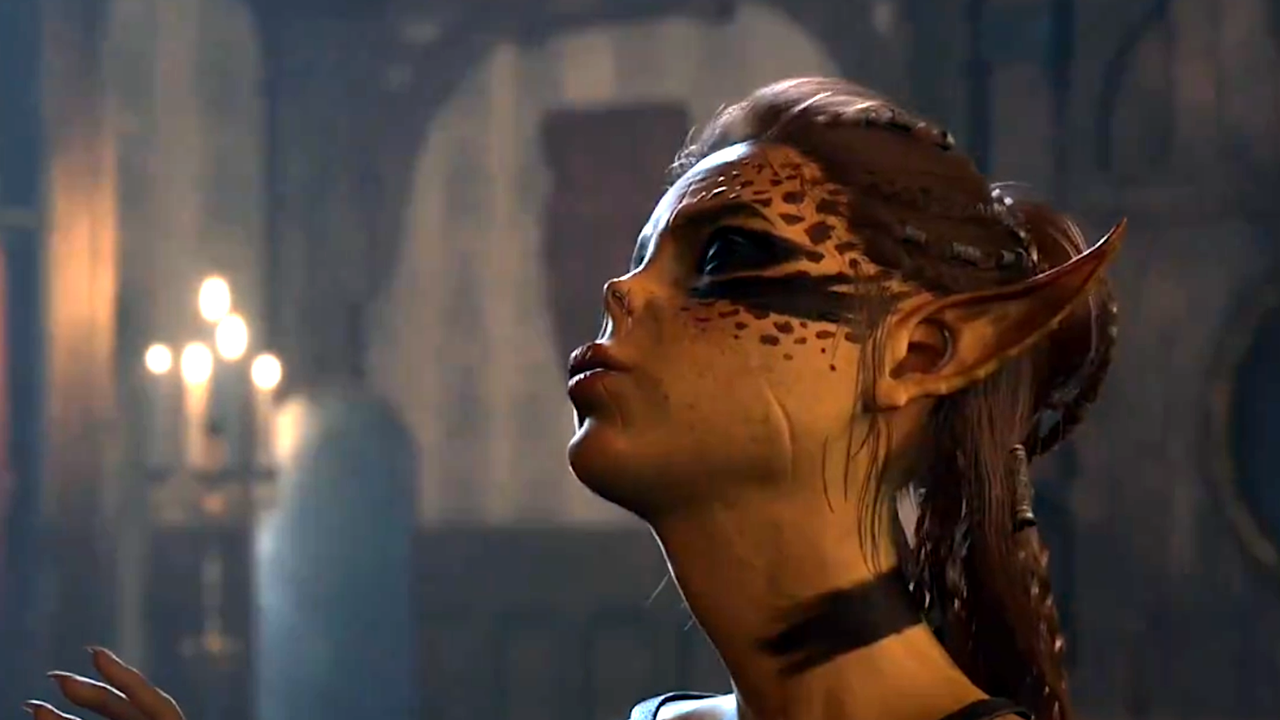
An image of a bugged kiss animation in Baldur's Gate 3, wherein the mighty gith warrior Lae'zel kisses the air sensually.

If you're not a fan of random violence and sadism—you know, a nerd—the words "Astarion disapproves" were probably burnt into your retinas like the afterimage of a nuclear blast when you finally rolled credits on Baldur's Gate 3. Your party members in that game always have a goddamn opinion on your decisions, and Larian communicated it in time-honoured fashion: little pop-ups like in Dragon Age or Knights of the Old Republic 2.

In the latest issue of Edge magazine (via GamesRadar), one of BG3's writers, Kevin VanOrd, reflected on its use of that system, and also copped to the fact that one of its key advantages is it skips, like, a whole bunch of writing.

"We can’t have every character reacting to every situation," said VanOrd, "otherwise we would be working on the game forever. So this is a way of showing how they feel without writing new dialogue."

It's also, kind of, a violation of that fundamental Larian design philosophy of letting players do whatever the hell they want—you're never going to get Astarion to approve of charity and kindness (at least early on) just like you'll never get Wyll to clap when you kick a child in the shins.

"Sometimes the answer is to just let the player break the game, but when it comes to party members, usually not," says VanOrd. He's right, of course: letting me cunningly stack boxes to sequence-break some quest or overcome an obstacle makes me feel like a genius. Letting me romance Wyll after massacring the Druid Grove would feel like a bizarre cop-out.

(Image credit: Wizards of the Coast)

It's a system with issues, though. In real life, love is not really a matter of filling someone's approval meter until they fall for you; it's weird and illogical and often very embarrassing for everyone involved. Reducing the whole process to accruing enough niceness points risks making it all feel a little hollow.

That's why Larian still busts out the D20 at critical moments: "If a character trusts you enough, they’ll go along with whatever you say, but if you need to convince them, that’s when it becomes a dice roll." It keeps things at least a little random (and, hey, those dice rolls do get easier if a character really likes you).

I don't envy VanOrd or any writer for a big and complex RPG. Fitting in a natural-feeling romance in a game that allows so much player freedom has gotta be tough. "Sometimes I yearn for linear storytelling," says VanOrd. Yeah, I bet!

Sign up to read this article
Read news from 100's of titles, curated specifically for you.
Already a member? Sign in here
Related Stories
Top stories on inkl right now
One subscription that gives you access to news from hundreds of sites
Already a member? Sign in here
Our Picks
Fourteen days free
Download the app
One app. One membership.
100+ trusted global sources.