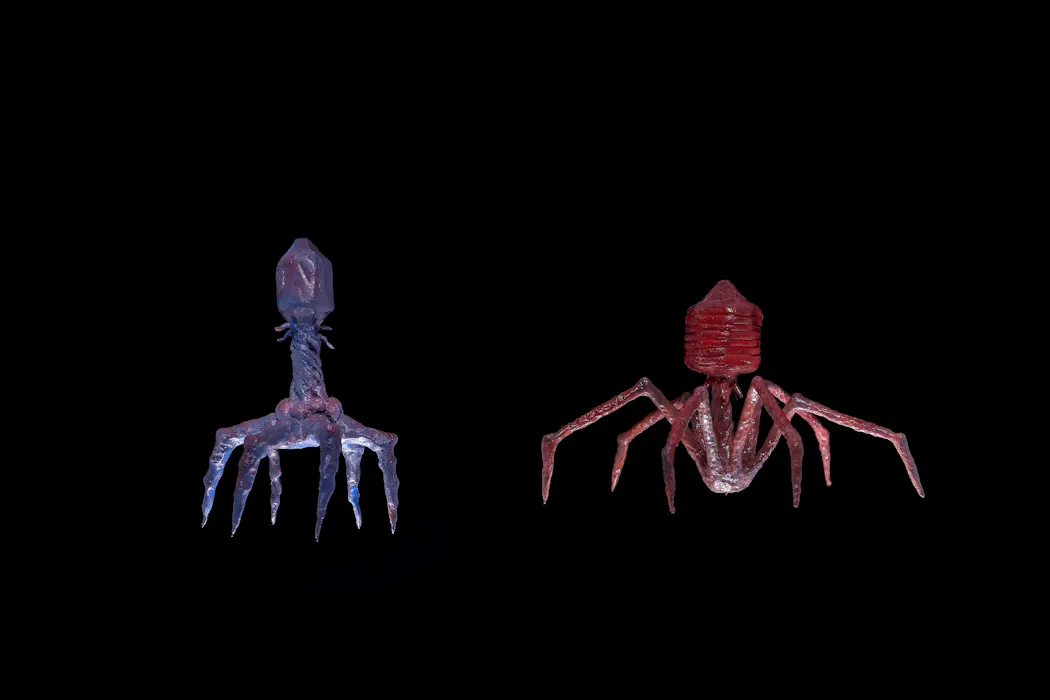
Bacteriophages, or phages, are viruses that infect and kill bacteria. These microscopic predators are found everywhere from soil and water to food and the human gut. Because they attack only specific bacteria, researchers are increasingly exploring them as tools for reducing harmful bacteria in humans and animals without disturbing helpful microbes.
That makes them especially interesting at a time of rising antimicrobial resistance. This is when bacteria evolve ways to survive drugs designed to kill them. It’s a global health threat driven in part by the overuse of antibiotics in medicine and agriculture. Unlike broad-spectrum antibiotics, which kill many different kinds of bacteria and can also disrupt helpful gut microbes, research has shown that phages may be able to remove harmful bacteria with less disruption to the wider microbiome.