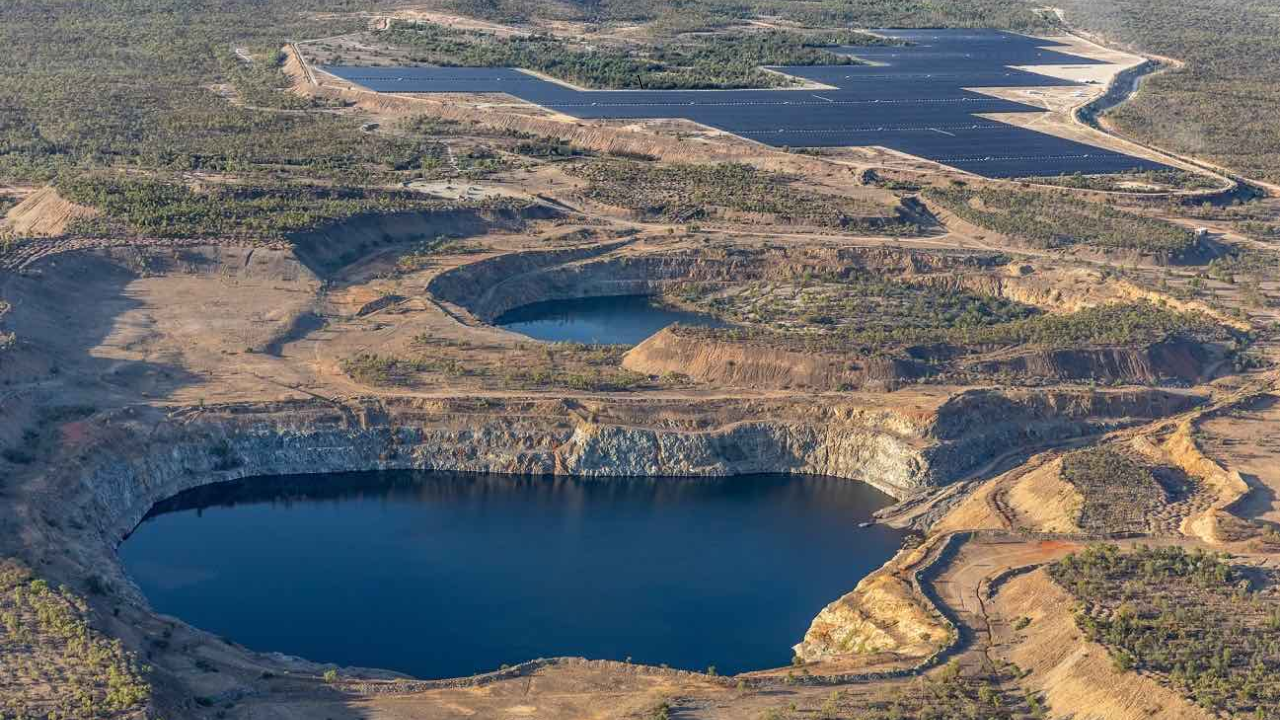
Australia's Kidston Renewable Energy Hub is repurposing a former gold mine in Far North Queensland into a pumped-hydro energy storage facility. The K2-Hydro project will use two disused mine pits as upper and lower reservoirs, with a planned capacity of 250 MW and 2,000 MWh of storage, providing approximately eight hours of energy storage. According to the Australian Renewable Energy Agency, the facility is designed to store electricity and release it when demand is high, with a start-up time expected to be less than 30 seconds. The project will also reuse existing mining infrastructure and connect the renewable energy hub to the national grid through a transmission line.
Get breaking news anytime, anywhere. Download the TOI app now!

How are former gold mine pits used for pumped-hydro storage
The K2-Hydro system is designed to use the former mine pits rather than constructing entirely new reservoirs. The project will effectively turn the existing pits into a large energy storage system. Water is pumped into an upper reservoir when electricity prices are low and is later released through reversible turbines into the lower reservoir to generate electricity when demand is high. The agency described the mine's massive open-cut pits as being repurposed to hold water for energy storage.
According to The World Economic Forum, the project will source water from groundwater and rainfall. It also says the existing mining infrastructure, including cleared land and roads, is being reused as part of the development. The approach is intended to make use of infrastructure already present at the former mining site while combining the pumped-hydro facility with the solar installation. The stored energy can then be dispatched when required, including during peak demand or when cloudy conditions reduce solar generation.
How much renewable energy can the pumped-hydro facility store
The pumped-hydro facility has a planned capacity of 250 MW and 2,000 MWh of energy storage. ARENA states that this provides approximately eight hours of storage and would be enough to power 143,000 homes. The agency also reported that the plant was designed with a start-up time of less than 30 seconds, allowing it to respond quickly to shortages in electricity supply.
The storage system is intended to work alongside renewable generation at the site. ARENA explained that energy from the solar and wind farms can be supplied to the grid around the clock through the storage system, providing what it described as a dispatchable, on-demand electricity supply. The World Economic Forum states that the hydro component is designed to store excess solar generation during the day and release electricity during periods of peak demand or cloudy conditions.
How does the project reuse existing mine infrastructure
The Kidston project also incorporates infrastructure associated with the former mine. The World Economic Forum states that reusing existing mining infrastructure helped avoid some of the land-use and permitting challenges associated with renewable energy developments. The project uses cleared land and existing roads, while a 186-kilometre, 275-kilovolt transmission line connects the site to the national grid, according to the World Economic Forum.
ARENA reported that a 187-kilometre transmission line would be required to connect the Kidston Renewable Energy Hub to the National Electricity Market. It said the line was also expected to facilitate the connection of additional renewable generation projects in the region. ARENA reported that the pumped-hydro project was expected to create more than 500 direct jobs during construction and support remote and regional businesses and communities.