Australia signs new strategic partnership with the Netherlands
Australia has signed a new strategic partnership with the Netherlands, seeking to boost defence ties and secure justice for the victims of MH17, Australian Associated Press reports.
Anthony Albanese met with his Dutch counterpart Rob Jetten on the sidelines of the United Nations.
As part of the partnership, the two countries will work more closely on security issues, economics and trade, as well as further support to Ukraine against Russia’s invasion.
A readout of the meeting said:
The world has become more volatile, more contested and less secure. In this geopolitical environment, it is more important than ever that like-minded partners stand together and deepen their cooperation.
Australia and the Netherlands recognise the need to continue investing in our close cooperation to meet current and future challenges.
The partnership will involve more regular exchanges between the two countries at a ministerial level, as well as between both prime ministers.
Australia and the Netherlands will also step up security cooperation and share more information on issues such as regional safety and arms control.
The two countries also promised to uphold efforts to pursue justice for the victims of the downing of Malaysia Airlines flight MH17.
The flight, which departed from Amsterdam, was downed by a Russian missile in 2014 and killed all 298 passengers and crew on board, including 38 Australians.
The statement said:
Australia and the Netherlands remain resolute in their commitment to pursuing truth, justice and accountability on behalf of the victims of the downing of MH17 and their next of kin.
Good morning, Nick Visser here to grab the blog. Let’s get to it.
Albanese pays tribute to Ukraine’s resistance
Albanese said the bilateral agreement would be in place not only during the war in Ukraine, but during peacetime once the conflict concludes.
The prime minister became emotional as he paid tribute to his “friend” Zelenskyy in his fight against Russian aggression.
“[Zelenskyy’s] leadership has been, I think, quite extraordinary, leading people in circumstances which are extraordinarily difficult,” he said.
“Russia thought it could just steamroll through in a matter of weeks, and what we have found is that the people of Ukraine were underestimated.”
The two leaders hugged when they first met in-person at the summit, with Zelenskyy thanking Australia for its support to Ukraine throughout the conflict.
“[The agreement is] the strongest document between our countries,” he told reporters.
“We really will increase our co-production and trade and, of course, security, which is really important.
“It’s all for our people, for the security.”
As part of the agreement, Australia will also step up training to help Ukrainian forces deter and repel any future Russian attacks.
It will also look to explore cooperation for training centres and jointly produce air-defence measures, missiles and drones.
Australia will join forces with the United Kingdom and Norway-led coalition to help support the development of Ukraine’s navy.
Work will be carried out to strengthen Ukraine’s maritime capability.
Australia and Ukraine will also work together to rebuilding infrastructure such as military healthcare facilities and training centres.
Extra sanctions have also been imposed on Russia, coinciding with the announcement of the agreement.
It brings the total sanctions placed on Russia and its supporters by the federal government to more than 1900.
Updated
Australia to provide $60m more in support for Ukraine’s fight against Russia
In a busy day of dipolomacy, Anthony Albanese also announced Australia will provide $60m more in support for Ukraine’s fight against Russia’s invasion as part of a fresh security agreement, Australian Associated Press reports.
The prime minister met Ukraine’s president, Volodymyr Zelenskyy, on the sidelines of the United Nations General Assembly in New York.
The 10-year bilateral security agreement, signed by both leaders, will lead to an extra $45m in Australian Defence Force equipment for Ukraine.
A further $10m will go to Ukraine’s energy support fund, while $5m will be spent on humanitarian assistance.
The $60m fund will bring Australia’s total contribution to Ukraine since Russia’s invasion in 2022 to $1.9bn.
The prime minister said the agreement was a proud day for Australians in seeking to uphold international laws.
Albanese told reporters in New York upon signing the agreement.
This is an issue not just for Europe, this is an issue for the world. If a large, more powerful country in Russia is allowed to profit from breaking the international rules of law with its illegal and immoral invasion of Ukraine, then that sets a bad precedent for the entire world.
PM to say Indo-Pacific ‘not a chessboard’ for superpowers
While Australia had ties with the US and China as its key security and trading partners respectively, Albanese will say the competition between the two powers should not be the only lens the Pacific should be dealt with.
“The Indo-Pacific is not a chessboard on which superpowers move the pieces,” he will say.
“Its countries are not spectators, they are shaping its future and writing their own script.”
The prime minister will make the speech after receiving the Atlantic Council’s Global Citizen award, where he is being recognised for his role in deepening alliances and promoting security and stability in the Indo-Pacific.
He will be among four award recipients at the event, including Formula One boss Stefano Domenicali, the president of Finland, Alexander Stubb, and actor Cynthia Erivo.
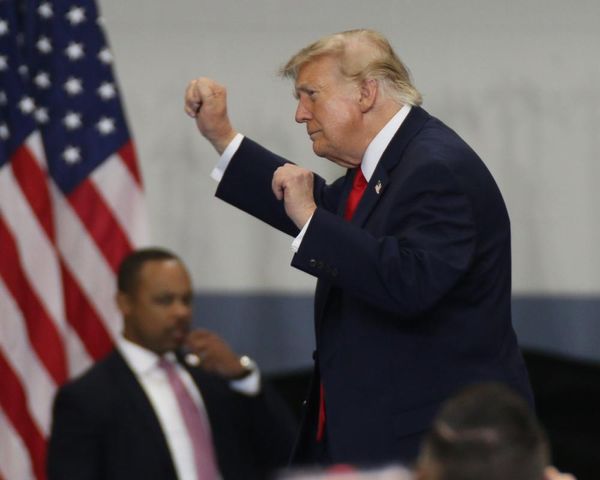
The speech comes a day after Albanese met briefly with Donald Trump at a gala dinner hosted by the American leader.
The prime minister and Trump have issued divergent calls on whether to rein in the use of AI after safety fears or, in the case of the US leader, accelerate its rollout.
World order no longer fit for purpose, Albanese says
The international world order set up after the second world war is no longer fit for the present-day environment, the prime minister will declare in a major foreign policy speech in New York today, Australian Associated Press reports.
In an address to the Atlantic Council, Anthony Albanese will say many of the institutions that were necessary post-1945 were not enough to meet present-day challenges.
The prime minister will use the speech on the sidelines of the United Nations general assembly in New York to argue partnerships with alliances remain crucial in a rapidly changing global environment.
Since the end of the cold war, the prevailing assumptions of international affairs were clear: openness was security, efficiency mattered more than resilience and international rules would be observed.
Those assumptions rested on the expectation that the influence of the major democratic powers would remain largely unchallenged.
The post-1945 world order is no longer fit for purpose. Universal institutions that remain necessary are now not always sufficient for the challenges we face.
The prime minister will say Australia needed to shape a world order that will replace the old one, while preserving diplomatic rules.
Albanese will point to the strategic competition between the United States and China in the Indo-Pacific region as being the most consequential issue facing the region.
Updated
OECD says Australia will struggle to get underlying inflation below 3%
The OECD says Australia will struggle to bring underlying inflation back below 3% in 2027, despite sub-par economic growth in this year and the next.
The Organisation for Economic Co-operation and Development in its interim economic outlook flagged that the world economy had, once again, proved more resilient than expected to the global energy shock triggered by the ongoing Iran war.
The artificial intelligence boom had papered over many of the cracks, the report said, adding that “global economic prospects remain heavily dependent on whether a durable resolution to the Middle East conflict is achieved”.
With fuel costs here jumping over recent weeks and inflation proving more persistent than hoped, there is a strong consensus that the Reserve Bank will deliver another interest rate hike next Tuesday – the fourth this year.
The OECD projected Australia’s headline inflation would drop from 4.1% this year, to 2.8% in 2027.
But “core” inflation – which removes the effects of big price swings, like for fuel – would prove harder to shift back into the RBA’s 2-3% target range.
The OECD expected the underlying price growth measure to ease from 3.5% in 2026 to 3.1% in 2027.
“Faced with renewed energy price shocks and stronger than expected demand pressures, and at a time when inflation is already above target in many economies, central banks need to ensure that underlying inflation pressures are durably contained,” the OECD said.
Updated
Anthony Albanese says OpenAI agent hacked Medicare
Anthony Albanese has revealed an artificial intelligence agent developed by OpenAI hacked Medicare in June.
The prime minister made the comments at the UN summit in New York.
This incident occurred in June this year and involved an Open AI agent gaining unauthorised access into the public-facing Medicare statistics reporting service portal, which is administered by Services Australia.
The AI agent accessed both public and non-public files.
A forensic investigation, aided by the Australian Signals Directorate, is now under way to ascertain more information, including what other government systems were affected.
The Medicare statistics reporting portal is a public-facing statistics portal that contains non-sensitive Medicare information relating to data and statistics, such as spending.
No personal information is believed to have been accessed at this stage but investigations are ongoing.
Evidence currently available is there is no broader compromise to the Services Australia network.
Nonetheless, this situation is obviously unacceptable.
Today, I spoke with the CEO of Open AI, Sam Altman, to express Australia’s extreme concern about this incident.
And I also expressed my disappointment that it took the company way too long to inform the government what had occurred.
Updated
Welcome
Good morning and welcome to our live news blog. I’m Martin Farrer with the top overnight stories and then it will be Nick Visser with the main action.
Updated