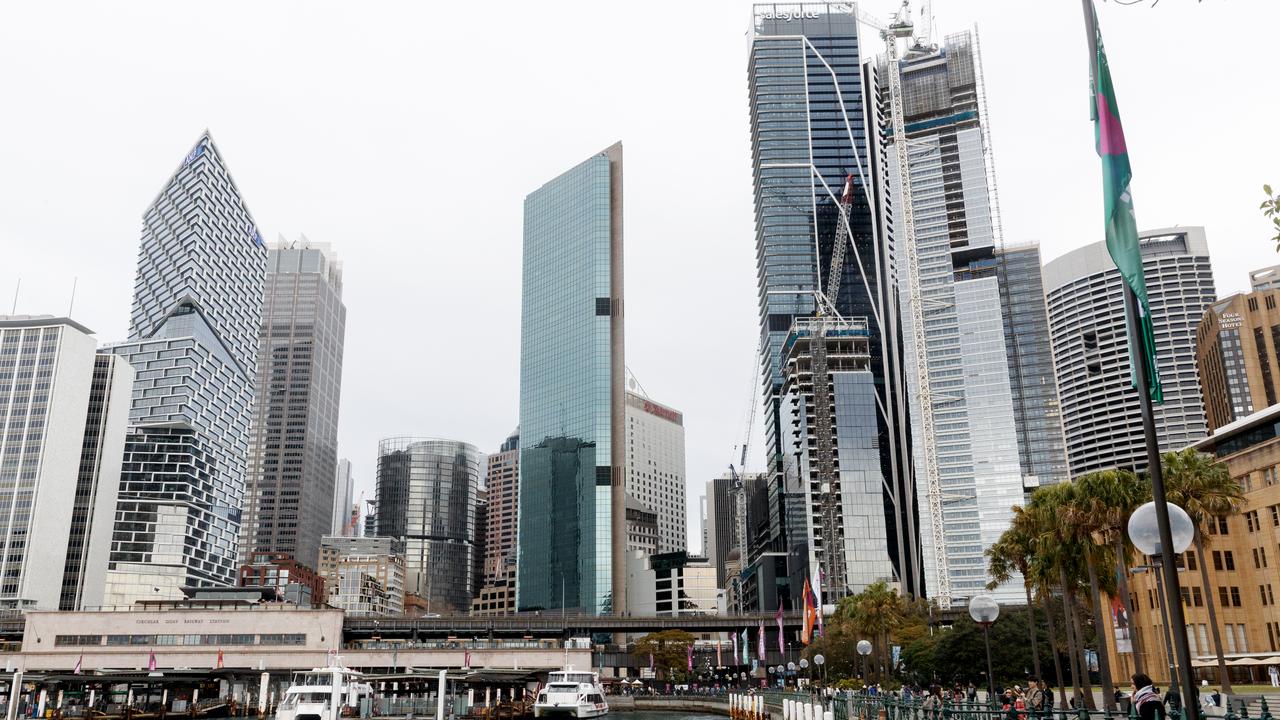
The Australian share market has fallen to a three-month low and is headed for its fourth straight week of losses, as oil prices and bond yields both moved higher.
Near noon on Friday, the benchmark S&P/ASX200 index had fallen 37.7 points, or 0.43 per cent, to 8,664, its lowest level since mid-June, while the broader All Ordinaries had dropped 48.5 points, or 0.55 per cent, to 8,848.2.
With a few hours of trading left, the ASX200 was on pace to finish the week down 0.8 per cent, and was also 0.6 per cent lower since the start of the year.
Overnight, a military adviser to Iran's leadership said that further attacks against the Islamic Republic by the US and Israel could prompt it to expand the war as far as the Indian Ocean, sending Brent crude to an eight-day high of $US106 a barrel.
Interactive Brokers senior economist Jose Torres said that higher oil prices were sparking share market turbulence, as investors feared they would face above-average inflation.
Meanwhile, Australian government bond yields were close to surpassing last week's 15-year peak, tracking moves overseas, amid weak demand for government debt and competition from corporate borrowing to fund an artificial intelligence rollout.
Nine of the ASX's 11 sectors were lower at midday, with energy flat and consumer staples 0.6 per cent higher.
The tech sector was the biggest mover, dropping 1.8 per cent as Xero fell 3.7 per cent, Wisetech Global falling 2.3 per cent and NextDC losing 2.2 per cent.
The consumer discretionary sector had declined 1.4 per cent amid firming expectations that the Reserve Bank will raise interest rates next week.
Eagers Automotive dropped 4.5 per cent, JB Hi-Fi retreated 2.6 per cent and Nick Scali subtracted 3.7 per cent.
Netwealth was the biggest loser in the ASX200 at midday, slumping 6.6 per cent as the portfolio administration company was hit by a class action filed in connection to the failed First Guardian super fund.
Elsewhere in the sector, all of the big four banks were higher. ANZ and Westpac were both up 0.6 per cent, while CBA gained 0.2 per cent and NAB climbed 0.3 per cent.
In the heavyweight mining sector, BHP dropped 0.8 per cent, Fortescue retreated 1.1 per cent and Rio Tinto lost 1.0 per cent.
The Australian dollar was changing hands for 70.12 US cents, from 70.35 US cents at 5pm on Thursday.