
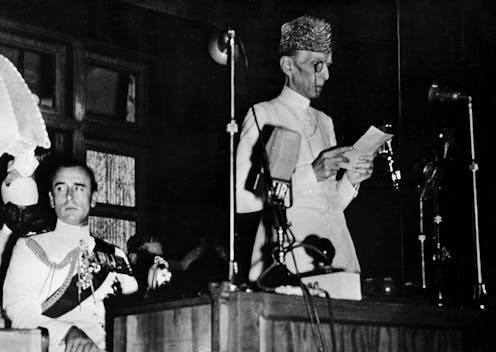
This month marks the 75th anniversary of Pakistan’s independence and of its Partition from British India in a devastating process that uprooted more than 15 million people and resulted in 1 million to 2 million dead. Hindus, Muslims and Sikhs – communities that had coexisted for hundreds of years – all participated in the sectarian violence. Countless people have borne the scars from these events over multiple generations.
Mohammad Ali Jinnah, the founder of Pakistan, sought to create a democratic, egalitarian and secular country where the Muslims of the subcontinent, who constituted about 25% of the population, could enjoy full equality. For most of his life, he sought to achieve this equality within an undivided Hindu-majority India. Later he became convinced that a separate homeland was necessary to realize such equality.














