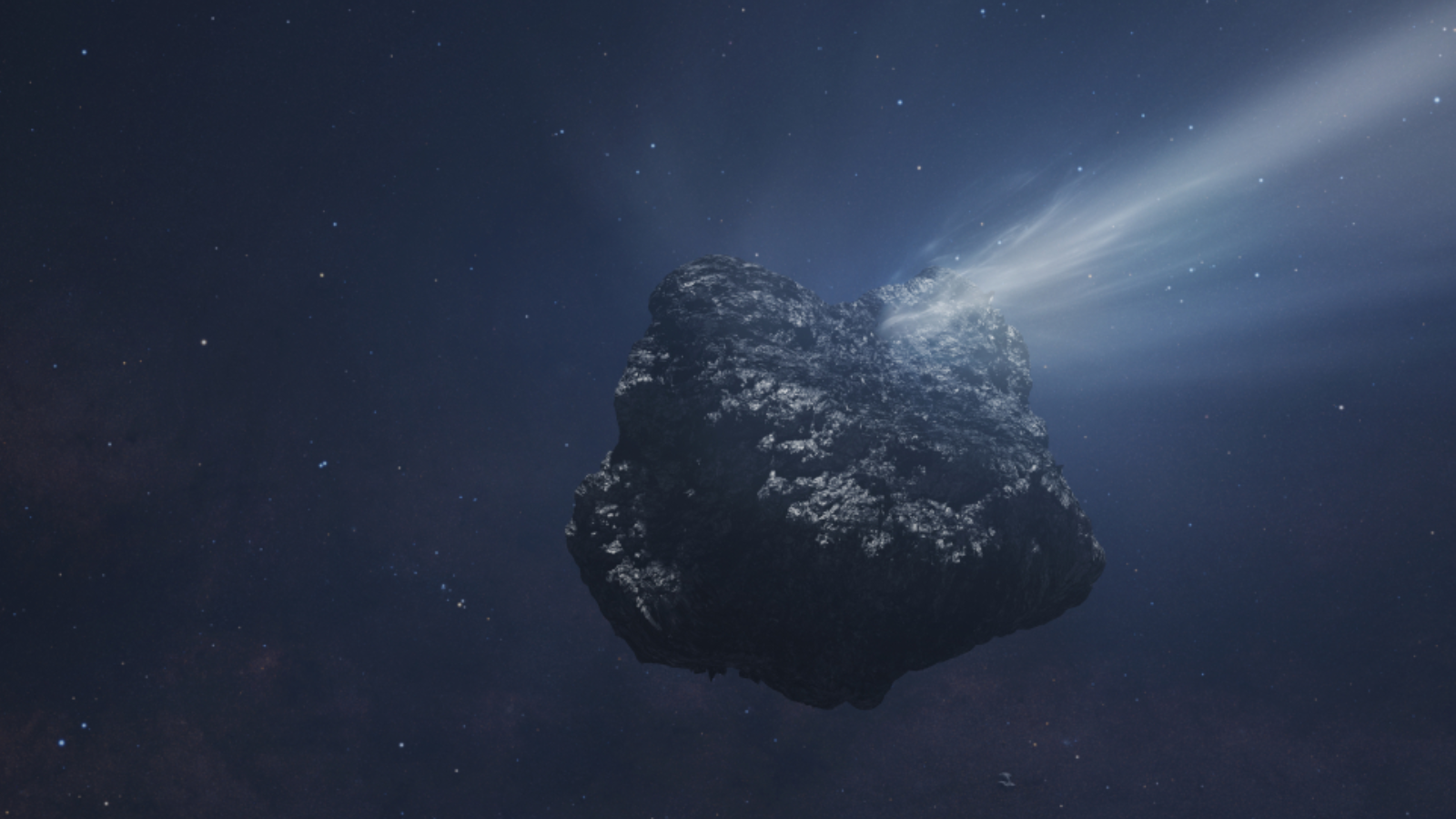
Astronomers have discovered that the largest comet from the Oort Cloud, a shell of icy bodies at the very edge of the solar system, is bursting with chemical activity.
Using the Atacama Large Millimeter/submillimeter Array (ALMA) in Chile, the team discovered that C/2014 UN271, an 85-mile-wide (137 km) body around 10 times the size of the average comet and also known as Bernardinelli-Bernstein, is erupting with complex and evolving jets of carbon monoxide gas.
Now located halfway between the sun and the solar system's furthest planet, Neptune (or 16.6 times the distance between the Earth and our star), C/2014 UN271 becomes the second-most distant comet originating from the Oort Cloud that has been seen to be chemically active. The observations are also the first direct evidence of what drives cometary activity when these icy bodies are far from the sun.