
Get all your news in one place.
100's of premium titles.
One app.
Start reading
The Conversation
The Conversation
Matthew Sharpe, Associate Professor in Philosophy, Australian Catholic University

Aristotle’s Politics has wisdoms and warnings for our age of tech utopias and inequality

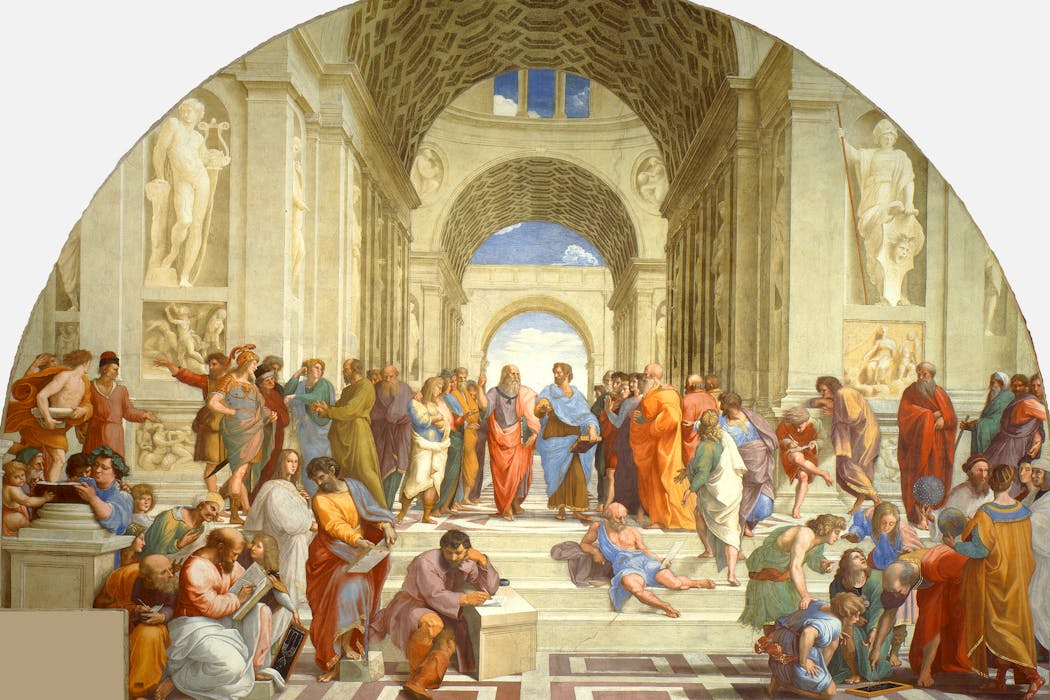
The School of Athens, fresco by Raphael, with Plato and Aristotle at its centre. Wikimedia Commons

If Plato was the first Western political philosopher, Aristotle was the first political scientist in today’s sense. Plato’s Republic, for instance, envisages an unworldly political utopia. But in Politics, Aristotle investigates a comprehensive range of political forms and regimes, down to their unglamorous, operational details.

To research the book, Aristotle sent pupils at the Lyceum, his school in Athens, to many Greek city-states to record their constitutions, forming a kind of empirical data set. He also anticipated our social sciences by millennia, taking seriously issues such as the political effects of the unequal distribution of wealth.

Sign up to read this article
Read news from 100's of titles, curated specifically for you.
Already a member? Sign in here
Related Stories
Top stories on inkl right now
One subscription that gives you access to news from hundreds of sites
Already a member? Sign in here
Our Picks
Fourteen days free
Download the app
One app. One membership.
100+ trusted global sources.





