
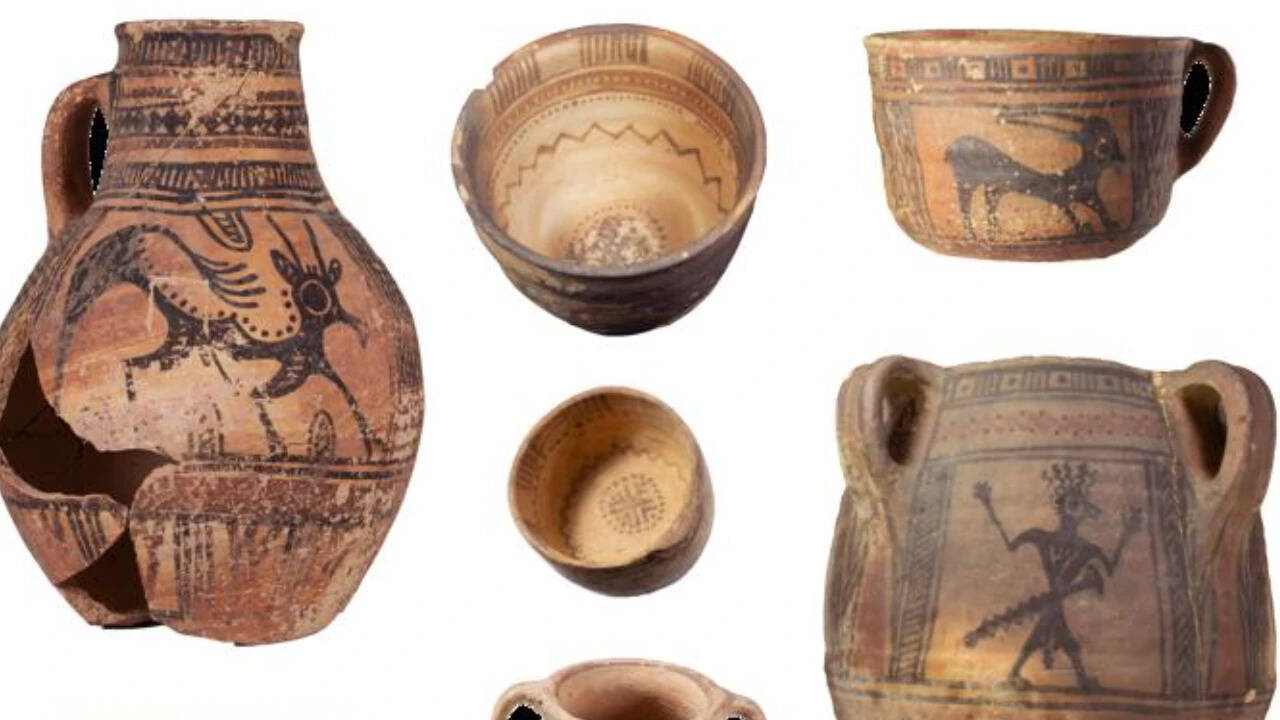
More than 3,000 years ago, potters working in the desert oasis of Qurayyah in what is now northwestern Saudi Arabia were producing a distinctive painted pottery that eventually travelled beyond the settlement where it was made. A new study titled Creating a brand. Genesis, transformation and diffusion of Qurayyah Painted Ware , published in PLOS ONE, has now combined archaeological, petrographic and chemical evidence to reconstruct how that pottery developed over several centuries, eventually becoming what researchers describe as an early example of brand-making. Known as Qurayyah Painted Ware, or QPW, the pottery was recognisable for its distinctive bichrome designs and consistent manufacturing traditions. By the time the fourth major production phase, known as QPW 4, emerged during the Late Bronze Age, the vessels were being produced in substantial quantities and had begun appearing outside Qurayyah, including at Tell el-Kheleifeh in southern Jordan and at the Hathor Shrine in Timna. Researchers argue that QPW 4 was more than simply a recognisable style of pottery: its consistent appearance, local production, export circulation and eventual imitation elsewhere suggest that people had begun associating the distinctive vessels with a particular place, quality and identity. This ancient pottery tradition offers a striking reminder that the instinct to build recognizable identity around craftsmanship and origin is far older than modern commerce, revealing sophisticated economic and cultural behaviors thousands of years before formal branding ever existed.
Get breaking news anytime, anywhere. Download the TOI app now!














