
Get all your news in one place.
100’s of premium titles.
One app.
Start reading
TechRadar
TechRadar
Roland Moore-Colyer

Apple really went backwards when it ditched titanium on iPhones

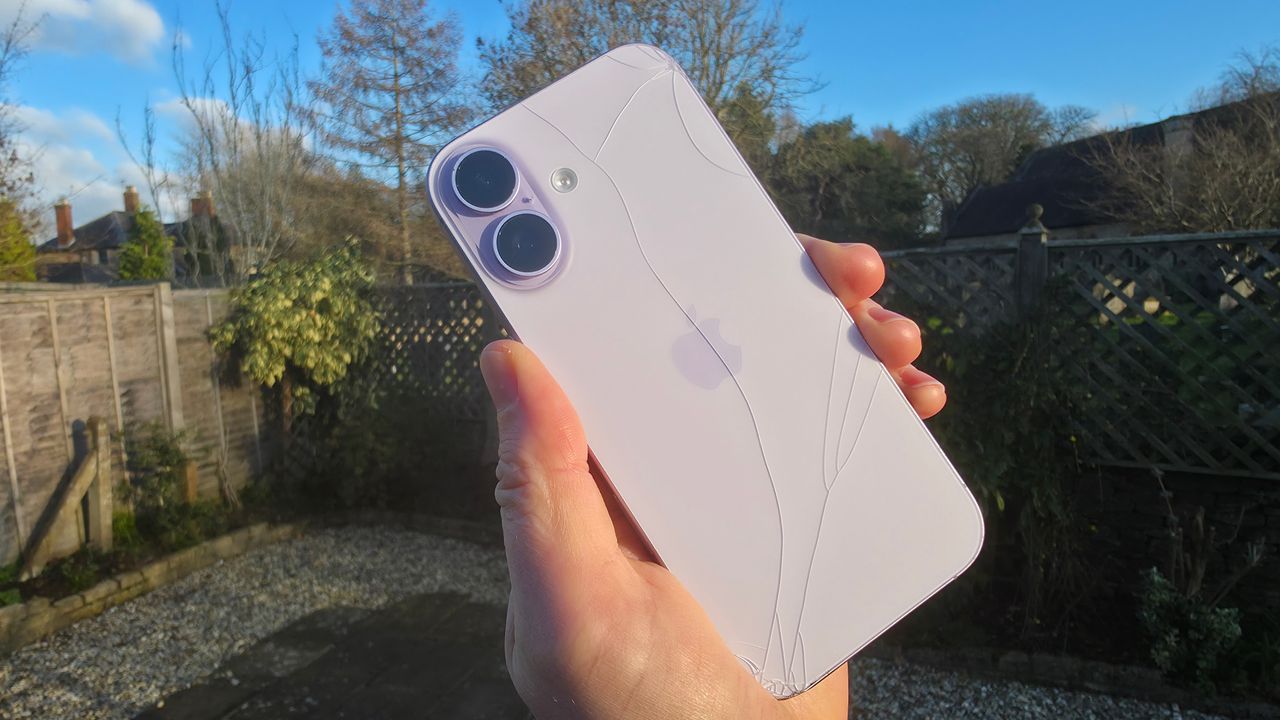
An image of a cracked iPhone 17.

So there I was, thinking about how the iPhone 17 having a larger, and correct size, 6.3-inch display complete with a 120Hz refresh rate, would mean I wouldn't miss the big specs of my iPhone 16 Pro Max.

Heck, the new Fusion main camera even goes some way to making me forget my love of telephoto cameras. So all was looking rather rosy…

Until the iPhone 17 with its satin-finished back and sides slipped from my hands.

The first time this happened the phone came away with a solid dent in its lower frame. The second, a sort-of horizontal splat onto a sidewalk left shattered glass in the top and bottom corners diagonally to each other, with hairline fractures connecting the two.

(Image credit: Future)

Of course this is down to my own dumb clumsiness, which seems to have got worse over the years. And as I’m not a fan of cases ruining the slick industrial designs of the best phones, I tend to raw-dog my iPhone experience, leaving the hardest I test out at the mercy of the elements and my fumblings.

But as I’ve written before, all this was fine with the past two generations of Pro iPhones as they made use of a titanium chassis, which proved pretty much immune to Roland foolery.

Yet that’s not the case with the iPhone 17, with its aluminum frame. Or indeed the iPhone 17 Pro and iPhone 17 Pro Max, both of which have ditched the titanium chassis for aluminum in order to save weight.

(Image credit: Future)

Given the above, I’m not a fan of this. And I also think that at its current price, the standard iPhone could make use of titanium. I get that it’s harder to work with. But Apple touts sustainability, so surely having stronger phones out of the box would save on energy, and indeed money, spent on repairs.

And while I’m talking durability, I still think more could be done, especially on flagship phones.

Sure, Gorilla Glass is tough and weathers scratches, and Apple’s own Ceramic Shield coating is very good on the display. But outside the use of titanium, I’ve yet to see a glass or coating that truly makes iPhones, Pixels phones and Galaxy S-series handsets truly durable.

Maybe I’m just trying to eschew blame for my own butterfingered nature, possibly aided by enjoying the holiday season festivities with a little too much gusto. But here’s to harder, stronger, tougher phones in 2026.

What’s do you reckon? Do phones need to toughen up? Or are you a case user? Let me know in the comments below.

Follow TechRadar on Google News and add us as a preferred source to get our expert news, reviews, and opinion in your feeds. Make sure to click the Follow button!

And of course you can also follow TechRadar on TikTok for news, reviews, unboxings in video form, and get regular updates from us on WhatsApp too.

Sign up to read this article
Read news from 100’s of titles, curated specifically for you.
Already a member? Sign in here
Related Stories
Top stories on inkl right now
One subscription that gives you access to news from hundreds of sites
Already a member? Sign in here
Our Picks
Fourteen days free
Download the app
One app. One membership.
100+ trusted global sources.