Get all your news in one place.
100's of premium titles.
One app.
Start reading
International Business Times UK
Athena Freya

Apollo 13's Triumph Meets Its Match — Watch Artemis II Redefine Space Exploration

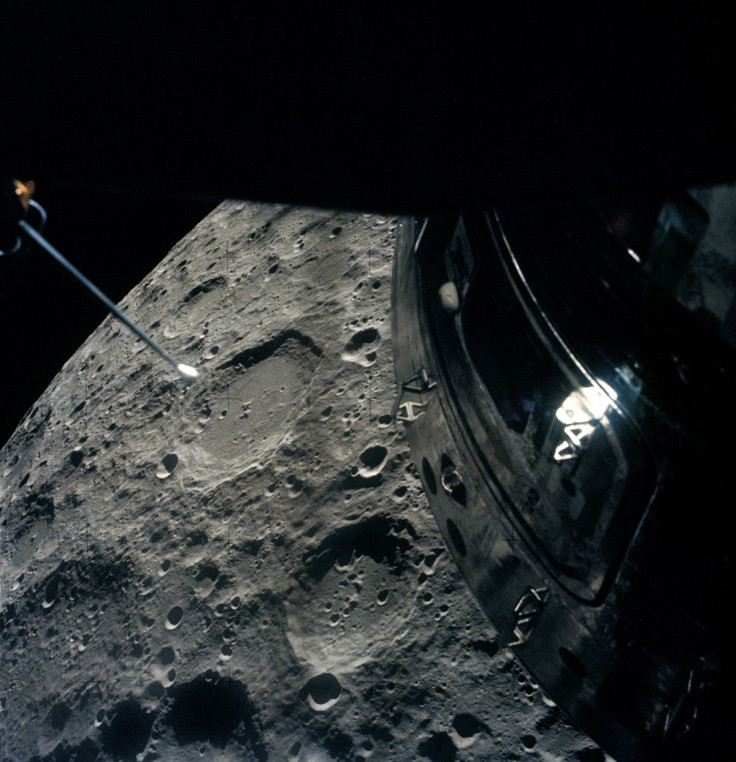
The Artemis II Orion spacecraft surpasses Apollo 13, floating above the Moon’s far side during the historic flyby (Photo: NASA History/ Facebook)

NASA's Artemis II astronauts have made history by travelling farther from Earth than any humans ever have, surpassing the record set by Apollo 13 over 50 years ago. On 6 April 2026, the Orion spacecraft carrying the four-person crew completed a breathtaking lunar flyby, offering a rare chance for the public to watch Artemis II redefine space exploration while capturing unprecedented views of the Moon's far side.

NASA Artemis II Crew Breaks Apollo 13 Distance Record in Historic Moon Flyby

The crew reached approximately 252,756 miles (about 406,778 km) from Earth, eclipsing the 248,655-mile (400,168 km) distance achieved by the Apollo 13 astronauts during their 1970 mission. The Artemis II trajectory followed a free-return path around the Moon, ensuring the astronauts' safe journey while testing Orion's deep-space systems. The spacecraft performed flawlessly, demonstrating the precision and reliability of NASA's modern deep-space technology.

The historic distance also allowed the crew to witness celestial phenomena rarely seen by humans, including Earthset and Earthrise, moments when Earth disappears and reappears over the lunar horizon. These views provide both scientific value and emotional resonance, showing how far humanity has ventured into the cosmos.

Artemis II Astronauts Achieve Record-Breaking Distance Beyond Apollo 13 Mission

Communications with Earth were briefly lost for around 40 minutes while Orion passed behind the Moon's far side. This temporary blackout highlighted the inherent challenges of deep-space navigation and gave the astronauts an isolated experience similar to the Apollo 13 crew's tense journey. During the blackout, onboard systems continued operating autonomously, underscoring the robustness of modern spacecraft design.

The mission crew comprises Commander Reid Wiseman, Pilot Victor Glover, Mission Specialist Christina Koch, and Mission Specialist Jeremy Hansen. Hansen became the first Canadian astronaut to travel beyond low Earth orbit. Throughout the flyby, the astronauts provided detailed commentary and captured high-resolution images of the lunar far side, documenting previously unseen impact basins, rugged ridges, and volcanic formations.

Watch Artemis II Crew Surpass Apollo 13 Record During Lunar Flyby Mission

According to live mission updates and coverage, the flyby demonstrated Orion's deep-space capabilities and the Space Launch System rocket's reliability. The mission also paved the way for Artemis III, which aims to return humans to the Moon's surface and establish a framework for long-term lunar exploration. The flight connected symbolically to NASA's historic Apollo programme, reflecting decades of progress in crewed spaceflight.

Viewers worldwide had the chance to witness the historic flyby live through official NASA broadcasts, social media, and livestreams. According to NASA History Facebook and Video From Space YouTube posts, audiences captured key moments of the mission in real time, sharing awe at the breathtaking visuals and the realisation that humans had reached farther into space than ever before.

NASA Artemis II Mission Sets New Human Distance Record Over Apollo 13 Legacy

Although the mission did not include a lunar landing, it fulfilled critical objectives for crewed deep-space operations, including spacecraft performance tests, orbital manoeuvres, and scientific observations. The flyby provided data that will aid future surface missions and enhance understanding of navigation beyond low Earth orbit.

By breaking Apollo 13's distance record, Artemis II has not only achieved a technical milestone but also reignited public interest in lunar exploration. It demonstrates the continuing ambition of human spaceflight, offering both scientists and enthusiasts a glimpse of the future as humanity prepares for sustainable lunar missions, eventual Mars expeditions.

Sign up to read this article
Read news from 100's of titles, curated specifically for you.
Already a member? Sign in here
Related Stories
Top stories on inkl right now
One subscription that gives you access to news from hundreds of sites
Already a member? Sign in here
Our Picks
Fourteen days free
Download the app
One app. One membership.
100+ trusted global sources.