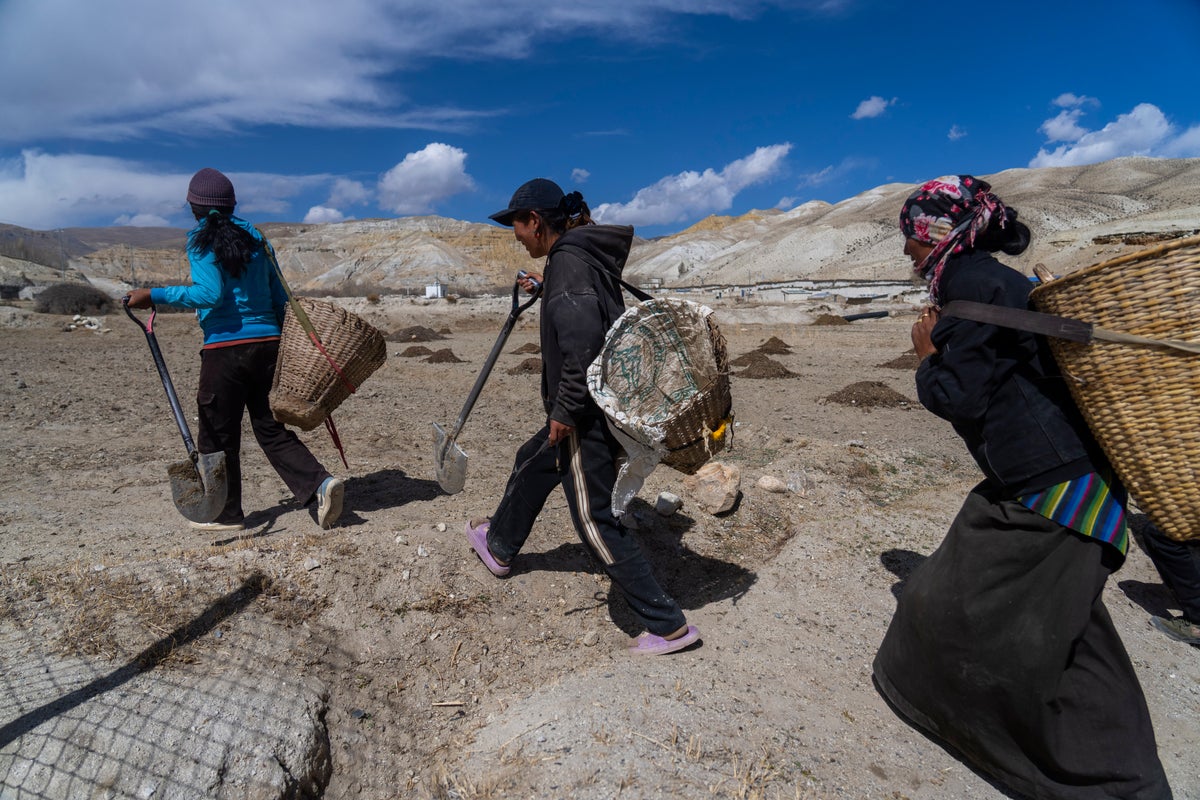
The slow, deliberate rhythms of life in Samjung, a remote Himalayan village nestled over 13,000 feet above sea level in Nepal's Upper Mustang, have been irrevocably silenced by the relentless march of climate change. For centuries, this Buddhist community thrived, its inhabitants herding yaks and sheep, and harvesting barley beneath sheer ochre cliffs. These towering formations are honeycombed with ancient "sky caves" – 2,000-year-old chambers used for ancestral burials, meditation, and shelter, testament to a deep-rooted heritage.
But the lifeblood of Samjung – its water – began to vanish. Year after year, the snow-capped mountains that fed its springs turned brown and barren as snowfall dwindled. Springs and canals dried up entirely, and when rain did come, it arrived in destructive deluges, flooding fields and dissolving the very mud homes that had stood for generations.