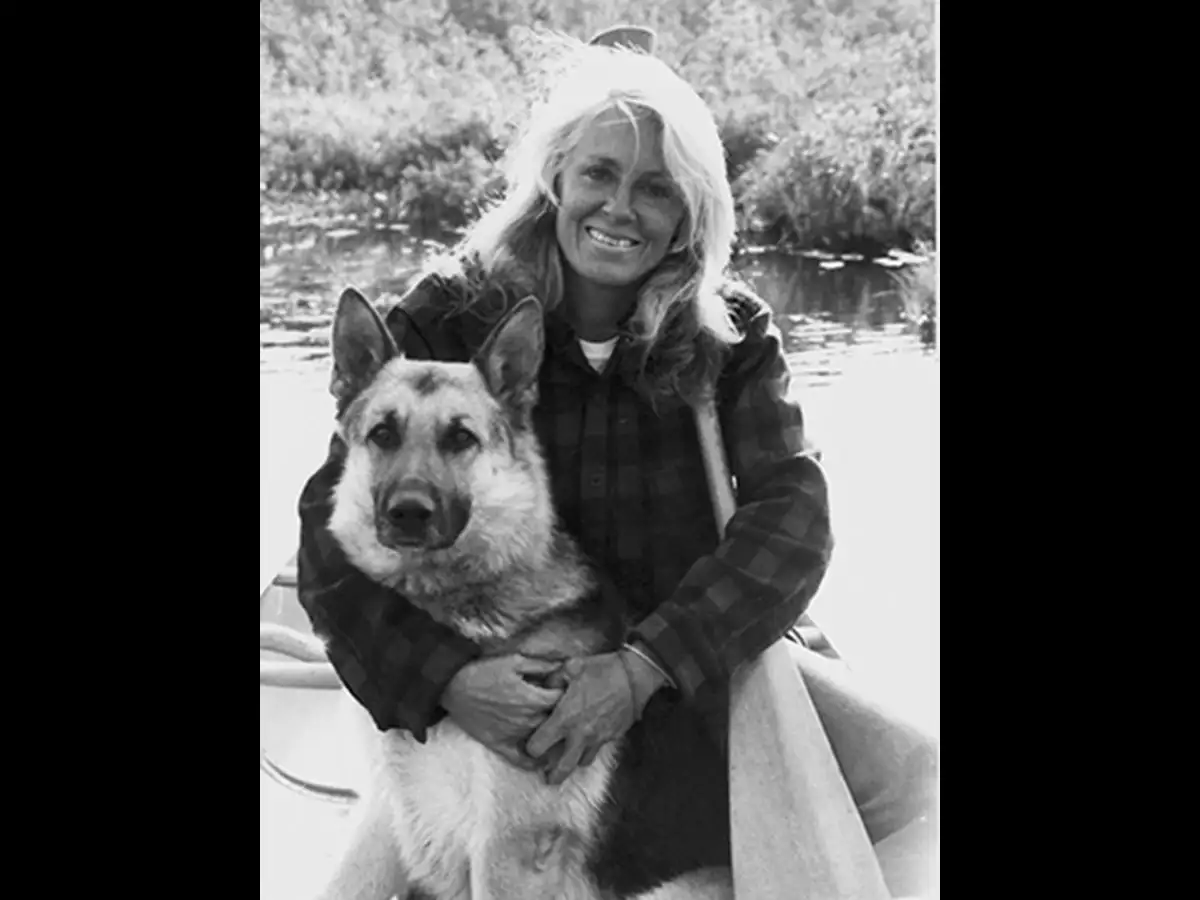
There was no electricity, no running water, no telephone and no road leading to Anne LaBastille’s remote property in New York’s Adirondack wilderness. In 1964, LaBastille, a wildlife ecologist, writer and conservationist, built a tiny 12-by-12-foot log cabin on the shore of Twitchell Lake. Far from modern conveniences, she created a life centered on nature, solitude and self-reliance.
Her experience eventually became the basis for Woodswoman, the celebrated memoir published in 1976, and a series of books documenting her extraordinary life in the Adirondacks.

A tiny cabin far from modern life
LaBastille did not build her cabin as a temporary escape from the city. She intended to live close to the wilderness and accept the challenges that came with it.
The property had no conventional road, power lines or telephone service. Water came from the surrounding wilderness, while heating and cooking relied on traditional methods.
Even getting building materials to the site was an undertaking. LaBastille obtained spruce logs from a local lumberyard and had them transported to the edge of the lake because there was no road leading directly to her property.
She also carefully chose a building site where she would not need to cut down large trees. The finished cabin was tiny by modern standards, but it became the center of her life and work.
Life in the Adirondacks was beautiful—and difficult
Living remotely meant accepting conditions that most people would find challenging. Adirondack winters brought heavy snow and freezing temperatures. Traveling for supplies could become difficult, particularly when the lake froze or severe weather arrived.