
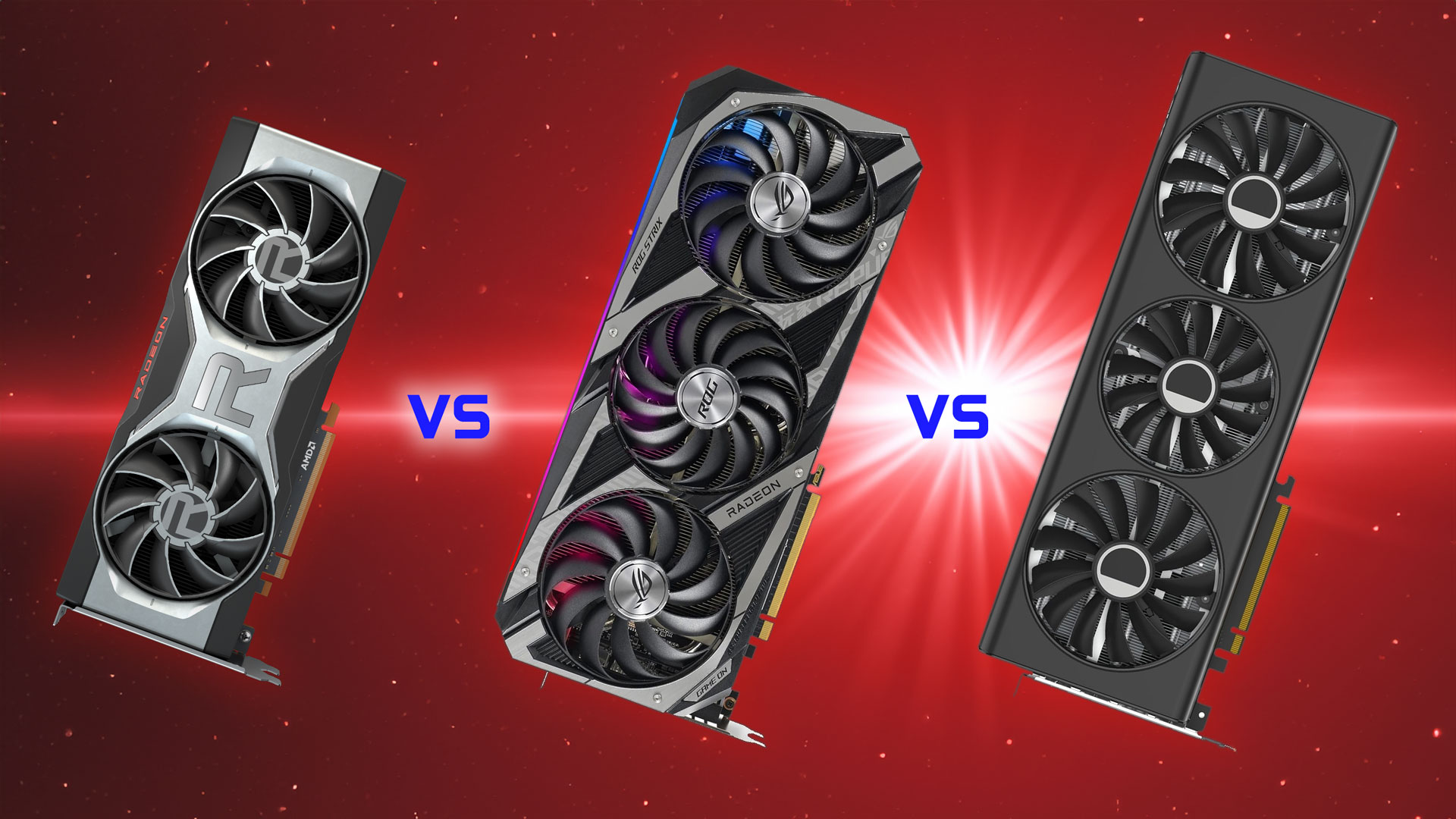
The RX 7700 XT is AMD's latest generation GPU to take on the "x700" series nomenclature. Despite being a successor to the RX 6700 XT and RX 6750 XT, these two older GPUs are still readily available at competitive prices, providing viable alternatives to the newer part and making this a good time to compare all three GPUs in a three-way faceoff.
The RX 6700 XT is the oldest card of the bunch, launching in 2021 at the height of the GPU shortages. The card's original MSRP was $479, and it was designed to compete with the RTX 3060 Ti, but for the next year and a half neither GPU sold for anywhere close to MSRP. These days, thankfully, prices are far more reasonable, and the RX 6700 XT represents a solid midrange AMD GPU that supports all of today's modern features: hardware-accelerated ray tracing, VRS, mesh shaders, and very fast clock speeds (something that is now common on all modern GPUs). It was a huge step up from the 5700 XT it replaced, though it didn't fare well in our initial review due to the supply restrictions that plagued the 2021 GPU market.
The RX 6750 XT arrived in 2022 as a refreshed variant of the RX 6700 XT, featuring slightly higher GPU clock speeds, higher memory clock speeds, and a slight bump in power consumption to match. In our original review, we felt the RX 6750 XT was a largely unnecessary refresh and were underwhelmed with its massive 15% price hike over the RX 6700 XT — it launched with a $539 MSRP, near the end of the Ethereum-mining craze that caused massively inflated GPU prices. Thankfully, the RX 6750 XT has seen massive discounts since 2022 and now tends to start at close to $300, giving it a more positive standing in this faceoff.
Note that technically, the 6750 XT 'replaced' the 6700 XT, but supplies of the older card haven't entirely dried up yet. Depending on current online pricing, the 6700 XT can still be the better pick of the two cards, so we felt it would be useful to include its results as an additional point of reference for this faceoff.
The RX 7700 XT is the newest GPU of the bunch, boasting the more power-efficient RDNA 3 architecture. The 7700 XT represents an evolution in design over the 6700 XT, doing the same things in general, only better. It also adds new WMMA instructions to boost FP16 throughput, useful for AI workloads. The biggest improvement to the 7700 XT is its performance, but similar to the RX 6750 XT, high launch pricing left a sour taste in our mouth with our original review.
Two or three years after the Navi 22 parts launched, and one year after their Navi 32 successor, prices have changed drastically for all three GPUs. Let's see how they stack up as we discuss performance, pricing and value, features, technology, software, and power efficiency — and as usual, those are listed in order of generally decreasing importance.