
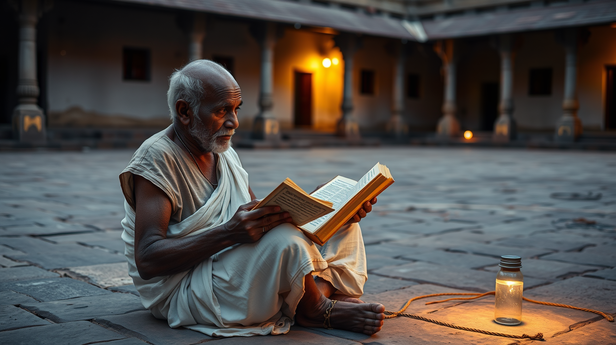
The Vachana does not meet you where you are
You come to a Vachana the way you come to most spiritual writing, carrying something. A grief, a question, a fatigue that has been sitting in your chest for weeks. You expect the text to reach toward you. Allama Prabhu's Vachana does not. It turns away. Or more precisely, it looks straight through you, as if the "you" doing the carrying is the very thing it refuses to address.Allama Prabhu was a 12th-century mystic-poet of the Veerashaiva movement in Karnataka. He is one of the central figures of the Anubhava Mantapa, the extraordinary gathering of sharanas, devotees, in Basavanna's Kalyana, where cobblers and Brahmins and washerwomen sat together and argued about the nature of God. His ankita, the signature he placed at the close of each Vachana, was Guheshwara, the lord of the cave, the hidden one. The name is itself a clue. The teaching lives in concealment.His most famous Vachanas circle the image of the hollow bamboo. The flute makes music only because it is empty inside. Allama was not offering this as comfort. He was stating a condition. You cannot carry your accumulated self, your certainties, your wounds, your spiritual ambitions, into that hollow. The hollow requires the prior emptying of you.













