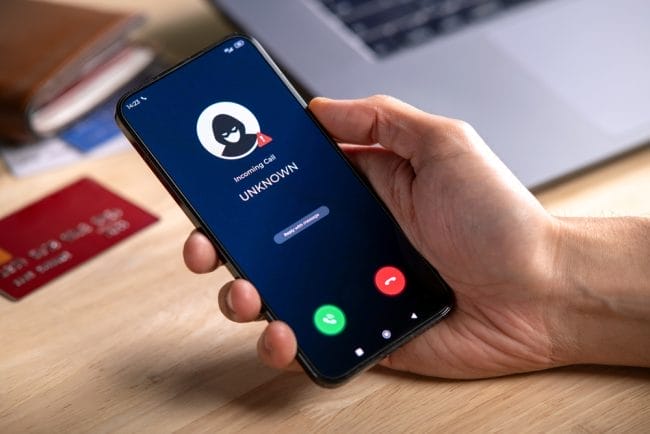
Your phone rings and the caller ID displays the official name of your bank. You answer to hear a calm, professional voice that sounds exactly like a trustworthy representative. This person claims there is a fraudulent charge on your account that requires immediate attention. They ask you to verify a few details to stop the transaction. It feels like a high-stakes situation demanding a quick response. However, the voice on the other end might not belong to a human. AI voice scams are rising sharply, with vishing attacks surging by over 400% as technology evolves. Experts are now pointing to subtle signs that can help you identify these digital impersonators.

The Rise of the Digital Mimic
The technology behind these scams has become incredibly sophisticated. Software can now replicate the tone and accent of a specific person with startling accuracy using only three seconds of audio. Scammers often harvest these voice samples from short clips found on social media platforms like TikTok or Instagram. These systems carry on real-time conversations and react to your emotions. This is a significant leap from the robotic text-to-speech tools used in the past. It is a digital mimic designed to bypass your natural instincts. Your ears may no longer be the most reliable way to verify a caller.
Identifying the Digital Mask
One potential red flag involves the rhythmic pacing of the conversation. While the voice sounds nearly perfect, AI sometimes struggles with the natural flow of human dialogue. The FBI has warned users to look for subtle imperfections like voice call lag time or unnatural movements in digital communication. You might notice a consistent, microscopic delay before the caller responds to your words. This often happens when you ask an unexpected or complex question that requires processing. Alternatively, the voice might interrupt you with a perfectly phrased sentence that feels slightly pre-recorded. These subtle inconsistencies act as a crack in the digital mask. Spotting these patterns can help you protect your finances from a sophisticated fraud attempt.
Strategic Defense Against Voice Cloning
To beat an AI voice scam, you must break the script that the scammer is following. If you suspect you are talking to a bot, ask a nonsensical or highly personal question. A human will react with confusion or humor. An AI will often provide a generic, polite deflection. It might also pause significantly as it tries to process the data. This simple test is one of the most effective ways to expose the fraud in real-time. Furthermore, never provide your PIN or password over the phone, no matter how convincing the voice sounds. You should also hang up immediately if you receive an unsolicited call from your bank. Call the number on the back of your physical debit card instead. The FTC advises that you should never trust caller ID alone, as numbers are easily spoofed. You can also set up a family code word that you use to verify identities during unexpected calls. Finally, enable multi-factor authentication that requires a physical security key or a biometric scan. Do not rely just on a voice or text code. By implementing these layers of security, you make yourself a hard target.
Maintaining Security in a Tech-Driven World
The surge in AI-driven fraud serves as a vital reminder to stay vigilant. Technology continues to change the landscape of security and communication. Scammers will likely refine their tools over time to appear even more convincing. You can protect your peace of mind by staying informed and trusting your intuition. Share these warning signs with your friends and family to help them stay safe. You have the power to remain one step ahead of these machines by using verified communication channels.
Have you ever received a phone call that sounded just a little too perfect to be real? Leave a comment below and share the red flags you noticed.
What to read next…
- “Cybercrime Is America’s #1 Safety Concern—Here Are 6 Ways It’s Evolving”
- Tennessee Property Owners Warned of Rising Ghost Rental Scams
- 10 Scams Hiding on Facebook Marketplace You Should Avoid This February
The post AI Voice Scams Are Spiking — Houston Investigators Reveal the New Clue That Gives Bank Impersonators Away appeared first on Budget and the Bees.