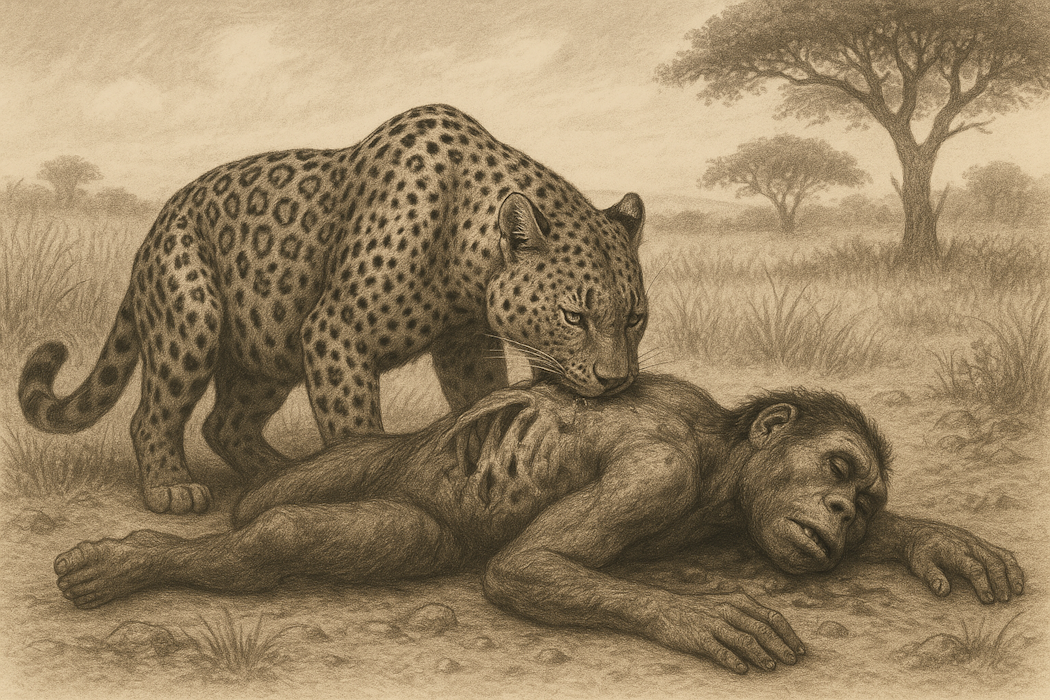
Almost 2 million years ago, a young ancient human died beside a spring near a lake in what is now Tanzania, in eastern Africa. After archaeologists uncovered his fossilized bones in 1960, they used them to define Homo habilis – the earliest known member of our own genus.
Paleoanthropologists define the first examples of the genus Homo based largely on their bigger brains – and, sometimes, smaller teeth – compared with other, earlier ancestors such as the australopithecines – the most famous of these being Lucy. There were at least three types of early humans: Homo habilis, Homo rudolfensis and the best documented species, Homo erectus. At least one of them created sites now in the archaeological record, where they brought and shared food, and made and used some of the earliest stone tools.