Get all your news in one place.
100's of premium titles.
One app.
Start reading
MyLifeXP
MyLifeXP
Lifestyle
Deepak Rajeev

AI Chatbots Boost Mental Health but Hurt Real Bonds, Study Says

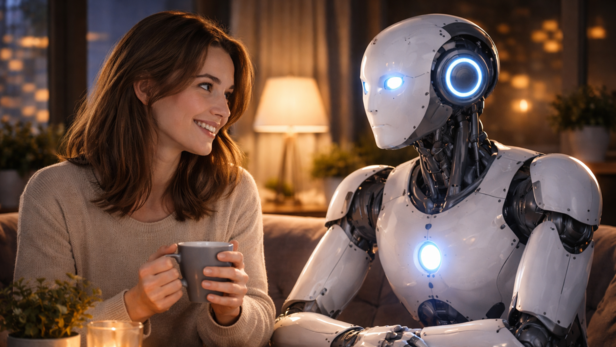
The rise of emotionally intelligent AI chatbots is quietly reshaping how people cope with loneliness, anxiety and emotional distress. But a new study reveals a striking contradiction: while these AI companions can make you feel better, they may also be pulling you away from real human relationships. The research highlights a growing tension in modern life- between digital comfort and genuine connection.

AI Companions Are Becoming Emotional Support Systems

AI chatbots mimicks emotional intelligence

Modern AI chatbots are no longer just tools- they are designed to understand and respond to human emotions. By mimicking emotional intelligence, these systems can recognise feelings, adapt to user moods and simulate empathy in conversations. According to a study, interacting with such AI can “boost a person’s mental health” and “alleviate internal distress,” making them especially appealing to those experiencing loneliness or stress.

The findings were published in the journal Psychology & Marketing, where researchers explored how people increasingly turn to AI companions for emotional support. Apps like Replika and Wysa, for instance, act as digital friends- offering a safe, judgment-free space where users feel heard and understood.

The Hidden Cost: Real-World Relationships Decline

Findings were published in Psychology & Marketing Journal

However, the same study uncovers a troubling downside. While users may feel emotionally supported, their real-world social ties begin to weaken. The research shows that these AI interactions can “simultaneously isolate” individuals from genuine human relationships, creating a hidden trade-off between comfort and connection. As users spend more time engaging with AI, they may gradually withdraw from friends, family and social environments. What begins as a coping mechanism can slowly reshape social behavior, reducing the effort invested in maintaining real relationships.

Why AI Feels So Comforting- But Incomplete

AI chatbots are endlessly patient & non-judgmental

One reason AI chatbots are so effective is their design. They are endlessly patient, non-judgmental and often highly agreeable. Unlike human interactions- which can be complex, demanding and sometimes uncomfortable- AI offers frictionless conversations that adapt entirely to the user’s emotional needs. But this is also where the problem lies. Real relationships involve disagreement, growth and emotional depth, while AI interactions often remain controlled and affirming. This can create an illusion of connection- one that feels real, but lacks the authenticity and mutual effort that define human bonds.

A Double-Edged Future for Mental Health

The study ultimately presents emotionally intelligent AI as both a breakthrough and a warning. On one hand, these tools offer accessible mental health support to millions, especially those who might not seek traditional help. On the other, they risk replacing meaningful human interaction with artificial companionship.

Researchers emphasise that AI should complement- not replace- real relationships. Human connection, with all its imperfections, remains essential for long-term well-being. As AI continues to evolve, the challenge will be finding balance: using technology to heal, without letting it quietly erode the very social bonds that make us human.

Unlock insightful tips and inspiration on personal growth, productivity, and well-being. Stay motivated and updated with the latest at My Life XP.

Sign up to read this article
Read news from 100's of titles, curated specifically for you.
Already a member? Sign in here
Related Stories
Top stories on inkl right now
One subscription that gives you access to news from hundreds of sites
Already a member? Sign in here
Our Picks
Fourteen days free
Download the app
One app. One membership.
100+ trusted global sources.