
Get all your news in one place.
100's of premium titles.
One app.
Start reading
The Conversation
The Conversation
Stephen D. Turner, Associate Professor of Data Science, University of Virginia

AI can design and run thousands of lab experiments without human hands. Humanity isn’t ready for the new risks this brings to biology

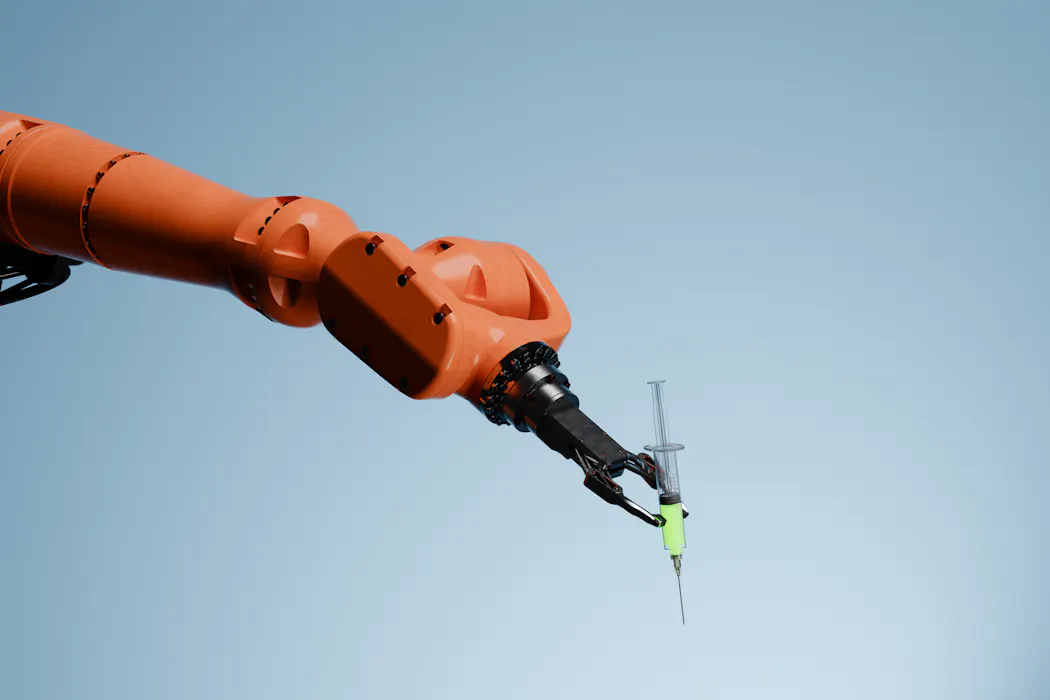
Robotic cloud laboratories powered by AI can carry out experiments remotely and cut costs. J Studios/DigitalVision via Getty Images

Artificial intelligence is rapidly learning to autonomously design and run biological experiments, but the systems intended to govern those capabilities are struggling to keep pace.

AI company OpenAI and biotech company Ginkgo Bioworks announced in February 2026 that OpenAI’s flagship model GPT-5 had autonomously designed and run 36,000 biological experiments. It did this through a robotic cloud laboratory, a facility where automated equipment controlled remotely by computers carries out experiments. The AI model proposed study designs, and robots carried them out and fed the data back to the model for the next round. Humans set the goal, and the machines did much of the work in the lab, cutting the cost of producing a desired protein by 40%.

Sign up to read this article
Read news from 100's of titles, curated specifically for you.
Already a member? Sign in here
Related Stories
Top stories on inkl right now
One subscription that gives you access to news from hundreds of sites
Already a member? Sign in here
Our Picks
Fourteen days free
Download the app
One app. One membership.
100+ trusted global sources.







