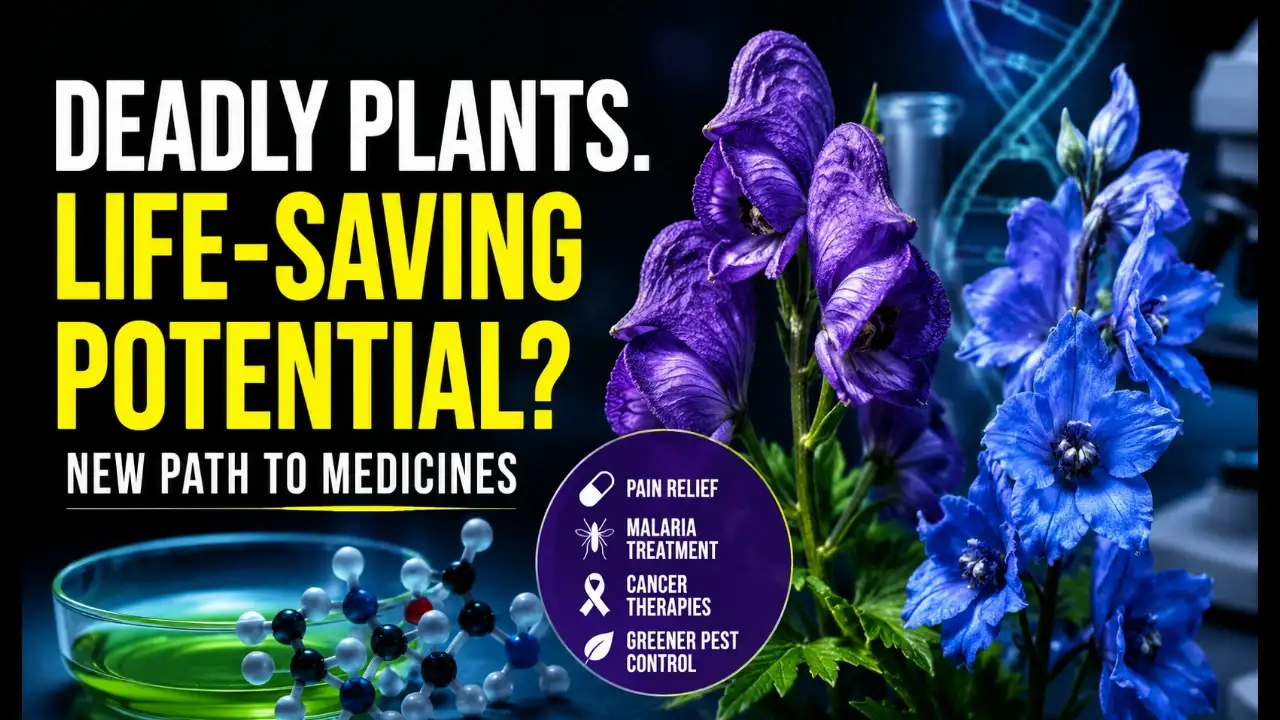
Plants that can kill you might soon save your life. For decades, wolfsbane and larkspur were famous only for their lethal poisons. Now, scientists have cracked their secret biological code.
In a major laboratory breakthrough, researchers mapped the exact enzymes these deadly plants use to build complex chemistry. They even reproduced parts of the pathway inside bioengineered yeast and tobacco plants.

This milestone unlocks the biosynthesis of diterpenoid alkaloids . These rare, intricate plant chemicals hold incredible therapeutic power. They interact directly with nerve cells, alter pain signals, and strike aggressive pathogens. By recreating this metabolic pathway in a controlled lab setting, scientists can finally harness these molecules without toxic side effects.
The real-world impact is massive. This discovery opens clean, scalable routes for non-opioid painkillers, next-generation malaria treatments, targeted cancer drugs, and eco-friendly pesticides. It also protects wild ecosystems by making wild plant harvesting completely obsolete.
This advance isn't a finished pill on pharmacy shelves today. It is something better: a revolutionary platform for medical discovery. By turning deadly plant toxins into lab-grown compounds, science is converting nature's most notorious weapons into humanity's newest life-saving cures.
The real breakthrough is understanding the plant's chemistry
The research, published in Molecular Plant in 2026, identified six enzymes involved in the early stages of producing atisinium , a diterpenoid alkaloid associated with both Aconitum and Delphinium species.