Get all your news in one place.
100’s of premium titles.
One app.
Start reading

After Super Bowl ad, consumers rethink the tradeoffs of home surveillance tech

Sentiment around widely used home surveillance tools is souring as high-profile cases reveal just how deeply law enforcement can tap the data they generate.

Why it matters: What once felt like a personal security upgrade now feels to many like participation in a broader law enforcement apparatus they didn't sign up for.


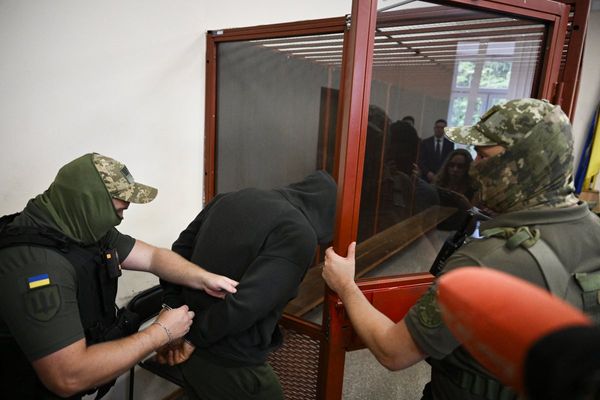
  • New AI advancements have made it easier to search, cross-reference and retain massive amounts of video and license plate data, raising the stakes of what once felt like localized neighborhood tools.

Driving the news: A Super Bowl ad for Amazon's Ring doorbell camera touting the ability of the device's new Search Party feature to locate lost dogs has spurred widespread backlash.

  • But many viewers assumed the tool was also able to track and identify people who walk by their front doors.
  • Customers posted about destroying their Ring doorbell cameras. Reddit users claimed they were requesting refunds from Amazon.
  • Even a popular social media account that rates dog photos posted a video accusing the company of pushing a "lucrative mass surveillance network" that turns "private homes into surveillance outposts."

In a statement, Ring spokesperson Yassi Yarger said that the company is focused on "giving camera owners context about critical events in their neighborhoods," and that Search Party "doesn't process human biometrics or track people" and is only designed to track lost dogs.

  • "Camera owners have always been able to share their videos with others if they choose," Yarger said. "We're using AI to give camera owners relevant context about when sharing might help those in their community — while keeping that choice in their hands, not ours."

By the numbers: In the week after the ad aired, nearly 50% of the social media conversations about Ring were considered negative, vs. 14% that were positive, according to data shared by PeakMetrics.

The big picture: The Super Bowl ad came at a time of simmering concerns around the partnerships personal surveillance tools have with law enforcement.

  • Earlier this week, FBI Director Kash Patel said agents investigating the disappearance of Nancy Guthrie were able to "actually excavate material that people would think would normally be deleted and no one would look for" from her Nest smart doorbell camera.
  • Flock Safety, the AI-powered license plate reader that's been rapidly expanding across American cities, is reportedly allowing ICE to tap into its databases — prompting some cities to postpone or cancel their contracts. On Thursday, Amazon canceled its partnership with Flock Safety. The companies said the partnership would "require significantly more time and resources than anticipated." "This integration was never live, and no videos were ever shared between these services," Yarger said.
  • Protesters have also been calling on Palantir, which provides AI surveillance technologies, to end its contracts with ICE. (Palantir CEO Alex Karp has argued that protesters should be "protesting for more Palantir.")

Catch up quick: For years, consumers largely accepted the privacy tradeoffs that came with internet-connected cameras.

  • Law enforcement has been using footage from the devices to aid investigations for years. Some deals allow users to voluntarily share their videos with law enforcement, and others require officials to submit formal legal requests.
  • But despite the privacy concerns, adoption of doorbell cameras has continued to rise across the United States as users seek to protect their homes from break-ins and other crimes.
  • The same month in 2019 that reports found that hackers were breaking into Ring doorbells, the company reported record sales.
  • Flock Safety, which was founded in 2017, is in more than 6,000 communities and cities across the United States, according to a company fact sheet.

The other side: Law enforcement argues these technologies help to speed up criminal investigations.

  • While announcing the Flock partnership cancellation, Ring reiterated that users have full control over whether they want to share specific videos with law enforcement.
  • The blog post also included a celebration of those who opted to share videos in response to the December shooting at Brown University. "One video identified a new key witness, helping lead police to identify the suspect's vehicle and solve the case," the company wrote.

Yes, but: Privacy advocates have argued the data shared through surveillance technologies are being used in some cases to prosecute protesters and surveil activists.

What to watch: Even as some consumers ditch the technologies, the surveillance ecosystem they helped build isn't going away.

Go deeper: Protesters go digital against ICE

Sign up to read this article
Read news from 100’s of titles, curated specifically for you.
Already a member? Sign in here
Related Stories
Top stories on inkl right now
One subscription that gives you access to news from hundreds of sites
Already a member? Sign in here
Our Picks
Fourteen days free
Download the app
One app. One membership.
100+ trusted global sources.