On 8 January, thousands of supporters of Brazil’s defeated former president, Jair Bolsonaro, stormed the country’s Congress, Supreme Court, and presidential offices, rallying against what they falsely claim was a rigged election. The scenes, which took place almost exactly two years after the US Capitol attack on 6 January 2021, when thousands of Donald Trump backers illegally entered the Washington building, are a sign of the immense challenge that Lula faces as he seeks to reunite a sharply divided society just a week into administration.
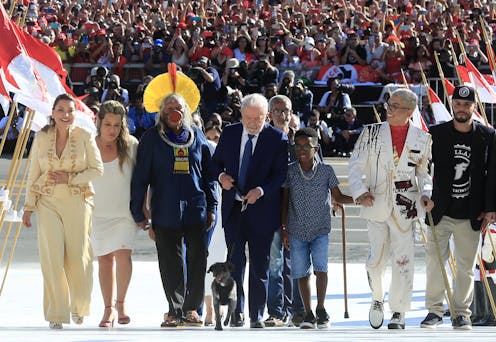
In his inauguration speech on 1 January, President Luiz Inácio Lula da Silva spoke alongside an Indian chief, a disabled boy and a metal worker, explicitly and implicitly putting inclusion and social unity at the centre of his agenda. As a scholar studying intergroup relations and discrimination in Brazil, I can attest that Lula’s approach will radically differ from Bolsonaro’s.