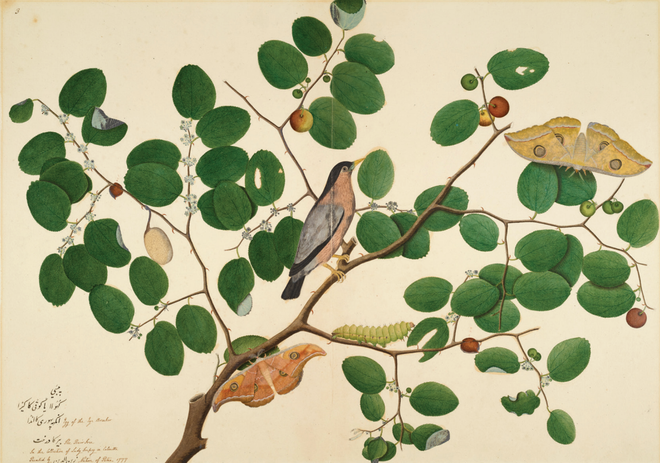
An outstanding variety of Indian historical textiles in silk have fascinated the world for centuries. They comprise well-known private and public collections in museums in the country and abroad. But little is known of the sources and histories of the yarns used in them. In a scenario primarily dominated by the histories of cotton and its role in shaping trade, wealth and colonisation in the subcontinent, Aarathi Prasad’s Silk — A History in Three Metamorphoses opens up exciting new areas for enquiry and research.
To researchers and scholars, the book presents new information guided through fresh references as well as those markers that they may be familiar with: findings in excavated sites of the Harappan civilisation, the fabled silk route, documentation of Indian fabrics by British colonial authorities, and the Great Exhibitions in Europe. Beyond India, the breathtaking sweep of this book presents never-before published information and insights on the histories of silk across the globe — from the Americas, Europe and Africa to other parts of Asia — covering events from ancient times to the contemporary. The selection of accompanying illustrations greatly help visualise many of the observations that the author brings to the book’s narrative.