Thirty-two students, professors, and stockroom employees at a Utah university swallowed or received a ten-day course of preventive antibiotics for a bacterial exposure that never happened. Two of them went to an emergency department with headaches and underwent spinal taps. Weeks later, laboratory testing showed the organism they had handled was harmless.
The CDC published the full account in its Morbidity and Mortality Weekly Report, with the investigation carried out by the Utah Department of Health and Human Services, the Utah Public Health Laboratory, and Brigham Young University in Provo. It is an unusual kind of public health story. Nobody was infected, nobody was hospitalized with disease, and the response worked exactly as designed. The harm came from the medical care itself, delivered to people who turned out not to need it.
For families with college students in Provo, Salt Lake City or any campus running an undergraduate microbiology lab, the practical question is not whether a dangerous germ is circulating. It is what happens when a university cannot say with confidence what is inside its own freezer.
What Actually Happened in the Classroom
On September 22, 2025, stockroom employees began preparing bacterial isolates for a multiday identification exercise. Students were supposed to receive Plesiomonas shigelloides, a low-risk organism commonly used to teach diagnostic technique. The employees wore gloves and lab coats but did not use respiratory protection, eye protection, or a biological safety cabinet.
Students started working with the isolates on September 29. By October 1, every student group had reached the same conclusion, and it was not the expected answer. The organism was a Gram-negative diplococcus that tested positive for oxidase and catalase, with sugar fermentation patterns matching Neisseria meningitidis, the bacterium that causes meningococcal disease.
Instructors could not fault the students' work. The university then searched the stockroom freezer and found a vial labeled N. meningitidis that should not have been in a teaching inventory. That vial was discarded without ever being tested. Utah health officials were notified on October 2.
Why Officials Gave Antibiotics Before They Had Answers
Health officials identified 33 people who had handled the unknown organism. Fifteen of them, or 45 percent, had documentation of at least one dose of MenACWY or MenB vaccine. That did not change the recommendation. CDC advises postexposure prophylaxis after any meningococcal exposure regardless of vaccination status, because the vaccines do not cover every strain and do not reliably prevent carriage.
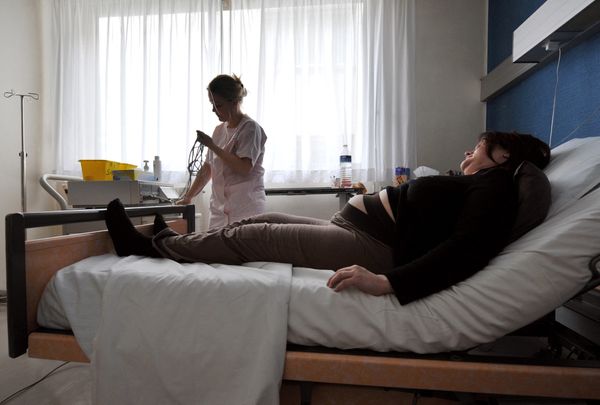
Officials recommended ciprofloxacin or ceftriaxone plus ten days of symptom monitoring. Thirty-two people, or 97 percent, received the antibiotics within 14 days. One person declined. Two people with headaches, one exposed student and one household contact of an employee, sought emergency care and received lumbar punctures. Neither was diagnosed with meningococcal infection. No one else developed symptoms.
The low threshold is deliberate. Meningococcal disease can move from first symptom to death within hours, and laboratory-acquired cases, including fatal ones, have been documented. Waiting for confirmatory testing before starting antibiotics would have been the more dangerous choice.
The Testing That Closed the Case
The Utah Public Health Laboratory received two of the suspected isolates on October 6. Mass spectrometry results came back on October 7, and whole-genome sequencing on October 8. Both identified the organism as Neisseria sicca, a bacterium that lives in the upper respiratory tract of healthy people and does not cause disease in people with normal immune systems.
The state lab then repeated the same sugar fermentation tests the students had run and got the same misleading result. The explanation was that this particular N. sicca strain was an atypical fermenter, producing a biochemical profile that mimicked its dangerous relative. The students had not made an error. The test itself could not tell the two apart.
Because N. sicca is not pathogenic, no further medical intervention was needed. The CDC report states plainly that although no one was exposed to N. meningitidis, the people involved "did experience unnecessary interventions, including invasive procedures and antibiotic PEP."
The review of the stockroom found the underlying problem. Investigators identified inadequate controls for identifying, labeling, storing and separating biological materials by risk level, along with limited supervision of stockroom staff, insufficient availability and use of protective equipment, and poor documentation of what was in inventory and where it had gone. The university has since overhauled documentation, supervision and training, inventoried existing stocks, and moved to separate research cultures from teaching cultures.
What This Means for Students, Parents and Other Campuses
The realistic risk to any individual student remains low, and this event should not discourage anyone from taking a lab science course. But two groups have a genuine reason to pay attention.
The first is students enrolled in hands-on microbiology courses this fall. It is reasonable to ask an instructor or department whether teaching stocks are inventoried separately from research stocks, and what protective equipment is required for isolate preparation. Those are ordinary safety questions, not accusations.
The second is anyone who receives a postexposure antibiotic recommendation after a suspected workplace or classroom exposure. Ciprofloxacin and ceftriaxone are not trivial medications. They carry real side effects, and they were given here to 32 people who did not need them. Nobody should stop or skip a prescribed course based on a news article, and the correct response to a genuine suspected exposure is still to take the medication as directed. The point is that the cost of an inventory failure lands on the bodies of students, not on a spreadsheet.
For any student who develops fever, severe headache, neck stiffness, confusion or a rash that does not fade under pressure, urgent medical evaluation is warranted regardless of vaccination status. Those symptoms should never be managed by waiting.
Utah health officials and the university have completed their after-action review. The CDC report recommends that instructional laboratories and stockrooms nationwide establish clear inventory controls, documented chains of custody, required safety equipment, and mandatory training in safe handling. Whether other universities adopt those measures before the fall semester is the open question. MedicalDaily will monitor for follow-up guidance from CDC and campus health authorities.
Frequently Asked Questions
Was anyone actually exposed to meningitis bacteria? No. Whole-genome sequencing and mass spectrometry at the Utah Public Health Laboratory identified the organism as Neisseria sicca, which is not pathogenic in people with normal immune systems. No one contracted meningococcal disease.
Why did 32 people take antibiotics if nothing was wrong? The antibiotics were given before testing was complete. Meningococcal disease can become fatal within hours, so CDC guidance calls for prompt preventive antibiotics after any suspected exposure rather than waiting for confirmation.
Did the students make a mistake in the lab? No. The Utah Public Health Laboratory repeated the students' sugar fermentation tests and got the same misleading result. The strain was an atypical fermenter that mimicked the biochemical profile of a dangerous organism.
Does the meningococcal vaccine mean you can skip preventive antibiotics? No. CDC recommends postexposure prophylaxis regardless of vaccination status. In this event, 45 percent of those involved had documented vaccination and were still advised to take antibiotics.
What went wrong at the university? Investigators found inadequate inventory controls for labeling, storing, and separating biological materials, limited supervision of stockroom employees, insufficient use of protective equipment, and poor documentation of sample inventory and chain of custody.
Should students avoid microbiology lab courses? No. The individual risk is low, and this was a systems failure rather than a hazard inherent to coursework. Students may reasonably ask their department how teaching stocks are inventoried and what protective equipment is required.
What symptoms would warrant urgent care after a suspected exposure? Fever, severe headache, neck stiffness, sudden confusion, sensitivity to light, or a rash that does not fade under pressure all warrant immediate medical evaluation. Do not wait to see whether symptoms improve.