Get all your news in one place.
100's of premium titles.
One app.
Start reading
The Economic Times
The Economic Times
Muskan Singh

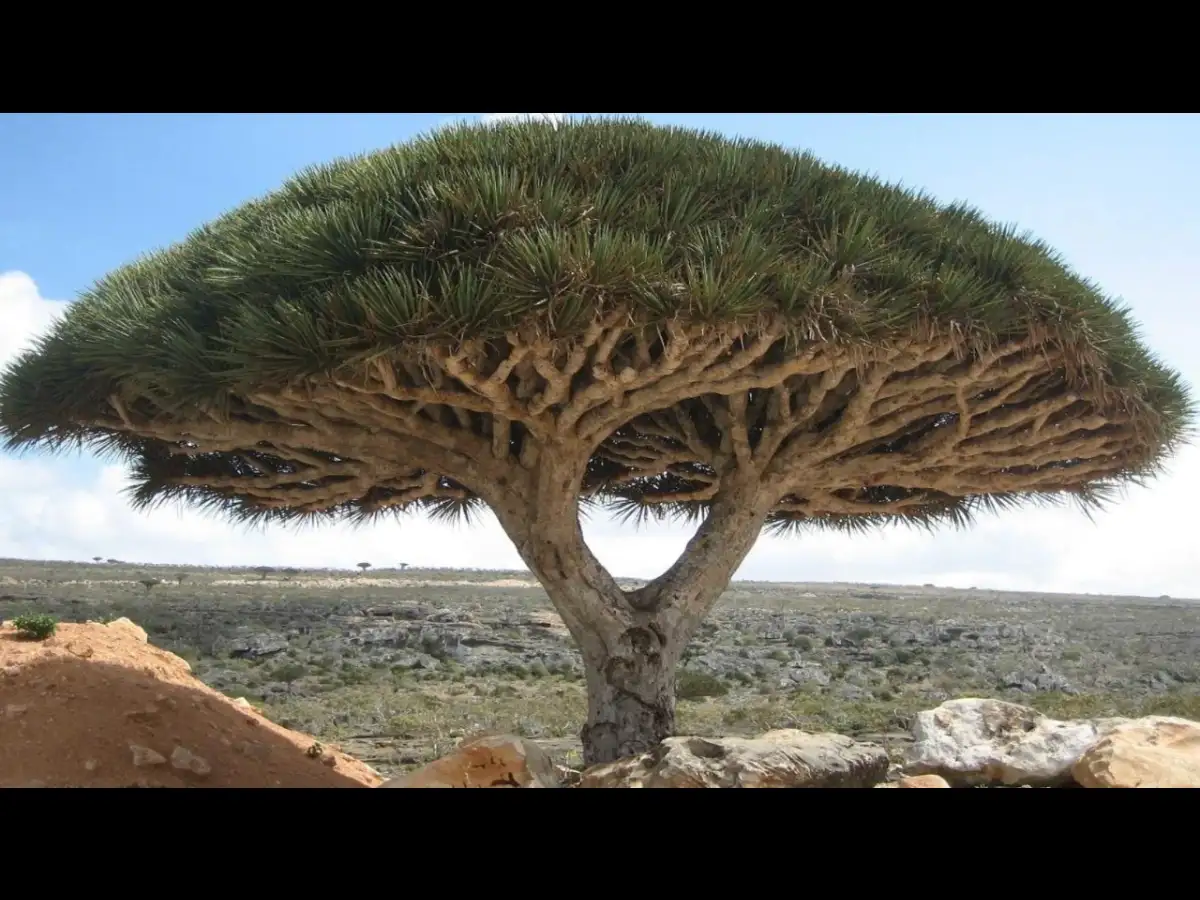
A tiny Yemeni island, Socotra’s strange dragon’s blood trees harvest moisture from fog to survive extreme aridity; 90% of its reptiles and 95% of its land snails are found nowhere else, creating an ecosystem unlike any other

At the entrance to the Gulf of Aden lies a Yemeni island unlike almost anywhere else on Earth. Socotra is famous for its strange plants, unusual animals and species that evolved in isolation. Its dragon’s blood trees appear almost otherworldly, while its cucumber trees have thick, water-storing trunks. Much of Socotra’s wildlife is equally unique, with 90% of its reptiles and 95% of its land snails found nowhere else, as per a report by the BBC Wildlife.

READ ALSO: Texas used towering wind turbines as accidental frost fans based on a 2019 NASA observation; the result warmed ground temperatures 4–7°F on winter nights

Why is Socotra so different?

Socotra sits off the Horn of Africa and has been separated from the ancient supercontinent Gondwana for millions of years. Over time, its isolation allowed plants and animals to follow their own evolutionary paths.

The island is sometimes called the Galápagos of the Indian Ocean. It has an estimated 825 plant species, with about a third found only on Socotra.

Its unusual landscape has also inspired centuries of stories. Ancient mariners spoke of trees that released dragon’s blood. Herodotus linked the island with the phoenix, while Marco Polo described its powerful sorcerers.

The most famous of Socotra’s strange plants is the dragon’s blood tree, Dracaena cinnabari . When its pale, ashen bark is cut, a deep crimson resin flows from it.

According to an old story, the first trees grew from the blood of a dragon killed by an elephant.

The trees themselves have developed a distinctive shape suited to Socotra’s dry conditions. Mature specimens have broad, umbrella-like crowns packed with stiff leaves. Their roots take up water from the soil, while their canopies can collect moisture from fog and mist and direct it toward the ground.

READ ALSO: In 1836, a pangolin from Nepal entered a London museum collection. 190 years later, scientists sequenced its preserved DNA and confirmed Manis aurita as a distinct species, giving conservationists a new tool against poaching

What makes the cucumber tree unusual?

Socotra has another plant that sounds almost impossible. The Socotra cucumber tree, Dendrosicyos socotranus , is the only tree belonging to the cucumber family.

Unlike its familiar relatives, it does not grow as a scrambling vine. Instead, it has a thick, bottle-shaped trunk that stores water. Its fruit is also different from the cucumbers people normally picture, producing small orange berries instead.

The desert rose, Adenium obesum , has another unusual strategy for surviving dry conditions. It grows with a swollen base and regularly drops its leaves to limit water loss. The leaves appear mainly at the ends of its branches, while its grey bark takes over the job of photosynthesis.

READ ALSO: Put rosemary and water in a jar: Why people recommend this simple bedroom trick for natural freshness

Which animals exist only on Socotra?

The island's unusual plants are matched by its wildlife. Around 95% of Socotra's land snails and 90% of its reptiles are found nowhere else. Six bird species are also endemic to the island. Among them is the Socotra sunbird, Chalcomitra balfouri , which feeds on the tubular flowers of endemic succulents.

Then there is the Socotra chameleon, Chamaeleo monachus . The hissing reptile was once believed to have magical abilities, adding another layer to the island's long history of legends. Socotra's isolation has therefore produced an ecosystem where unusual plants and animals are not isolated curiosities. They are part of a wider collection of species that evolved together in an environment unlike any other.

Today, Socotra is a UNESCO World Heritage Site, but its unusual ecosystems face pressure from development, invasive species and climate change.

The island's famous dragon's blood trees, water-storing cucumber trees and endemic reptiles and snails have survived through an extraordinary evolutionary history. Their future, however, depends on conservation rather than the legends that have surrounded Socotra for centuries.

FAQs

Why are Socotra's dragon's blood trees famous?

Their bark releases a crimson resin, and their canopies collect moisture from fog.

How many Socotra reptiles are endemic?

About 90% are found only on the island.

Sign up to read this article
Read news from 100's of titles, curated specifically for you.
Already a member? Sign in here
Related Stories
Top stories on inkl right now
One subscription that gives you access to news from hundreds of sites
Already a member? Sign in here
Our Picks
Fourteen days free
Download the app
One app. One membership.
100+ trusted global sources.