Get all your news in one place.
100’s of premium titles.
One app.
Start reading
Reason
Reason
C.J. Ciaramella

A Tiny Alabama Town Ran an Outrageous Speed Trap. Now It Will Pay $1.5 Million To Settle a Lawsuit.

The hamlet of Brookside, Alabama, has agreed to pay $1.5 million to settle a civil rights lawsuit three years after local news investigations revealed that it was running a predatory speed trap.

The Institute for Justice, a public interest law firm that sued Brookside in 2022 on behalf of motorists who said they were framed and swindled by the town, announced on Monday that it had reached a settlement agreement that would require substantial transparency and policing reforms, in addition to payments to the class members.

Brookside became a national news story in 2022 after the Birmingham News reported that the small town's unusually large police force was bankrolling the city budget by fining people traveling through and towing their cars under what motorists claimed were fabricated charges.

It was one of the worst cases of profit-motivated policing in recent memory: The news investigation found that Brookside, a place with no traffic lights and one commercial property, a Dollar General store, "collected $487 in fines and forfeitures for every man, woman and child." By 2020, two years after Brookside expanded its police force from one officer to nine and began aggressively pursuing traffic enforcement, income from fines and forfeitures comprised 49 percent of the town's budget. Motorists alleged that they were getting pulled over for fake traffic violations, slapped with bogus charges, then forced to pay thousands in fines and towing fees after being convicted in Brookside's municipal court.

The investigations led to the resignation of the Brookside police chief, a Pulitzer Prize for the reporters, and a class action lawsuit filed by the Institute for Justice.

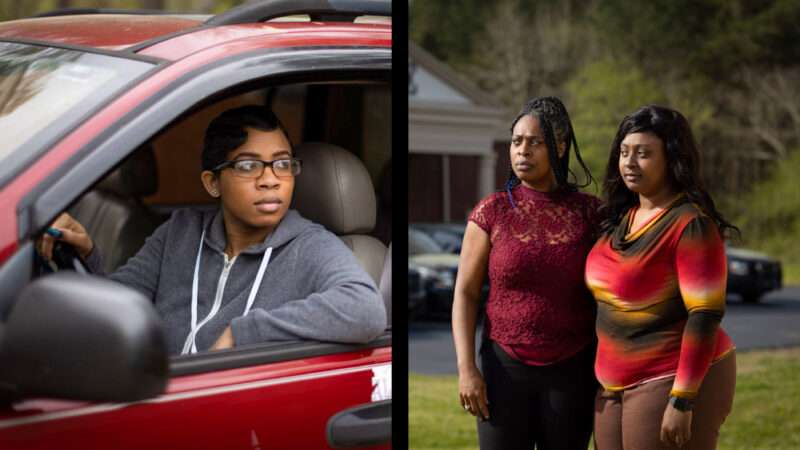
"Police are supposed to protect and serve, not ticket and collect," Chekeithia Grant, one of the named plaintiffs in the case, said in an Institute for Justice press release Monday. "When that gets flipped around, people suffer. We brought this case to remind Brookside of that, and to get the town on the right track. This settlement should do that. And it should be a warning to other towns."

According to the lawsuit, Grant and her daughter were both arrested by Brookside police following a traffic stop and falsely charged with possession of marijuana, possession of drug paraphernalia, obstruction of government operations, and resisting arrest. Both were convicted in the Brookside Municipal Court, but town prosecutors agreed to dismiss all the charges after the two women appealed to a county court. But by then, they had already paid roughly $2,000 in fines and fees to Brookside.

Brookside's racket was so outrageous that the Justice Department filed a "statement of interest" in support of the Institute for Justice's lawsuit, noting the perverse profit incentives that such schemes create:

Judges should not profit from their decisions in cases. Nor should funding for prosecutors or police officers depend substantially on unnecessarily aggressive law enforcement aimed at generating income through fines and fees. Criminal justice systems tainted by these unreasonable incentives stand to punish the poor for their poverty and put law enforcement at odds with the communities they are meant to serve.

However, Brookside was just a particularly odious example of the classic American speed-trap town, a municipality that survives by latching onto a nearby highway and gorging itself, like a bloated tick, on traffic enforcement revenue.

States have often responded to negative publicity from speed-trap towns with legislative reforms, and Alabama was no different. A few months after Brookside's practices were exposed, the Alabama state legislature passed a bill capping the revenue municipalities can keep from fines to just 10 percent of their general operating budgets.

In addition to the $1.5 million payout to the lawsuit class, the proposed settlement will require Brookside to end many of the financial incentives tied to its traffic enforcement, such as repealing its fee to retrieve towed cars. The Brookside Police Department would also stay off the nearby interstate for the next 10 years, except for emergency response, and there would be 30 years of strict caps on how much revenue the town could keep from policing and code enforcement.

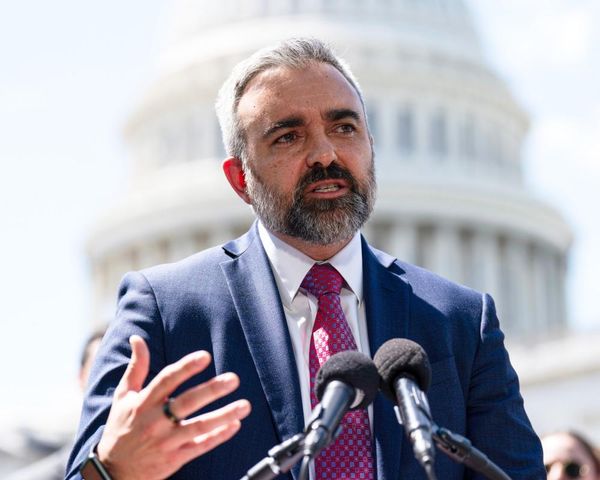
"Systems that permit policing for profit inevitably result in abuse," Institute for Justice senior attorney Sam Gedge said in a press release. "The settlement we've proposed compensates those impacted by Brookside's system and keeps it from recurring."

The settlement proposal must still be approved by a federal court.

The post A Tiny Alabama Town Ran an Outrageous Speed Trap. Now It Will Pay $1.5 Million To Settle a Lawsuit. appeared first on Reason.com.

Sign up to read this article
Read news from 100’s of titles, curated specifically for you.
Already a member? Sign in here
Related Stories
Top stories on inkl right now
One subscription that gives you access to news from hundreds of sites
Already a member? Sign in here
Our Picks
Fourteen days free
Download the app
One app. One membership.
100+ trusted global sources.