
Get all your news in one place.
100's of premium titles.
One app.
Start reading
Fit & Well
Fit & Well
Health
Lou Mudge

A Pilates instructor with over 20 years of experience says these are the six exercises she wishes desk workers would do to strengthen and stabilize their shoulders

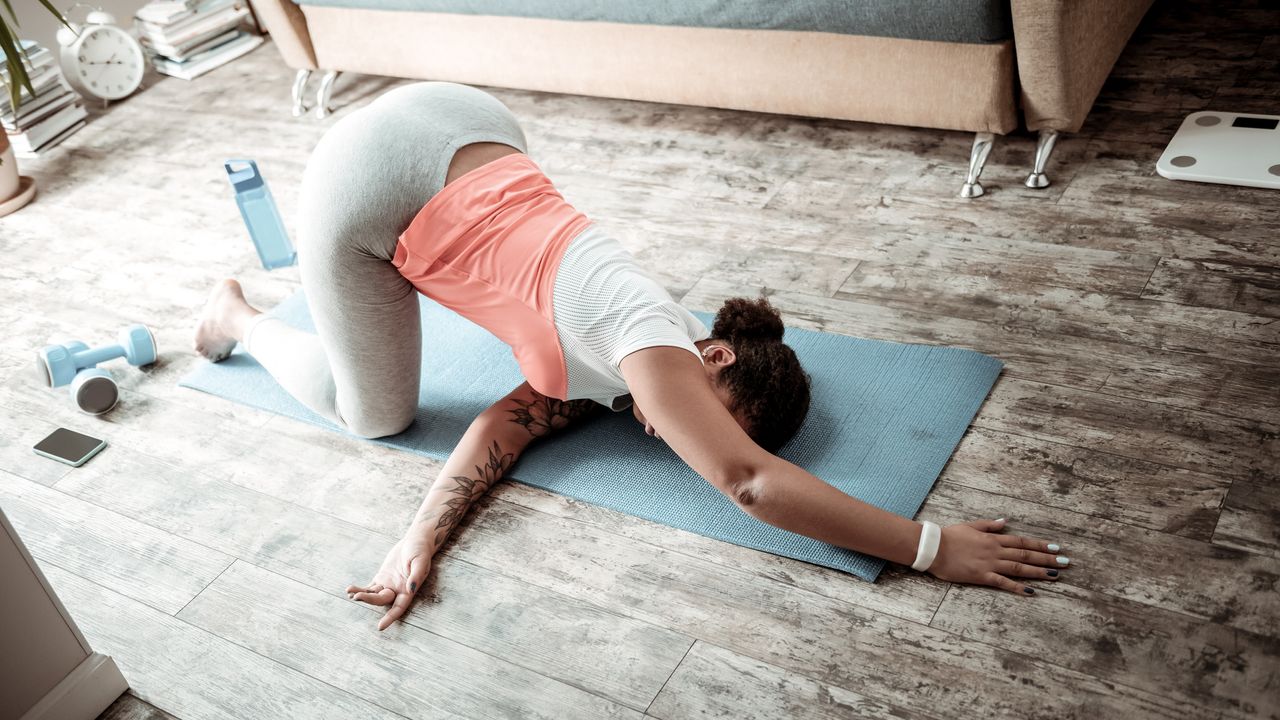
Woman in thread the needle pose in a domestic setting.

You may not have the literal weight of the world on your shoulders, but there’s a nugget of truth to the saying, because it’s one of the most common places for people to hold stress-related muscle tension.

Your shoulders also take the brunt of working long hours at a desk.

To top it all off, “the shoulder is one of the most mobile joints in the body, which also makes it one of the most vulnerable,” says Pilates instructor and Balanced Body educator Portia Page.

“Tight muscles, poor posture, weakness in the upper back, and limited thoracic mobility can all contribute to shoulder soreness.”

If you are experiencing soreness in this area, Page has a threefold approach to tackling it.

She recommends improving the mobility of the joint, strengthening the supporting muscles to help stabilize it, and stretching to release any stored tension.

Page suggests completing the following six exercises to relieve tension in sore shoulders, and to build the strength and mobility you need to prevent recurrence.

Page advises to “stop if pain increases, becomes sharp, or radiates down the arm.”

1. Shoulder roll

Sets: 2-3 Reps: 10 each direction Rest: 30sec

Page says: “This simple movement increases circulation, reduces tension, and restores mobility to the upper trapezius, levator scapulae, and muscles surrounding the shoulders.”

How to do it:

  • Sit or stand with a straight back and your arms held loosely at your sides.
  • Slowly lift both shoulders toward your ears.
  • Roll them backward, squeezing your shoulder blades together.
  • Continue the circle by lowering your shoulders down and forward, moving slowly and smoothly.
  • Do all your reps, then reverse direction.

Targets:

2. Wall angel

Sets: 2-3 Reps: 8-10 Rest: 45sec

Page says: “Wall angels help improve posture, strengthen upper-back muscles, and encourage healthy shoulder and overall upper body movement—an area often neglected when shoulders become sore.”

How to do it:

  • Stand with your head, upper back and hips resting against a wall.
  • Bend your elbows to 90° and bring your arms out to the sides, with your shoulders and arms against the wall, palms facing forward.
  • Slowly slide your hands up the wall overhead, extending your arms, pausing at the top of the movement for a single breath.
  • Reverse the movement back to the starting position.

Form tips: Keep your wrists and elbows lightly touching the wall if possible and maintain gentle abdominal activation throughout.

Targets:

3. Thread the needle

Sets: 2-3 Hold: 20-30sec each side Rest: 15sec between sides

Page says: “Many shoulder issues originate from stiffness in the upper back and thoracic spine.

“This stretch improves rotation around the stable shoulder and arm while gently opening the posterior shoulder and chest of the moving arm.”

How to do it:

  • Get on all fours with your hands under your shoulders and your knees under your hips.
  • Inhale and rotate your torso to face right, lifting your right arm to vertical.
  • Exhale and rotate your torso to face left, threading your right arm between your left hand and left knee to the left side.
  • Allow your right shoulder and the side of your head to rest lightly on the floor, breathing deeply and relaxing into the stretch.
  • Return to the starting position and repeat on the opposite side.

Targets:

  • Posterior deltoid
  • Rhomboids
  • Rotator cuff muscles
  • Thoracic spine

4. Scapular retraction and protraction (standing)

Sets: 2-3 Reps: 12-15 Rest: 30sec

Page says: “Strong and mobile shoulders provide a stable foundation for healthy shoulder movement.

“Many people experiencing shoulder soreness have weak or underactive postural muscles, which this exercise aims to correct.”

How to do it:

  • Sit or stand with a straight back and your arms extended in front of you at shoulder height.
  • Gently draw your shoulder blades together (retraction), moving your arms backward slightly.
  • Hold briefly, then separate your shoulder blades like an elevator door opening (protraction), moving your arms forward slightly.

Form tip: Avoid arching your back or shrugging your shoulders.

Targets:

  • Rhomboids
  • Middle trapezius
  • Lower trapezius

5. Scapular retraction and protraction (tabletop)

Sets: 2-3 Reps: 12-15 Rest: 30sec

“This variation loads the upper body, creating a different sensation in the shoulders as the body is in a different alignment with gravity.”

How to do it:

  • Get on all fours with your hands under your shoulders and your knees under your hips.
  • Keeping your arms straight and your torso horizontal throughout, bring your shoulder blades towards one another (retraction), lowering your chest slightly.
  • Pause, then move your shoulder blades away from each other (protraction) by pushing the floor away, lifting your chest slightly.

Targets:

  • Rhomboids
  • Middle trapezius
  • Lower trapezius

6. Telescope to pinwheel

Sets: 2 Reps: 6-10 each side Rest: 30sec

Page says: “The shoulder doesn’t work alone, thoracic spinal mobility is essential for comfortable shoulder movement.

“This exercise improves rotation and torso flexibility while reducing tension across the front and back of the shoulders.”

How to do it:

  • Lie on your left side with your legs together and your knees bent, and both arms extended in front of you with your palms together.
  • Telescope: Engage your core and lower your right shoulder toward the floor, sliding your right palm forward.
  • Reverse the movement of your right shoulder, moving it to rest on the floor behind you, sliding your right hand across your body and extending it to the right.
  • Pause here, then reverse the movement back to the start.
  • Pinwheel: Engage your core and lower your right shoulder toward the floor, sliding your right palm forward.
  • Sweep your right arm overhead and to the floor behind you.
  • Continue, sweeping your hand past your hip and back to the starting position.
  • Alternate between the two movements, completing all reps on one side before switching.

Form tips: Keep your hips stable, rotating from your torso and shoulders. Follow your moving hand with your eyes.

Targets:

  • Pectoralis major and minor
  • Anterior shoulder
  • Thoracic spine
  • Upper back musculature
Sign up to read this article
Read news from 100's of titles, curated specifically for you.
Already a member? Sign in here
Related Stories
Top stories on inkl right now
One subscription that gives you access to news from hundreds of sites
Already a member? Sign in here
Our Picks
Fourteen days free
Download the app
One app. One membership.
100+ trusted global sources.