
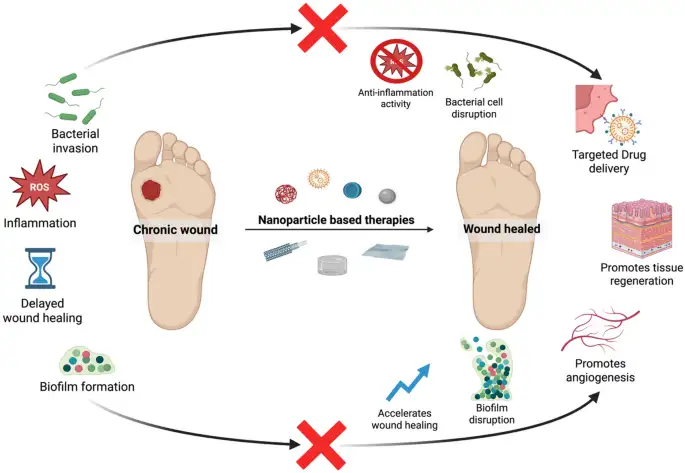
Scientists are using nanomaterials to heal stubborn wounds that resist antibiotic treatment, creating a new path for patients facing chronic infections. Severe burns, diabetic ulcers, and slow-healing lesions often become dangerous because bacteria develop protective biofilms. These infections can survive standard medicines and increase the risk of serious complications.
The rise of antibiotic-resistant wounds has pushed researchers toward smarter therapies that target bacteria without harming healthy tissue. Light-activated nanomaterials are emerging as a promising solution because they can release heat or antibacterial molecules only when needed.