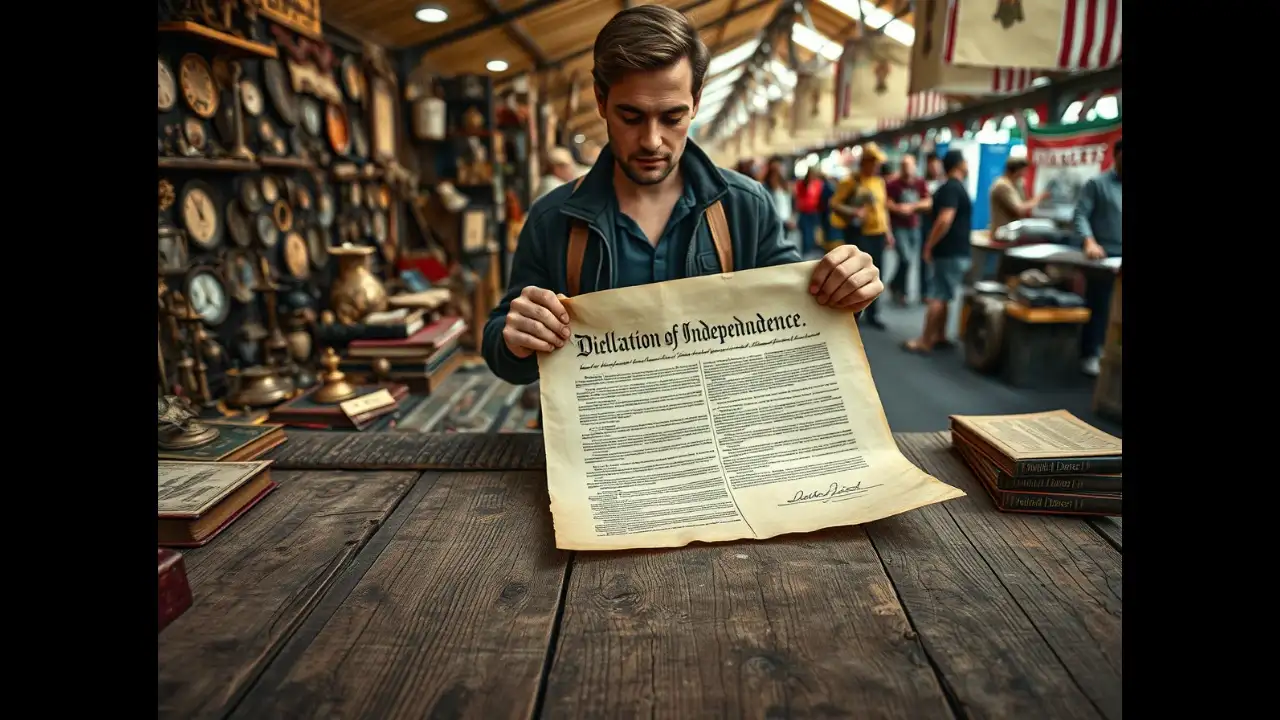
Few historical discoveries are as astonishing as finding a priceless American artifact in an ordinary flea-market purchase. In 1989, a man shopping at a Pennsylvania flea market paid only $4 for an old picture, reportedly attracted by its frame. Hidden behind the picture was a folded sheet of paper that initially appeared to be little more than an old document. Years of historical significance were concealed within that inexpensive purchase, however, because the paper turned out to be a rare early printed copy of the Declaration of Independence. Smithsonian Magazine later highlighted the discovery as one of those extraordinary moments when an apparently insignificant object turns out to contain a major piece of history. The document was eventually sold at Sotheby’s for approximately $2.4 million, transforming a $4 purchase into one of the most remarkable historical discoveries associated with American collecting.
The document’s importance came from its connection to the first printing of the Declaration of Independence. After the Continental Congress adopted the Declaration on July 4, 1776, John Dunlap, the official printer to Congress, was tasked with producing copies for distribution. The National Archives explains that Dunlap worked through the night, producing approximately 200 copies of what are now called the Dunlap broadsides.