Like a ship sailing through changing weather at sea, our solar system's journey around the center of the Milky Way takes it through varying galactic environments — and one of them may have had a lasting impact on Earth's climate, a new study suggests.
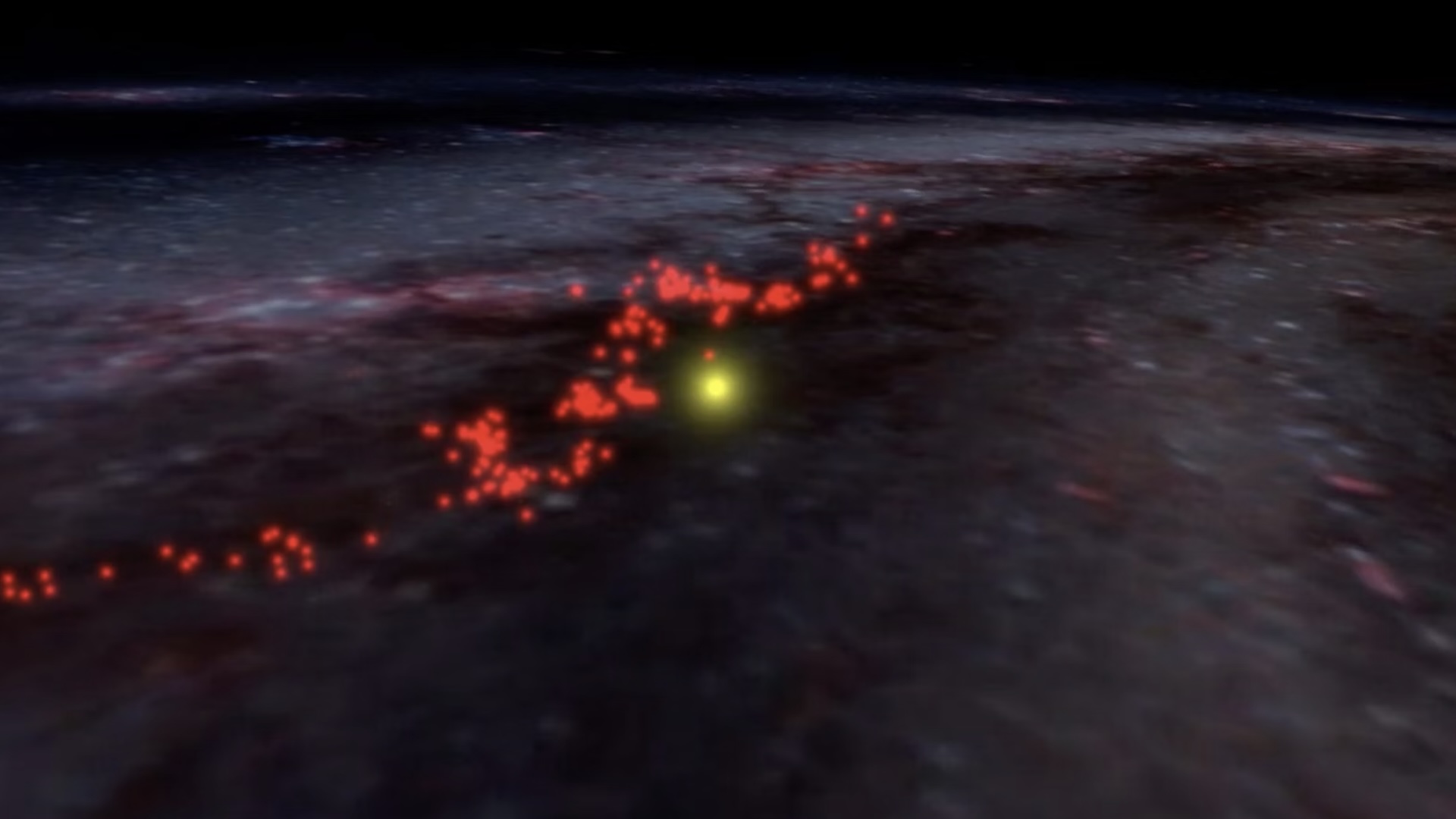
Observations from the European Space Agency's recently retired Gaia mission indicate that around 14 million years ago, our solar system passed through a dense, star-forming region in the direction of the constellation Orion. This region is part of a vast network of star clusters that spans nearly 9,000 light-years and is sculpted into a structure that astronomers have dubbed the Radcliffe Wave in honor of the Harvard Radcliffe Institute in Massachusetts, where the wave’s existence was confirmed.