Get all your news in one place.
100's of premium titles.
One app.
Start reading
The Conversation
The Conversation
Anthony Cordingley, Senior Lecturer in English Literature, University of Sydney

A bestselling novel was pulled from a French literary prize after AI accusations – what next?

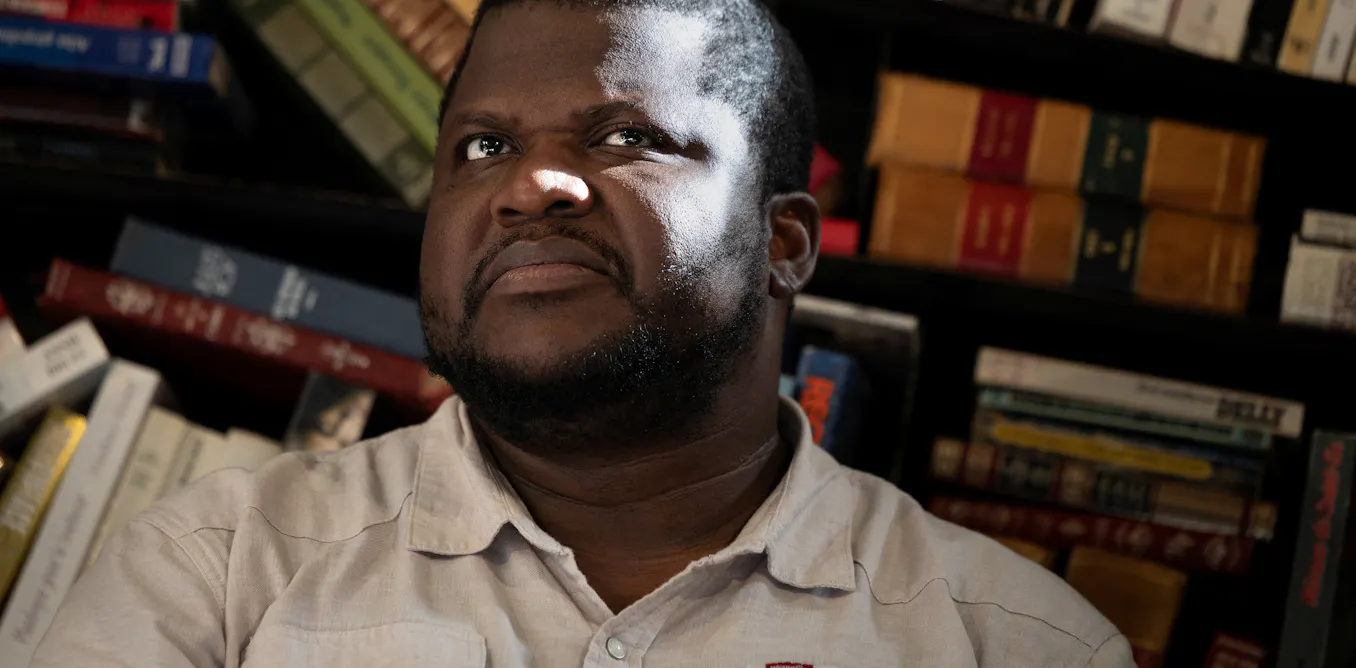
The French literary world has been rocked by an AI scandal, unfolding in waves. Haitian–Canadian author Thélyson Orélien had his novel removed from the shortlist of the Prix Goncourt, France’s most prestigious literary prize, last Friday – soon after an anonymous account on X claimed it was written “almost entirely by artificial intelligence”.

It Was Either That or Die (C'était ça ou mourir), about a Haitian’s perilous journey towards Canada through Brazil, Mexico and the United States, has topped the French bestseller list and sold about 35,000 copies. It won another French prize, the Fnac novel prize, last Monday and has had rave reviews.

Orélien, aged 38, emigrated to Canada in 2010, following the devastating earthquake in Haiti that flattened his home. He denies using AI to write his work.

Pangram, which was used to raise the allegations, has been called the “gold standard” of AI detectors. The Goncourt Academy, which oversees the Priz Goncourt, withdrew the book from its shortlist due to the “consistent findings of analyses by credible researchers and journalists” suggesting the book was, “in all likelihood, largely the product of artificial intelligence”.

Orélien’s French publisher said he began writing the novel in 2017 and finished a draft in 2019 – long before generative AI was commercially available. In a statement last week, Orélien, who is Black, said he had been the victim of “numerous racist attacks” and is “currently compiling a dossier with [his] publishers in France and Quebec to prove [his] claims”.

Samuel Fitoussi, a columnist for the conservative newspaper Le Figaro who has called himself “rather right-wing”, has admitted to being part of the “group project” behind the X account. But the author of Woke Fiction denies any political motivation, saying he is defending “the moral pact that binds an author and his readers” and “rais[ing] awareness about AI-generated writing”.

book cover: C'etair ca ou mourir

In the wake of the AI allegations, Quebec newspaper La Presse published allegations of plagiarism in articles and opinion pieces written by Orélien between 2012 and 2013. (These were followed by a Radio-Canada investigation, which found “at least five” of Orélien’s columns and opinion pieces were partly copied from texts by other authors.)

La Presse also found, using Pangram, that Orélien’s short story Où va le monde, which won an award in 2012, had “at least four identical sentences” to Louis Pauwels’ 1960 book, Le matin des magiciens (1960). Orélien was contacted by La Presse, but didn’t respond.

The scandal puts the spotlight on the reliability of such detectors. It also questions our expectations of writers, with some French authors arguing AI is now part of our lives – and that authorship is evolving.

Non-English writing and AI detection

Orélien has said: “The images, the repetitions, the rhythms are living speech, they are mine. My traditions are Haitien and Caribbean.”

Could non-standard and highly oral French lead Pangram into error?

Testing this possibility, French AI expert Benoît Raphaël submitted two chapters from two, then four Haitian novels into Pangram. Both were correctly identified as human created.

Raphaël then entered a sample of Orélien’s poetry, short prose and critical writings published before 2023, when generative AI was not sufficiently developed to produce such text. These, too, were identified as human created.

Raphaël said before this scandal broke, he had written to another AI expert with his suspicions Orélien’s novel was written with AI assistance. He had spotted the telltale signs of AI-generated prose, including the overreliance on certain rhetorical constructions.

How reliable are AI detectors?

Studies have shown that Pangram is highly accurate in detecting AI use, with a successful detection rate of over 95%, and virtually no false positives. Still, they do happen.

It’s been used to raise allegations about other recent literary works, including Jamir Nazir’s Commonwealth Writers Prize winning short story, which was officially cleared. (Nazir, a Trinidadian writer of East Indian heritage, told judges his writing process involved using speech-to-text tools, followed by intensive editing, due to chronic health conditions.)

Is author AI use acceptable?

On French television last week, iconic author Virginie Despentes, whose novels include the Man International Booker shortlisted Vernon Subtex 1, rejected the idea authors should be held accountable for AI use. “Thélyson Orélien doesn’t have to justify himself […] It’s got nothing to do with us. He writes however he wants. Fuck Pangram”.

A woman with blonde hair, a black blazer and a t-shirt
Virginie Despentes said, ‘Thélyson Orélien doesn’t have to justify himself’. Penguin Livros

Despentes enjoyed the work’s short sentences, powerful metaphors and episodic nature, which she sees as typical markers of contemporary writing. Raphaël Doan, co-creator of a 2023 alternative history he openly wrote with ChatGPT, shared the screen with Despentes. Despite Orélien’s denial, Doan said he believed the author had used AI, citing his novel’s formulaic AI style, hackneyed imagery and storyline lacking continuity, skipping from scene to scene (AI struggles to sustain a convincing prose narrative over hundreds of pages).

Alexandre Gefen, author of the Culture History of AI, compared Orélien to a Renaissance artist populating his studio with other artists working at his command. Authorship, he said, has always evolved with writing technologies.

The commercial success of Orelién’s novel shows he has managed to create an authentic voice that readers find compelling. If he used AI for this, it is impossible to think it happened without intensive prompting and reprompting.

Perhaps, in this age of AI, how writers use it will become a skill, to be used well or poorly. High quality literature will include the ingenious use of this new writing technology, while bad literature will be characterised by its lazy or unoriginal use.

Many readers, however, cherish an implicit pact with the author, searching for an intimate encounter with a different human subjectivity. Literary criticism has long questioned this, though, especially since English professor Jack Stillinger’s classic exposé of the many hands that contributed to works of some of our most revered Romantic authors, such as the contribution of William Wordsworth’s wife Dorothy Wordsworth to his writing.

Just as one might think those authors should also acknowledge other human input to their writing, it is reasonable to ask authors who use AI to disclose it. Then, readers will have the choice to play this new game, or to opt out.

This article was originally published on The Conversation. Read the original article.

Sign up to read this article
Read news from 100's of titles, curated specifically for you.
Already a member? Sign in here
Related Stories
Top stories on inkl right now
One subscription that gives you access to news from hundreds of sites
Already a member? Sign in here
Our Picks
Fourteen days free
Download the app
One app. One membership.
100+ trusted global sources.