Get all your news in one place.
100's of premium titles.
One app.
Start reading
The Economic Times
The Economic Times
Rana Sarkar and ET Science Desk

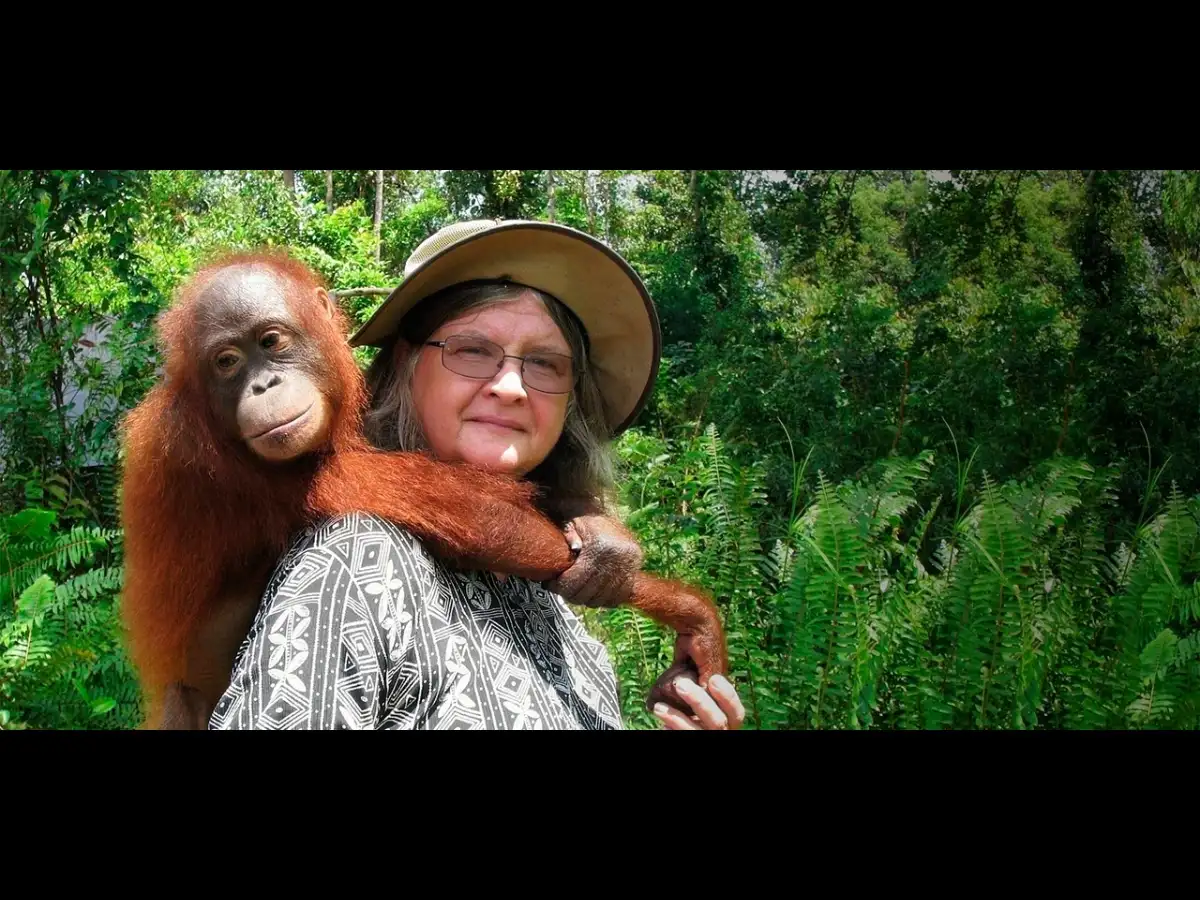
A 25-year-old Canadian primatologist entered Borneo’s remote wild swamps with her husband in 1971 to study orangutans; after 40 years of research, she found that they give birth just once every 7.7 years and documented 400 types of food in their diet

Prior to her fame, the Canadian primatologist and anthropologist Biruté Mary Galdikas, along with her husband, Rod Brindamour came to the Tanjung Puting Reserve in Indonesian Borneo when the forest was under siege. The year was 1971, and coming to this tropical, humid rainforest would have sounded almost surreal. There was no telephone, road, electricity, television or postal service. And Illegal logging and hunting were stripping animals of the forests they depended on for survival.

However, they came to study orangutans, an exceptionally intelligent non-human species found only in Borneo and Sumatra, whose habitat was also under threat. The orangutans Galdikas had come to study were considered particularly difficult subjects, elusive, wary and living largely in dense, swampy forests.

Before her departure from America, Galdikas was informed by professors and others that the study of orangutans in the wild “couldn’t be done.” But she had other plans for herself and wildlife.

Also Read: Wheat farmers have a new weapon against a pest that costs them $350 million a year; researchers are using straw bales to move tiny parasitoids into fields and fight the wheat stem sawfly

A childhood fascination with the forests of Borneo

Born in 1946 in Wiesbaden, Germany, Biruté Galdikas was the daughter of Lithuanian refugees Antanas and Filomena Galdikas, who were on their way to Canada to settle there after World War II.

Galdikas’ passion for exploration developed when she was a little girl growing up in Toronto. As per the Orangutan Foundation International (OFI), her first library book was Curious George which she had borrowed at the age of six. The stories of the naughty monkey along with the yellow-hatted man inspired her and by the time she was in the second grade, she had made up her mind that she would become an explorer.

She received her education at Canadian universities before moving to America. She majored in natural sciences at the University of California at Los Angeles where she acquired her bachelor’s degree in psychology and zoology in the year 1966 and masters in anthropology in the year 1969.

While in graduate school, she was introduced to a renowned Kenyan anthropologist, Dr. Louis Leakey. She discussed with him her dream of studying orangutans. Initially, he seemed indifferent, but she kept pursuing her dreams. After three years, Leakey secured funding for her research, following the support he had previously given Jane Goodall and Dian Fossey for their studies of chimpanzees and mountain gorillas. Then came the journey to Borneo.

Building a research camp in the wild

Upon arrival at Tanjung Puting, an untouched coastal national park, Galdikas started observing the ecology and behavior of the orangutans in the wild. She set up a camp named Camp Leakey after her professor. This task required a lot of patience on Galdikas’ part since orangutans are often found in the forest canopies and are far from the observer.

Four years after going to Borneo, Galdikas brought her research to a wider public through writing the feature cover story in National Geographic Magazine. Brindamour provided the photos for her publication.

Sign up to read this article
Read news from 100's of titles, curated specifically for you.
Already a member? Sign in here
Related Stories
Top stories on inkl right now
One subscription that gives you access to news from hundreds of sites
Already a member? Sign in here
Our Picks
Fourteen days free
Download the app
One app. One membership.
100+ trusted global sources.