Get all your news in one place.
100's of premium titles.
One app.
Start reading
The Times of India
The Times of India
World
TOI World Desk

800,000 bees stolen in Australia; thieves left honey and took colonies

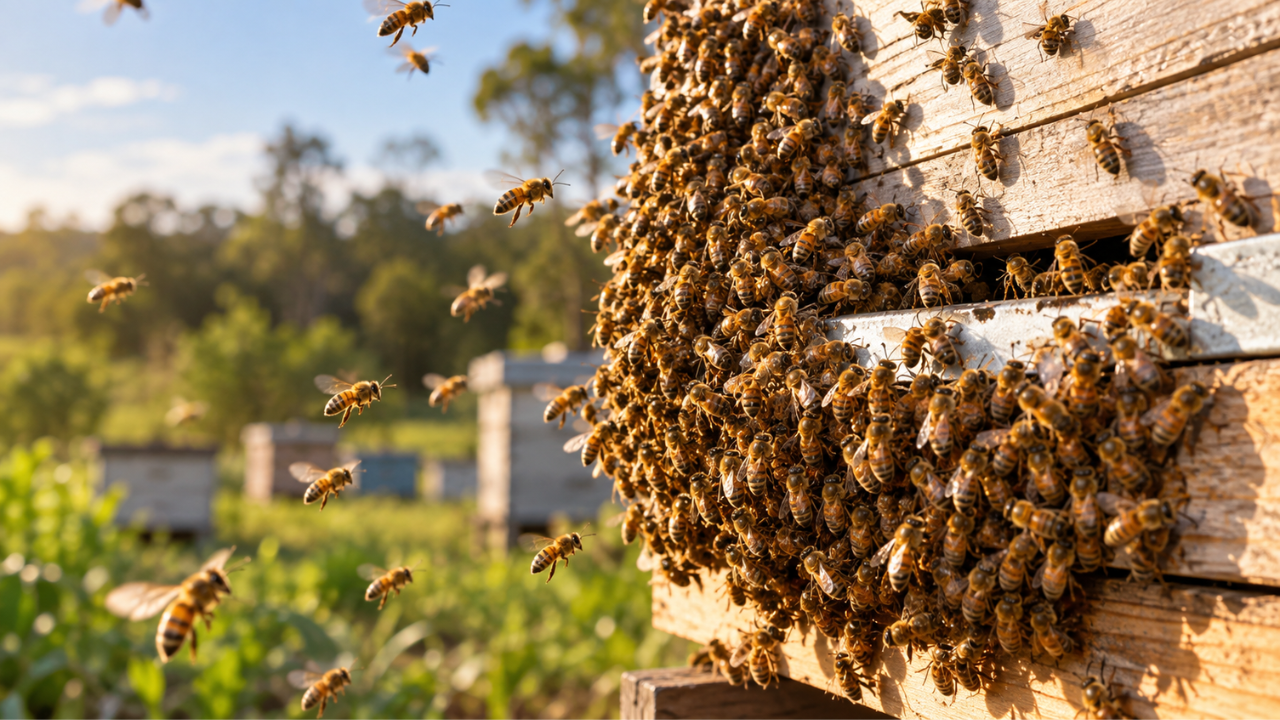
More than 800,000 bees have been stolen from commercial hives across Far North Queensland in a series of unusual thefts that appear to have targeted the living colonies rather than their honey. The stolen bees belonged to at least three beekeepers on the Atherton Tablelands, west of Cairns, with 44 colonies reported missing. The bees and associated colonies are estimated to be worth tens of thousands of Australian dollars, while beekeepers also face losses from honey production and pollination contracts. What makes the thefts particularly unusual is that the perpetrators reportedly removed bees, queens, brood and frames from hives, then reassembled the boxes and left the honey behind. Police suspect the operation may have involved someone with commercial beekeeping experience.

Get breaking news anytime, anywhere. Download the TOI app now!

More than 800,000 bees missing from 44 colonies

The scale of the theft became clear after commercial beekeeper Jack Laughton discovered 14 empty hives at a property near Kairi on September 10. Another 27 hives were subsequently found without their bees at Mutchilba, while a further four hives were reported stolen on the Tablelands, according to local reporting. Tom Bidner, an apiarist from the Atherton Tablelands, said 44 colonies belonging to three beekeepers had been taken. He estimated that each colony contained at least 20,000 bees, putting the total at more than 800,000. Earlier estimates had placed the number at about 500,000. The number could change as beekeepers continue checking their colonies and other possible losses emerge.

Thieves left the honey but took the bees and brood

The thefts appear to have involved a detailed understanding of commercial beehives. Rather than simply carrying away complete hives, the perpetrators reportedly removed the frames containing bees and brood, including the queens, and transferred them into their own boxes. The original hive boxes were then put back together, meaning the theft could be difficult to spot from a distance. Bidner said the operation appeared to involve a truck and specialised equipment and could have taken several hours, potentially involving more than one person. In an especially unusual detail, the thieves left the honey behind. That has led beekeepers to believe the bees themselves, along with their future honey production and pollination value, were the main targets.

Stolen colonies were valuable beyond their honey

The financial impact extends beyond the estimated value of the missing bees. Commercial colonies are used by farmers to pollinate crops, and the thefts have occurred during the peak avocado season in Far North Queensland, when beehives are placed on farms under pollination agreements. Bidner told ABC that the initial loss from the hives was estimated at up to A$20,000, with as much as another A$10,000 in lost pollination income, while future honey production could also be affected. Queensland officials have also warned that the disappearance of colonies can affect growers because reduced pollination can ultimately reduce crop yields. The stolen colonies could therefore represent both an immediate loss to beekeepers and a potential loss for farms relying on them.

Police suspect someone familiar with commercial beekeeping

The method used in the thefts has prompted investigators to consider the possibility that the perpetrators have substantial experience handling commercial bee colonies. Detective Sergeant Ben Cross of the Mareeba Rural and Stock Crime Squad told ABC that police believed the offender could be someone operating on a semi-commercial or commercial scale rather than simply a hobby beekeeper. Bidner similarly said the work required people who knew how to handle bees and had access to appropriate equipment. However, authorities have not publicly established the identity or occupation of the thieves, and the suggestion that they came from within the beekeeping industry remains an investigative theory rather than a confirmed fact. Police are continuing to investigate the thefts and have urged anyone with information to come forward.

Bee thefts come as Queensland battles varroa

The thefts have occurred as Queensland's beekeeping industry deals with another major threat: the spread of the parasitic varroa mite. Varroa destructor was detected in Far North Queensland in September 2026, with the new detection representing a major northern expansion of the pest's known range. Australia first detected varroa in 2022 and subsequently moved from an eradication strategy towards management after the parasite became established. The timing has added pressure on beekeepers already dealing with the loss of healthy colonies. However, while beekeepers have described the thefts and the arrival of varroa as a serious combination of problems, there is no confirmed evidence that the thefts were caused by the parasite's spread. The investigation into the missing colonies remains ongoing.

Sign up to read this article
Read news from 100's of titles, curated specifically for you.
Already a member? Sign in here
Related Stories
Top stories on inkl right now
One subscription that gives you access to news from hundreds of sites
Already a member? Sign in here
Our Picks
Fourteen days free
Download the app
One app. One membership.
100+ trusted global sources.