
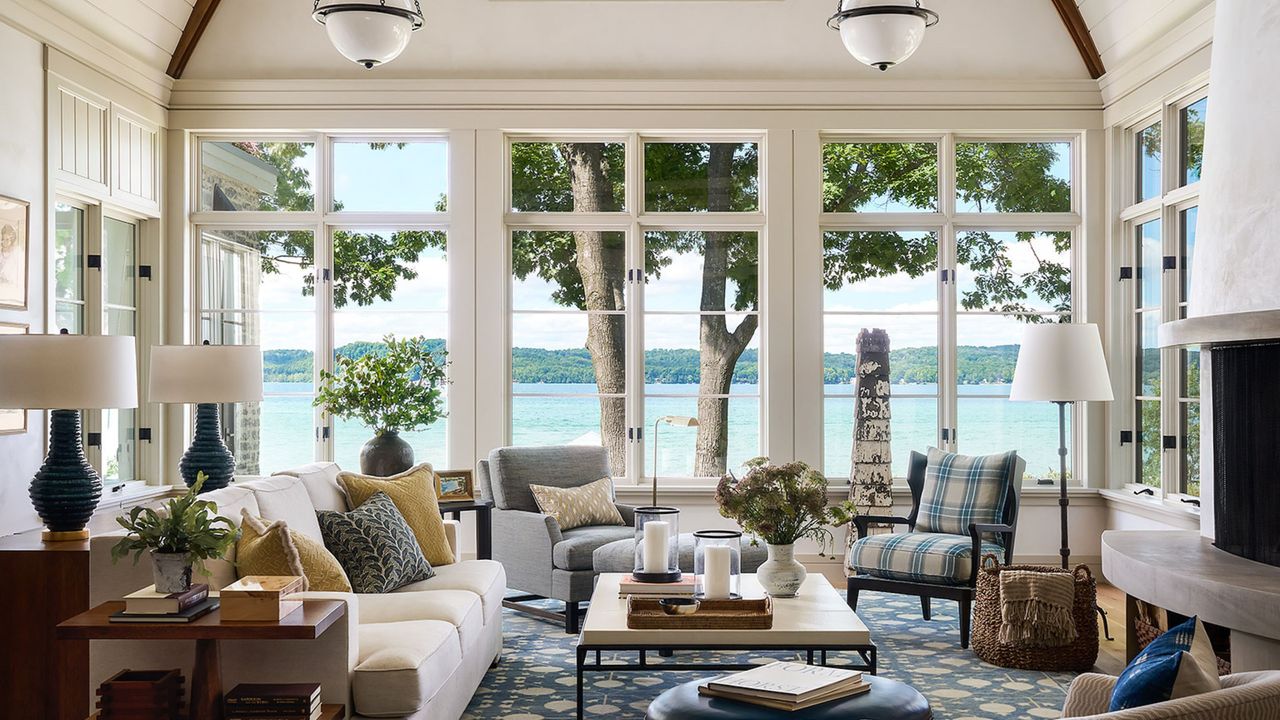
Contrary to their name, sunrooms aren't just spaces to enjoy the warm rays of summer sun. Whether it's a cozy snug to retreat to come autumn or a breakfast nook to start your spring mornings in, sunrooms bridge the gap between inside and out, providing you with a space to sit back, relax, and take in the view, all from the comfort of your home.
While sunrooms are undeniably one of the most idyllic rooms and will almost certainly add value, there's plenty to consider before adding one of your own. From key design choices like considering orientation and how to stop the room from overheating, to the type of furniture and decor that's going to work best in this sun-drenched space, there are a few practical must-dos to prioritize before you commit to adding a sunroom.

1. Consider Orientation For The Right Amount of Sunlight
'The orientation of the sunroom is so important and something to consider before you add one to your home. Whether it faces east or west changes how the sun moves across the space through the day,' explains Leigh Spicher, director of design studios at Ashton Woods Homes. 'If you get a lot of afternoon sun, you'll need shades to protect both the room and yourself, so look at UV protection on the windows or a specific UV-blocking shade.'
'You should first consider where on the home the sunroom is placed, which impacts how much sun exposure the room gets throughout the day', agrees Bob Zuber, partner at Morgante Wilson Architects. 'And some people do prefer their sunroom to be a bit shaded and cooler at certain times – as well as what the views are and how much cross-breeze there will be when windows are open. Additionally, it’s important to take into account that whatever room the sunroom is attached to will lose some of its access to natural light.'
The orientation of your sunroom will also affect what furniture, colors, and materials you opt for. For example, you may consider the best colors for north-facing rooms if it lacks direct sunlight. This may inform your furniture and fabric choices, too; you may choose bolder, more colorful styles that brighten the space and won't fade from too much sun over time.
2. Keep It Well-Ventilated
Whether you're working with a small sunroom or a larger, open-plan space, ventilation in these sunny spots is always important. 'With summers becoming hotter, overheating needs to be considered from the start, rather than after the room has been built,' explains Caroline Montague, interior designer and owner of Tuscan retreat Villa Sartiano.
There are ways to improve ventilation that will make your sunroom comfortable for all seasons. 'I would always speak to the architect and the relevant glazing and ventilation specialists about the orientation of the room,' says Caroline. 'Plus, the type of glass, opening windows, shading and whether additional cooling may be needed.'
'An interior designer can make blinds and curtains look beautiful, but they should not be expected to solve an architectural problem,' adds Caroline. 'A portable fan and a last-minute roller blind will only do so much if the room has been designed without enough ventilation or protection from the sun.'
3. Decide On Its Purpose
Sunrooms can be multi-purpose spaces, but you want some idea of what you will be doing in the room before you start the build. 'Before you make any stylistic decisions, you’ll need to decide how you'll actually use the room. Is it for reading, for entertaining, for indoor gardening?' says Leigh.
'Based on that, decide what you want the room to feel like. There's a misconception that every sunroom should feel light and airy, but they can just as easily feel warm and curated, or even moody and sophisticated. One of my favorite palettes for a sunroom uses a darker trim with warmer finishes, which makes for a more contemporary and really lovely room full of light. It can also feel wonderfully traditional. When you have that much natural light coming in, it naturally gives you permission, no pun intended, to lean into darker, richer, warmer colors.'
'The very first thing to consider is how you intend to use the sunroom. Will it be the place where you sip morning coffee, or somewhere to relax and hang out with family?', says Bob. 'Do you want it to be a bonus dining area, or an extension of your living space when you entertain? All of that dictates whether you design the sunroom as a three-season room, or a four-season room with full heating and cooling, and informs how it will connect with the rest of the home.'
4. Lean Into Your Home's Architecture
Your house style plays a part in how your sunroom should be designed. Keeping things authentic to your home's architecture will ensure your sunroom stands through years of trend changes.
'Before adding a sunroom, you should always identify the overarching style of your home and note any repetitive details such as the type of millwork, masonry, and/or window style,' suggests Kate Pechinka of Kate Kelly Interiors. 'Creating a sunroom that is cohesive with these original architectural details will ensure that the home continues to speak the same design language and leaves the room feeling like a natural fit.'
'When a sunroom is designed and completed without true connection to the home, it can automatically feel out of place no matter how you style it,' adds Kate.
5. Invest In Durable Materials That Won't Fade
Whether you're creating a coastal inspired sanctuary or a snug home library, investing in high-quality fabrics and materials will ensure your sunroom is fit for purpose for years to come.
'Sunlight can be quite unforgiving,' says Caroline. 'It can fade delicate fabrics, make certain flooring very hot and create glare across glossy surfaces. I would look for materials that sit comfortably with strong daylight and become more attractive with use. Timber, stone, terracotta, linen and woven fibres tend to work particularly well.'
Just as you'd design a living room layout, it's important to consider where your furniture and decor will go in your sunroom, paying attention to orientation and outside views. 'People are often drawn to the idea of having as much glass as possible, but you still need somewhere sensible to place a sofa, a lamp, a console or a piece of artwork,' explains Caroline. 'I would sketch out the furniture before finalizing the windows and doors. Think about where people will sit, what they will look at and how they will move through the room and into the garden.'
6. Keep It Cohesive
While sunrooms are unique in their purpose (compared to hard-working areas like kitchens or laundry rooms), that's not to say they should feel incongruous to the rest of the house. 'One of the biggest design mistakes is treating the sunroom as a completely separate project. It can then feel as though it has been added onto the house rather than belonging to it,' Caroline says.
'There should be some visual connection with the adjoining rooms. That might come from continuing the flooring, repeating a wall color or fabric that appears elsewhere in the home. The sunroom can still feel lighter and more relaxed, but it should not look as though you have suddenly stepped into a different property.'
That also means you don't have to embrace traditional decorating ideas, either. Nothing is stopping you from designing a sunroom that completely contrasts with all the usual coastal-inspired designs. 'As a Floridian, this might be one of my favorite topics, and I love to debunk the myth that every sunroom has to be painted bright white with wicker furniture and blue and white striped pillows,' says Leigh. 'A sunroom doesn't have to be coastal, and it doesn't have to be about flowers or plants either, though I love those things. Its defining characteristic is natural light. It's about the view and about ushering in the natural light we all desperately need. The best sunrooms feel like an extension of the outdoors.'
7. Embrace Smart Features
Embracing smart home trends is a good place to start if you want a sunroom that feels suitable for any time of day, regardless of the season.
'We are big advocates for creating spaces that are transformable,' say Mike Shively and Lucas Goldbach of En Masse Architecture and Design. 'A sunroom should be able to function as an outdoor space during good weather but still be comfortable and useful throughout the colder months. Features like walls of doors that open completely and tuck out of the way, large retractable screens, or screens that can be swapped for glass panels in the winter allow the room to adapt to the seasons instead of only being defined by the warm months.'
'That flexibility also means you can furnish the space more like an interior, with comfortable indoor-style furniture rather than traditional outdoor furniture. In the summer, the space can open completely to the outdoors, while in the winter it becomes a heated room that still offers the experience of being connected to the landscape.'
8. Pull Inspiration From Nature
A sunroom is there to bridge the gap between outside and in. To ensure your space feels like a seamless extension of your garden, backyard, or patio, design it with nature in mind.
'Outdoor living feels best when it is effortless, so we love focusing on transitional spaces that create a seamless connection between indoors and out,' say Mike and Lucas. 'It's also important to think honestly about how you'll actually use the space. Rather than creating outdoor areas that are too broad or too numerous, we prefer designing spaces that reflect how clients naturally live.'
'We're also seeing homeowners prioritize greenery over unnecessary hardscaping. Bringing landscaping closer to the house means that even when you're indoors – which is most of the time – you still enjoy the feeling of being surrounded by nature. The spaces adjacent to outdoor areas matter just as much as the outdoor space itself, especially in climates like Chicago where you can't be outside year-round. Designing rooms that let you feel connected to the outdoors, even during the colder seasons, has become increasingly important.'
Timeless Sunroom Shopping Picks


Whether you want to enjoy the scenery of rolling fields or boast 360-degree views of a nearby lake, there's an art to designing the perfect sunroom. Considering the practical side of things will ensure your sunroom lasts for years, no matter the season. From prioritizing natural light to investing in long-lasting materials that won't age, pay attention to these eight things before designing a sunroom of your own.
Love beautiful design ideas, expert advice, and inspiring decor trends? Sign up for our newsletter and get the latest features delivered straight to your inbox.