
Get all your news in one place.
100’s of premium titles.
One app.
Start reading
Times Life
Times Life
Nidhi

7 Sacred Vishnu Temples in North India to Visit for Removing Past Karma

Sometimes life feels unfair without a clear reason. Patterns repeat. Efforts do not give results. Relationships break the same way again and again. Fear appears without memory. In Sanatan thought, these moments are not random. They are often seen as karma speaking, not as punishment, but as unfinished lessons waiting to be understood.

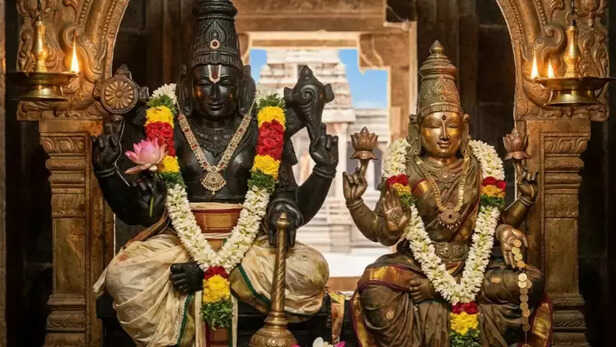
Karma is not only about what we do in this lifetime. It is a long memory carried by the soul. Lord Vishnu, the preserver of the universe, is believed to guide souls through this memory with balance, patience, and correction. Where Shiva dissolves, Vishnu sustains and realigns. His temples are therefore not places of escape from karma, but spaces where karma slowly loosens its grip.

North India is home to several Vishnu temples that have been revered for centuries as centers of karmic cleansing. Devotees visit these places not to erase destiny overnight, but to gain clarity, strength, and alignment with dharma. When intention changes, karma begins to shift.

1. Badrinath Temple

Badrinath Temple

Badrinath is not just a pilgrimage site. It is considered one of the most powerful spiritual correction points in the Indian subcontinent. Here, Lord Vishnu is worshipped as Badri Narayan, seated in deep meditation in the Himalayas.

Spiritually, Badrinath is associated with the cleansing of long carried karmas, especially those linked to ego, neglect of duty, and misuse of intellect. The extreme terrain reminds devotees of humility and surrender. Scriptures describe this land as one where Vishnu himself chose austerity for the welfare of all beings. Bathing in the Alaknanda River and offering prayers here is believed to purify ancestral karma and restore balance between action and intention.

2. Narsingh Temple Joshimath

The Narsingh Temple represents Vishnu in his fiercest form. Narasimha appears when injustice crosses its limits and silent suffering can no longer be ignored.

This temple is spiritually linked with protection from heavy karmic consequences. Devotees believe it helps neutralize karmas related to fear, suppressed trauma, betrayal, and abuse of power. Worship here is not gentle, but grounding. It reminds one that karma cannot be escaped, but it can be corrected through accountability and courage. The energy of this place encourages inner strength and moral clarity.

3. Raghunath Temple

Raghunath Temple

Raghunath Temple is dedicated to Lord Rama, the embodiment of Vishnu’s principles of dharma, restraint, and responsibility. While Rama is worshipped as a king, his deeper significance lies in his obedience to duty even when it caused personal suffering.

This temple is traditionally associated with healing family and relationship-related karma. Many devotees come here seeking resolution of long standing conflicts, generational burdens, and emotional debts carried forward unknowingly. Rama’s teachings emphasize that karma reduces when one chooses righteousness over convenience. The temple stands as a reminder that moral discipline is itself a form of spiritual liberation.

4. Narayana Ashram

Narayana Ashram does not impress through scale, but through silence. Nestled in the Himalayas, it is dedicated to Vishnu as Narayana, the inner witness of all actions.

This ashram focuses on dissolving subtle karmas, those created by ignorance, attachment, and unconscious living. Life here revolves around discipline, self study, and service. Scriptures emphasize that karma weakens when awareness strengthens. Time spent in Narayana Ashram is believed to bring clarity, helping seekers understand not just what karma they carry, but why they carry it.

5. Krishna Janmabhoomi

Krishna
Replaced by his sister yogmaya

Mathura carries the energy of Krishna, Vishnu’s most human and compassionate avatar. Krishna does not demand renunciation. He teaches balance. Action without attachment.

Devotees visit Krishna Janmabhoomi to heal emotional karma such as guilt, fear of failure, overthinking, and attachment to outcomes. Krishna’s philosophy in the Bhagavad Gita explains that suffering increases when action is tied too tightly to expectation. Mathura is believed to help realign the heart with joy and purpose, reminding devotees that karma loosens when life is lived with trust.

6. Dwarkadhish Temple

Dwarka represents Vishnu as a ruler who lived fully in the world without being consumed by it. Dwarkadhish shows that spirituality does not reject responsibility.

This temple is traditionally linked with correcting karma related to leadership, ambition, and material power. Devotees pray here for wisdom in decision making and ethical conduct. Dwarka teaches that karma becomes binding when power is used without awareness. When responsibility is carried with humility, karma begins to dissolve naturally.

7. Rishikesh Narayana Temples

Rishikesh Ganga Aarti Evening
Devotees holding lamps beside the river as mountains and temples glow in soft evening light

Rishikesh is known as the gateway to inner transformation. The Narayana temples here emphasize Vishnu as the guide of the inner journey rather than the outer ritual.

Spiritually, Rishikesh is associated with cleansing mental and thought-based karma. Restlessness, confusion, and constant inner noise are also karmic patterns. Meditation and mindful worship here help steady the mind. Scriptures state that when the mind becomes clear, karma loses its power to bind. Rishikesh offers that clarity.

Sign up to read this article
Read news from 100’s of titles, curated specifically for you.
Already a member? Sign in here
Related Stories
Top stories on inkl right now
One subscription that gives you access to news from hundreds of sites
Already a member? Sign in here
Our Picks
Fourteen days free
Download the app
One app. One membership.
100+ trusted global sources.







