
Get all your news in one place.
100's of premium titles.
One app.
Start reading
Times Life
Times Life
Aishwarya Kapoor

6 Foods Indians Eat Daily That Trigger Rheumatoid Arthritis Inflammation and Joint Pain

Refined Sugar: The Chai Problem Nobody Talks About

Two teaspoons of sugar in the morning chai, two more in the afternoon cup, a mithai at the office, by evening, the average Indian has consumed enough refined sugar to meaningfully raise inflammatory markers. A 2014 analysis published in the American Journal of Clinical Nutrition found that regular consumption of sugar-sweetened foods increased circulating levels of interleukin-6 and C-reactive protein, two of the primary inflammatory signals that drive rheumatoid arthritis flares. Sugar does not cause rheumatoid arthritis, but in someone who already has it, high sugar intake keeps the immune system in a state of low-grade activation. The joints pay the price.

The fix is not zero sugar. It is awareness of how much is already in the diet before a single deliberate sweet is added.

Refined Vegetable Oils High in Omega-6

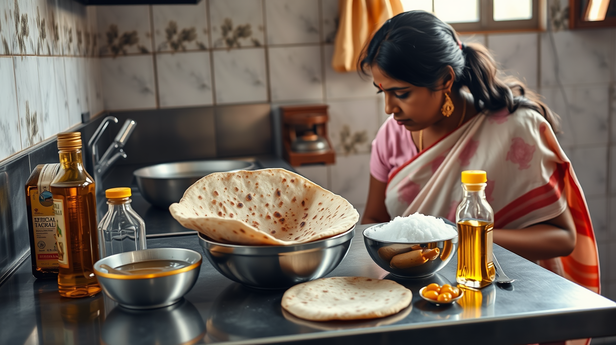
Sunflower oil, soybean oil, and corn oil dominate Indian kitchens because they are cheap and widely available. All three are extremely high in omega-6 fatty acids. The body needs omega-6, but the ratio of omega-6 to omega-3 in the average Indian diet has shifted dramatically, from the historically balanced 4:1 to somewhere between 15:1 and 20:1 in urban households, according to research published in Prostaglandins, Leukotrienes and Essential Fatty Acids. That imbalance pushes the body toward producing pro-inflammatory compounds called prostaglandins, which aggravate joint inflammation in rheumatoid arthritis patients. Mustard oil, used traditionally across North and East India, has a far better omega-6 to omega-3 ratio and is a straightforward substitution. Cold-pressed coconut oil is another option. The oil in the kadai matters more than most rheumatology patients are told.

Vanaspati, partially hydrogenated vegetable fat still used in some commercial fried snacks and bakery products, compounds the problem by adding trans fats on top of the omega-6 load.

Maida: White Flour and the Gut-Joint Connection

Bread, biscuits, naan, samosa wrappers, and most packaged namkeen are made with maida, the highly refined wheat flour that has had its fibre and germ stripped out. The gut-joint axis is an active area of research: a 2016 paper in Nature Reviews Rheumatology established that dysbiosis, an imbalance in gut bacteria, is consistently observed in rheumatoid arthritis patients and may precede clinical onset. Maida feeds gut bacteria that produce endotoxins, which cross a compromised gut lining and enter the bloodstream, triggering systemic inflammation. Whole wheat atta, jowar, or bajra roti are not just traditional choices. For someone managing joint pain, they are a meaningful dietary adjustment with a documented biological rationale.

The problem is not wheat itself. It is what refining does to it.

Red Meat: Mutton Twice a Week Adds Up

Mutton curry on Sundays is a fixture in millions of Indian households. Red meat is a significant source of arachidonic acid, an omega-6 fatty acid that the body converts into pro-inflammatory eicosanoids. A study published in Arthritis and Rheumatism tracked over 25,000 participants and found that women who consumed the highest amounts of red meat had a significantly higher risk of developing inflammatory arthritis compared to those who ate it rarely. The mechanism is not mysterious: arachidonic acid directly feeds the same inflammatory cascade that rheumatoid arthritis exploits. Reducing red meat to once a week, rather than eliminating it, and replacing some portions with fish, particularly mackerel or sardine which are high in anti-inflammatory omega-3s, is a practical adjustment most households can manage without restructuring their cooking entirely.

Excessive Salt: Pickles, Papad, and Processed Snacks

A single serving of store-bought achar can contain 400 to 600 milligrams of sodium. Add papad, salted chaas, and a packet of namkeen, and the daily sodium intake in a typical Indian household regularly exceeds the WHO recommended limit of 2,000 milligrams. A 2020 study in the journal Science Translational Medicine found that high sodium intake altered immune cell behaviour, specifically pushing T helper 17 cells toward a more inflammatory state. These are the same immune cells that are dysregulated in rheumatoid arthritis. The research was partly conducted in animal models, but the human observational data from the same study showed a correlation between high-salt diets and increased autoimmune disease severity. Homemade achar with controlled salt, and replacing packaged snacks with roasted chana or makhana, are adjustments that carry real anti-inflammatory logic behind them.

Alcohol: The Inflammation Multiplier

Alcohol is not a traditional part of most Indian diets, but consumption is rising, particularly among urban men. Even moderate drinking, two to three drinks a week, increases intestinal permeability, the condition commonly called leaky gut, which allows bacterial fragments to enter the bloodstream and trigger immune responses. For someone with rheumatoid arthritis, this is not a theoretical risk. A review published in Clinical Rheumatology noted that alcohol interacts directly with methotrexate, the most commonly prescribed drug for rheumatoid arthritis in India, increasing the risk of liver toxicity. Beyond the drug interaction, alcohol independently raises levels of tumour necrosis factor-alpha, a cytokine that is a primary driver of joint destruction in rheumatoid arthritis. The question for someone managing this disease is not whether alcohol is culturally acceptable. It is whether the inflammatory and pharmacological cost is worth it.

Rheumatoid arthritis is an autoimmune disease, which means the immune system is already misfiring. Every food on this list works by adding fuel to that misfiring, not by causing a new problem, but by amplifying one that already exists. The real pattern across sugar, refined oils, maida, red meat, salt, and alcohol is that they all push the same immune pathways in the same direction. A person managing joint pain through medication alone, without looking at what they eat three times a day, is treating half the disease.

Sign up to read this article
Read news from 100's of titles, curated specifically for you.
Already a member? Sign in here
Related Stories
Top stories on inkl right now
One subscription that gives you access to news from hundreds of sites
Already a member? Sign in here
Our Picks
Fourteen days free
Download the app
One app. One membership.
100+ trusted global sources.







