
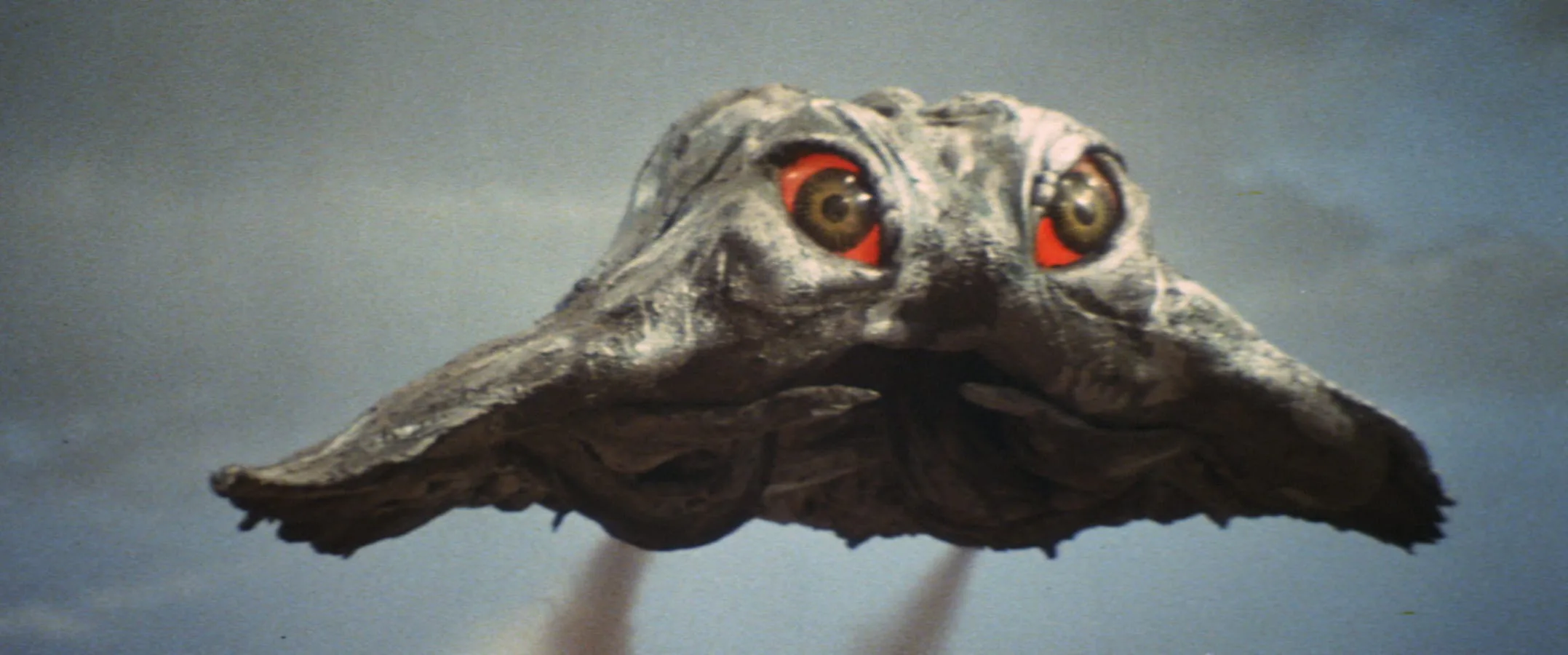
Part of what makes Godzilla such an enduring franchise is that it’s always changing. That’s true of the big guy’s adversaries, of course — tracing the metamorphosis of a kaiju is one of the fun parts of these movies — but it’s true of the movies, too. Although director Ishiro Honda originally imagined Godzilla as a heady metaphor for the psychic toll the bombings of Hiroshima and Nagasaki placed on the people of Japan, it didn’t take long for Godzilla to become, well, kids’ stuff.
Although Honda returned to steer the series back in a relatively more serious direction with Destroy All Monsters in 1968, late-’60s Godzilla movies like Son of Godzilla and All Monsters Attack were made specifically for young fans. But while Godzilla movies retreated into cash-grab nostalgia, Japan was evolving all around it. As it did in much of the world, the psychedelic revolution hit Tokyo hard in the late ‘60s, as did student protests objecting to Japan’s involvement in Vietnam. And even the kingdom of the monsters couldn’t ignore these changes forever.















