Get all your news in one place.
100's of premium titles.
One app.
Start reading
Tom’s Guide
Tom’s Guide
Technology
Dan Bracaglia

5 things to know about the new Samsung Galaxy Watch 9

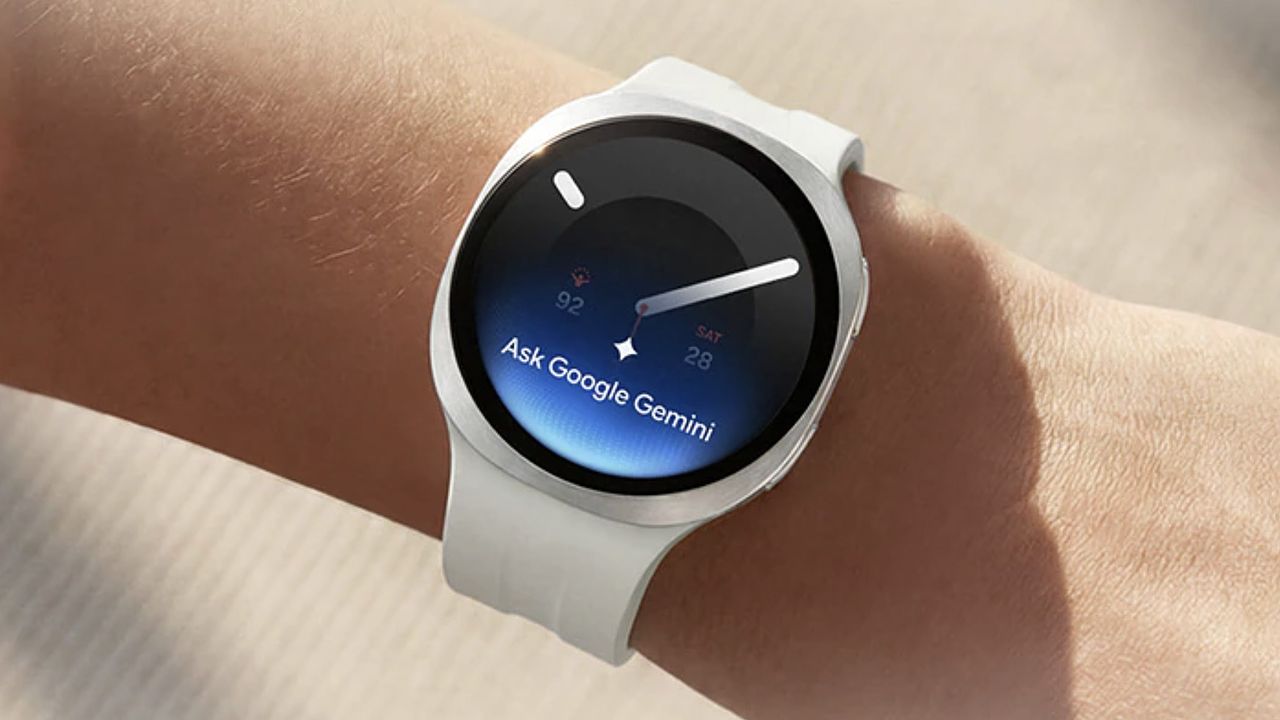
Samsung Galaxy Watch 9 close-up.

The Samsung Galaxy Watch 9 just got unveiled during the brand's annual summer Galaxy Unpacked event alongside the Galaxy Watch Ultra 2, Galaxy Z Fold 9, and Galaxy Z Flip 8 handsets.

A fairly iterative update compared to the Galaxy Watch 8, the biggest improvements the new model brings to the table are (potentially) improved battery life and a fairly impressive list of new fitness and holistic tracking tools, which may or may not ultimately make it to older models via future firmware.

Here are the five biggest things you need to know about the new Samsung Galaxy Watch 9.

Galaxy Watch 9 cheat sheet

  • Price: $379 for 40mm (no LTE) or $409 for 44mm (no LTE); add $50 to either for cellular
  • Design: Same design and size options as Galaxy Watch 8; 40mm is available in Cream or Graphite; 44mm comes in Graphite or Silver
  • 'Classic' model : Samsung did not announce a Galaxy Watch 9 Classic with a clicky bezel
  • Screen: Same max brightness, 3,000 nits, as Galaxy Watch 8
  • Health features: New 'Vitals' dashboard with key metrics including heart rate, HRV, Sp02, body temp, breath rate in one place; new 'Heart Health' score
  • Fitness features: New 'Cardio Load' insights, new 'Fitness Index' score out of 100 and based on factors like daily step count average, V02 Max, average heart rate, BIA (Bioelectrical Impedance Analysis), and average workout recovery time
  • Battery life: 40mm Galaxy Watch 9 has a 390 mAh battery compared to a 325 mAh battery for the 40mm Galaxy Watch 8; 44mm Galaxy Watch 9 sports a 445 mAh battery compared to a 435 mAh battery for the 44mm Galaxy Watch 8

Galaxy Watch 9: Versus the competition

Samsung Galaxy Watch 9 specs

Samsung Galaxy Watch 9

Samsung Galaxy Watch 8

Samsung Galaxy Watch Ultra 2

Starting price

$379

$349

$699 / AU$1299

Dimensions

42.7 x 40.4 x 8.6mm /
46.0 x 43.7 x 8.6 mm

42.7 x 40.4 x 8.6mm /
46.0 x 43.7 x 8.6 mm

47 x 47 x 10 mm

Weight

31.5 g / 34 g

30 g / 34 g

61.5 g

Display

1.34-inch / 1.47-inch; 3,000 nits max brightness

1.34-inch / 1.47-inch; 3,000 nits max brightness

1.52-inch AMOLED, 5,000 nits max brightness

Water resistance

50 meters

50 meters

100 meters

Battery capacity

40mm: 390mAh / 44mm: 445mAh

40mm: 325mAh / 44mm: 435mAh

800 mAh

1. Samsung increased the price across the line

(Image credit: Samsung)

When Samsung announced the Galaxy Watch 8 this time last year, I wasn't surprised to see a $50 price increase across the board compared to the Galaxy Watch 7. However, I was surprised to see Samsung raise the price of the Watch 9 this time around.

The 40mm Galaxy Watch 9, for example, starts at $379 without LTE, compared to $349 for the Galaxy Watch 8 equivalent. The 44mm Galaxy Watch 9, meanwhile, is $409 versus $379 for last year's equivalent.

Preorders are now available for the Galaxy Watch 9, which should ship later this month.

  • Galaxy Watch 9 (Bluetooth, 40mm): $379
  • Galaxy Watch 9 (LTE, 40mm): $429
  • Galaxy Watch 9 (Bluetooth, 44mm): $409
  • Galaxy Watch 9 (LTE, 44mm): $459

2. There's no Galaxy Watch 9 'Classic'

(Image credit: Dan Bracaglia/Tom's Guide)

I was a big fan of the Samsung Galaxy Watch 8 Classic (see image above), which sports a bidirectional clicky bezel for navigation and an additional customizable button compared to the standard Galaxy Watch 8 models.

Unfortunately, there is no Samsung Galaxy Watch 9 Classic. That said, Samsung has confirmed that the Galaxy Watch 8 Classic will remain in the brand's lineup for the time being.

3. The external design is the same as Galaxy Watch 8

(Image credit: Samsung)

While Samsung made all sorts of under-the-hood upgrades to the Galaxy Watch 9, including a new processor and increased battery capacity, the outward appearance remains unchanged from its predecessor.

The physical dimensions and the weight are also essentially the same, as is the 50-meter water resistance rating. Finally, the Galaxy Watch 9 also boasts the same 3,000-nit max brightness display and twin-button design as the Galaxy Watch 8.

4. There are lots of new holistic features

(Image credit: Samsung)

Samsung's latest generation of wearables is all about preventative rather than reactive holistic insights. As a result, the Galaxy Watch 9 — and the new Galaxy Watch Ultra 2 — both feature a whole host of new wellness scores, dashboards, and insights.

The list includes a new Vitals dashboard, Heart Health Score, Daily Cardio Load metric, and Fitness Index score.

The Vitals dashboard brings your most important wellness metrics into one easy-to-view panel with your current heart rate, heart rate variability (HRV), blood oxygen saturation percentage (Sp02), body temperature, and breath rate.

The new Heart Health score, meanwhile, is based on four metrics including your seven-day physical activity average, sleep time average, Body Mass Index (BMI), and estimated blood pressure.

For runners and high-cardio athletes, the new Cardio Load metric is designed to help you train more effectively, with built-in recovery suggestions to help avoid injury.

Finally, the new Fitness Index is a personalized score based on factors like daily step count average, V02 Max, average heart rate, BIA (Bioelectrical Impedance Analysis), and average workout recovery time.

The output is five individual Fitness Index scores: Body Composition, Cardio, Endurance, Strength, and Flexibility, ranging from one to 100. These scores are calculated by comparing your fitness levels to other users in your age range.

(Image credit: Samsung)

5. Battery life should be slightly improved

Both the 40mm and 44mm Samsung Galaxy Watch 9 models see modest battery capacity increases. For the smaller model, that's a jump from 325 mAh for the Galaxy Watch 8 to 390 mAh for the Galaxy Watch 9. For the bigger model, the capacity has increased from 435 mAh on the Galaxy Watch 8 to 445 mAh for the Galaxy Watch 9.

Increased battery capacity, coupled with up to 15% more efficient processing, thanks to the new Snapdragon Wear Elite chipset, should mean that the Galaxy Watch 9 lasts longer than its predecessor, which averages about 30 hours per charge with the always-on display enabled.

Here's hoping that the Galaxy Watch 9 pushes that closer to 40 hours per charge or more to stay competitive with brands like Google; the 45mm Pixel Watch 4 lasts nearly 60 hours per charge in my testing.

More from Tom's Guide

Sign up to read this article
Read news from 100's of titles, curated specifically for you.
Already a member? Sign in here
Related Stories
Top stories on inkl right now
One subscription that gives you access to news from hundreds of sites
Already a member? Sign in here
Our Picks
Fourteen days free
Download the app
One app. One membership.
100+ trusted global sources.