Get all your news in one place.
100’s of premium titles.
One app.
Start reading
Times Life
Times Life
Nidhi

5 Hanuman Temples People Visit After Doctors Give Up

॥ यत्र यत्र रघुनाथ कीर्तनं

तत्र तत्र कृतमस्तकाञ्जलिम् ॥

Wherever the name of Rama is spoken, Hanuman bows in devotion.

For millions across India, this verse is not poetry. It is lived truth.

There are moments when hospital corridors fall silent, reports stop changing, and even hope begins to sound tired. It is in these moments that people often look beyond prescriptions and procedures. Not because they reject science, but because suffering is not only physical. Across India, when treatment reaches its limit or answers run out, families quietly turn toward faith, discipline, and prayer. For centuries, Lord Hanuman has been invoked in such moments as a symbol of strength that does not collapse under pain. Certain Hanuman temples have, over time, become places people visit when doctors say there is little more they can do. Not as a replacement for medicine, but as a final refuge for courage, clarity, and inner resilience.

1. Sankat Mochan Hanuman Temple

Humility of the Mighty
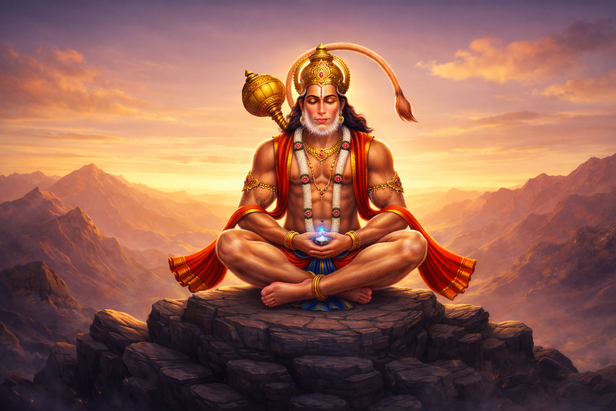
Hanuman bowing with humility

The name itself means “the remover of troubles.” Established in the 16th century by Goswami Tulsidas, the author of Ramcharitmanas, this temple holds a unique place in India’s spiritual geography. It is believed that Tulsidas had a direct vision of Hanuman at this very spot.

People visit Sankat Mochan not for dramatic rituals but for disciplined devotion. The temple tradition emphasizes recitation of Hanuman Chalisa, Ram naam japa, and maintaining mental restraint. Many devotees who come here during prolonged illness speak of gradual recovery, emotional strength, or the ability to endure pain with clarity.

The temple does not promote faith healing. Instead, it encourages routine prayer, fasting on Tuesdays and Saturdays, and inner discipline. In Varanasi’s spiritual ecosystem, Sankat Mochan is associated with relief from psychological stress, fear, and long-term suffering rather than instant cures.

2. Mehandipur Balaji Temple

Perhaps the most misunderstood Hanuman temple in India, Mehandipur Balaji is often associated with extreme cases where mental health treatment has not shown results. Dedicated to Balaji, a form of Hanuman, the temple follows highly structured rituals that have remained unchanged for centuries.

The temple management strictly states that no medicine should be stopped. Medical treatment and prayer are expected to continue together. The rituals here are intense, time bound, and rule based. They focus on discipline, repetition, and strict behavioural conduct rather than emotional display.

Scholars of religion note that the environment itself plays a role. The controlled setting, absence of distraction, collective belief, and repetitive ritual can have psychological effects on individuals suffering from trauma or psychosomatic distress. The temple’s reputation grew as families returned year after year reporting improvement in conditions previously considered untreatable.

3. Salasar Balaji Temple

hanuman
everyone wants to be seen, liked, and noticed.

Salasar Balaji is deeply connected with vows, discipline, and fulfilment of mannat. Located in the Shekhawati region, the temple gained prominence after the discovery of the idol in the 18th century. Since then, it has become one of the most visited Hanuman shrines in North India.

Devotees often undertake physically demanding journeys to Salasar, some walking barefoot for days. For those facing severe illness, the temple represents surrender and resolve rather than desperation. The rituals focus on self control, charity, and simplicity.

Medical historians have observed that pilgrimages involving physical exertion, routine, and community support often lead to measurable improvements in stamina and morale. At Salasar, people speak less of miracles and more of regained willpower, acceptance, and renewed strength to continue treatment.

4. Jakhu Temple

Situated at the highest point in Shimla, Jakhu Temple is associated with Hanuman’s search for the Sanjeevani herb during the Ramayana. The climb itself is a central part of the experience.

People suffering from long-term illness often visit Jakhu not for ritual complexity but for silence, altitude, and isolation. The temple environment encourages reflection and controlled breathing, aided by the mountain climate.

Medical research has consistently shown that high-altitude environments, reduced noise, and physical movement can positively affect mental health and respiratory resilience. Jakhu’s reputation stems from this combination of mythology, geography, and discipline rather than claims of supernatural healing.

5. Mahavir Mandir

Shri Hanuman
Towering Hanuman inspires perspective; shifts relationship with burdens.

Located near Patna Junction, Mahavir Mandir is one of the most visited Hanuman temples in eastern India. The temple administration runs hospitals, trusts, and medical facilities using donations, creating a rare bridge between faith and healthcare.

Devotees visiting Mahavir Mandir during illness often combine prayer with treatment funded by the temple’s charitable institutions. The belief here is not that faith replaces medicine, but that compassion sustains recovery.

The temple’s reputation is rooted in consistency. Regular worship, structured offerings, and service to others are emphasized. Many who visit during critical health phases describe emotional stability and improved compliance with medical care after their visits.

Sign up to read this article
Read news from 100’s of titles, curated specifically for you.
Already a member? Sign in here
Related Stories
Top stories on inkl right now
Our Picks
Fourteen days free
Download the app
One app. One membership.
100+ trusted global sources.