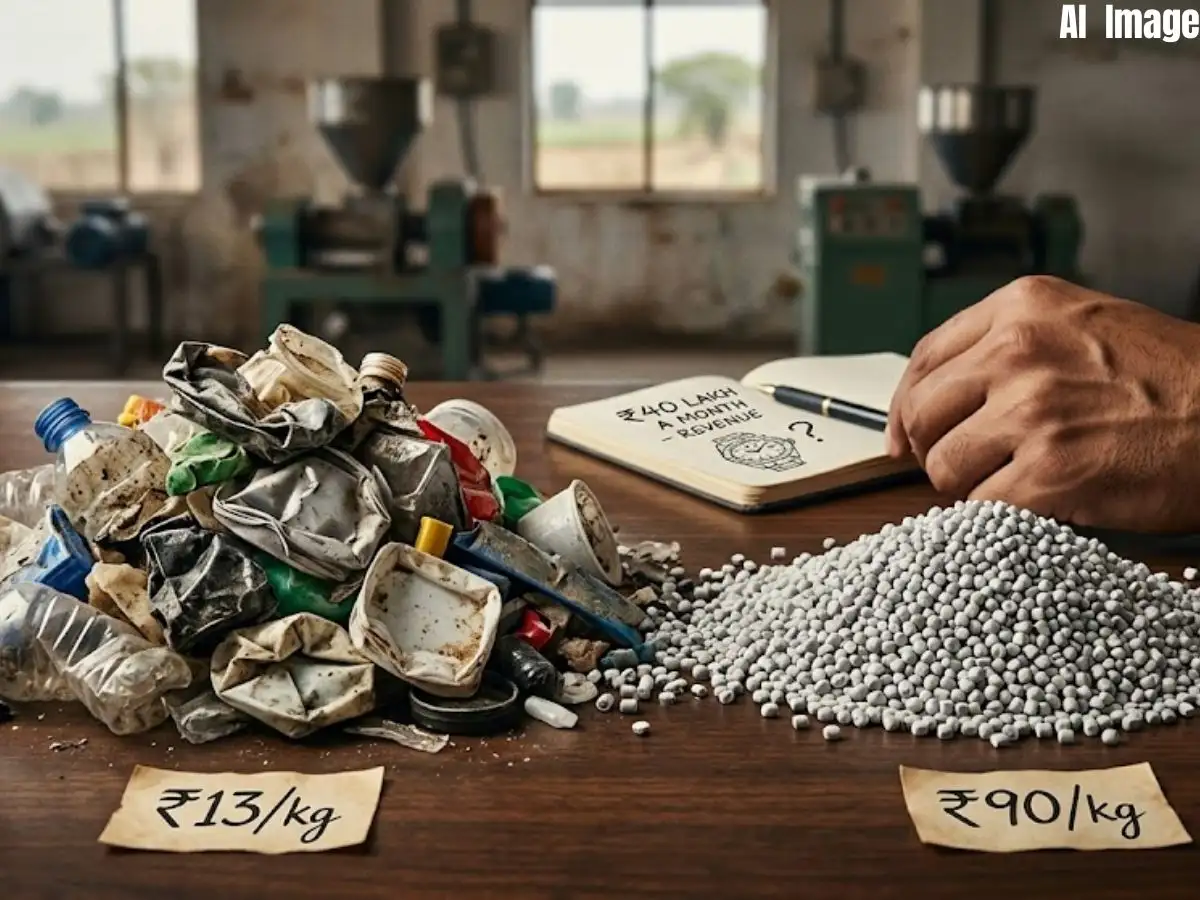
Thirteen rupees a kilo in, ninety rupees a kilo out. Somewhere in that gap sits a business quiet enough that even a close relative didn't know it existed, until an expensive Rolex watch gave it away. The story surfaced on X through a post by a user named Pratham. He'd run into his cousin at a family wedding, the kind of relative you nod at more than you actually talk to. This time, though, something caught his eye: a limited-edition Rolex, sitting comfortably on a wrist attached to someone he didn't think was doing anything unusual for a living.
So he asked. What do you do?

"Plastic business," came the reply. Pratham assumed buying and selling plastic in bulk, the kind of trading operation that exists in a industrial estates across the country. Nothing that screams Rolex money. Which is exactly why he pushed a little further and asked how the numbers actually worked out.
Where the ₹13 Becomes ₹90
Here's the part that made Pratham stop and recalculate everything he thought he knew about his cousin. The business isn't trading plastic at all. It's rescuing it.
The factory buys waste plastic, bottles, cans, assorted scrap, for around ₹13 a kilo. This is the stuff destined for a landfill, a drain, or a roadside pile, priced accordingly low because, it's garbage.