
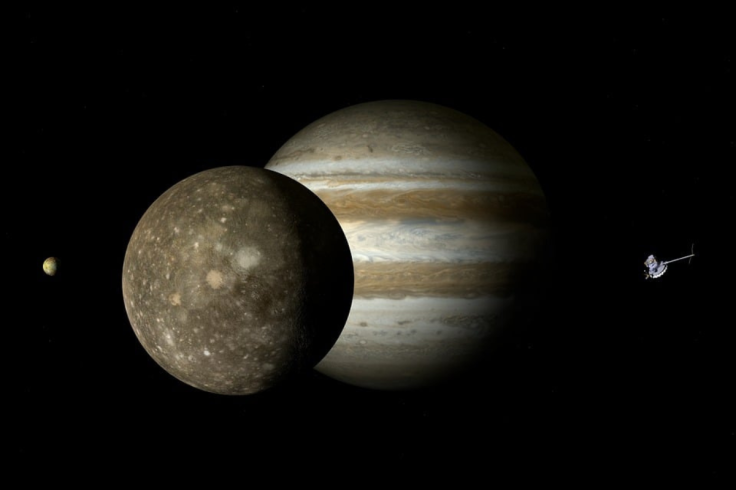
Discovered on July 1, 2025 by the ATLAS survey telescope in Chile, 3I/ATLAS — the third confirmed interstellar object after 1I/ʻOumuamua and 2I/Borisov — hurtled into our solar system at an inbound velocity of about 44 km/s. This rare visitor, designated C/2025 N1 (ATLAS), reached perihelion on Oct. 29 or 30, 2025 at roughly 130 million miles (210 million km) from the sun, inside Mars' orbit, travelling at around 152,000 mph (245,000 km/h). Now post-perihelion, it is racing outbound on a retrograde trajectory inclined at about 5° to the ecliptic, setting up a close approach to Jupiter at 0.357 AU (about 33 million miles or 53 million km) in March 2026 — remarkably near the gas giant's Hill sphere boundary.
The interstellar visitor known as 3I/ATLAS is quietly tearing itself apart — but in a way that no ordinary comet should. Instead of the chaotic outbursts astronomers expect when ice and dust meet the heat of a star, this object appears to be bleeding material with eerie steadiness, as if governed by rules that standard comet theory never anticipated.