For archaeologists, finding an ancient tomb is one thing. Finding one that has remained sealed for nearly 600 years is far more unusual, because the objects inside can still be studied alongside the people they were buried with, preserving clues that are often lost when graves are looted.
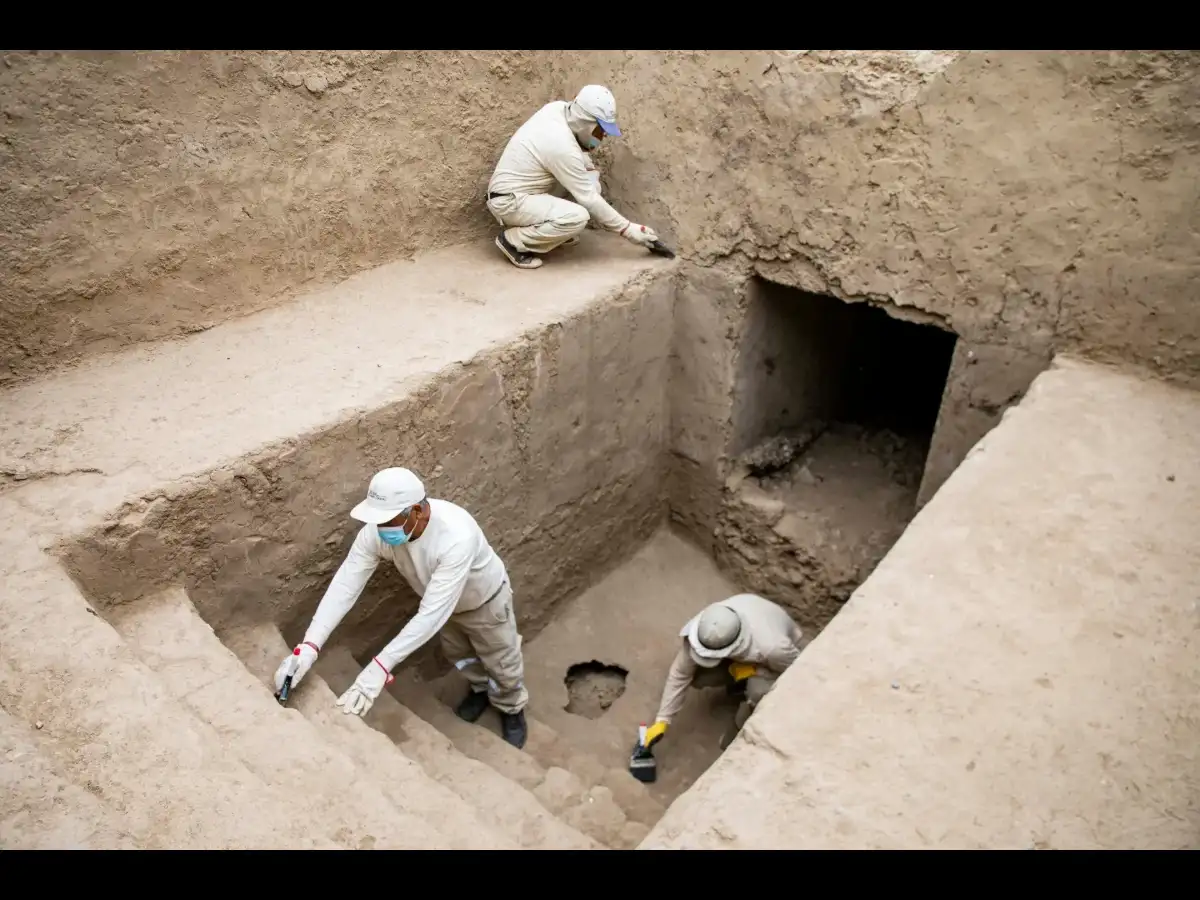
That is what makes a newly uncovered burial platform at Chan Chan in northern Peru so important. The almost intact tomb contains the remains of at least 38 people, along with weapons, metal objects, jewelry and textiles dating to the final centuries of the Chimú civilization. Together, the remains and artifacts could offer researchers an unusually detailed look at how this powerful pre-Inca society buried its elite, organized its hierarchy and understood death.

The discovery has been described by University of Florida archaeologist Gabriel Prieto, who was not involved in the excavation, as the “discovery of the decade” because it provides an unusually clear opportunity to examine an elite Chimú burial, reported The New York Times.
The discovery is particularly significant because many ancient elite burials at Chan Chan were disturbed or looted long before archaeologists could document them scientifically. In those cases, researchers may still see the objects in museums or private collections, but they lose the crucial information about exactly where an object was found, whom it was buried with and how the burial was arranged.
What archaeologists found beneath the ruins
The burial platform was found in the complex of Utzh An, which used to be known as the Great Chimú Palace, located at the Chan Chan archeological site near present day Trujillo.
It measures almost 17 meters across and has a height of almost five meters. It includes a central chamber and two chambers on its sides. The central room, accessible via an entrance and stairs leading down, held the remains of a principal individual together with shells and metal artifacts.