
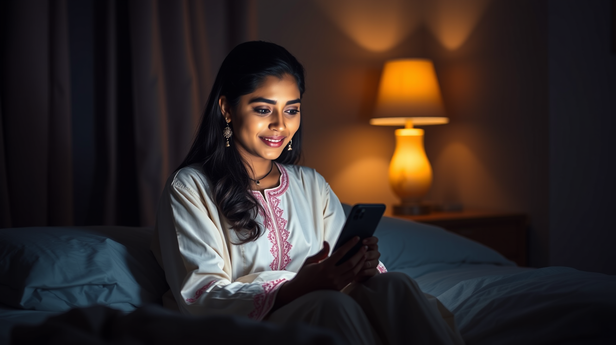
The Screen That Tells Your Brain It's Still Noon
The blue light emitted by phone and laptop screens suppresses melatonin production, the hormone your body uses to signal that sleep is due. A study published in the Proceedings of the National Academy of Sciences found that reading on a light-emitting device before bed delayed melatonin release by about 90 minutes and reduced REM sleep the following night. Your pineal gland cannot distinguish between afternoon sunlight and the glow of a reel you're watching at 11 PM. It reads both as daytime and holds off on the chemical that brings drowsiness.