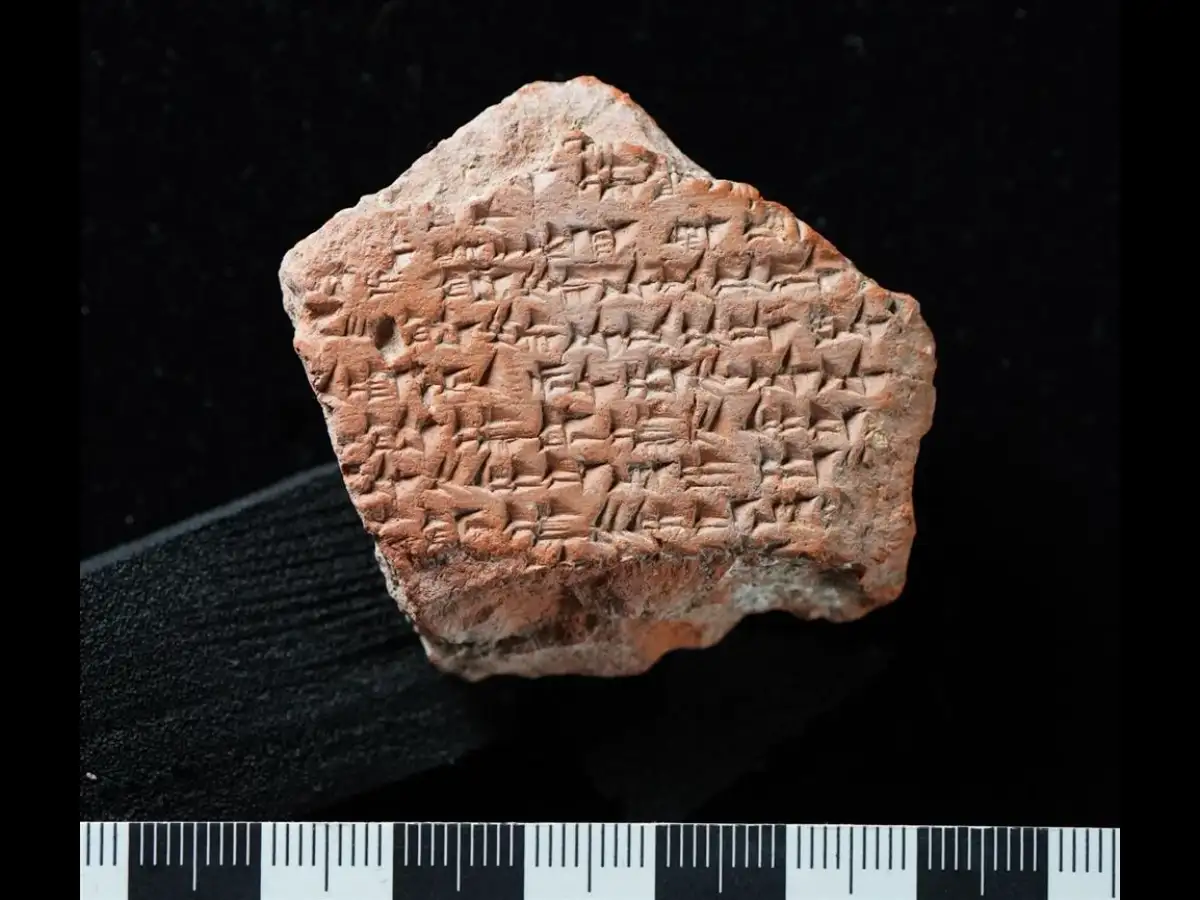
In a remarkable discovery, archaeologists have discovered a 3,400-year-old fragment of the world's oldest known peace treaty, the Turkish Ministry of Culture and Tourism has announced. Known as the 'Treaty of Kadesh', the researchers identified the fragment and it is about an agreement between an Egyptian pharaoh and a Hittite king. The discovery, which contains lines from provisions concerning people seeking refuge from one country to another, was announced on World Peace Day, September 21st, by the Minister of Culture and Tourism, Mehmet Nuri Ersoy. He stated, "We have found traces of peace, thousands of years old, in the soil of Anatolia!"
During excavations at the Boğazköy/Hattuşa archaeological site in the Boğazkale district of Çorum, a new tablet fragment belonging to the Kadesh Peace Treaty, one of the most important documents in the history of world diplomacy, was unearthed. Scientific examinations revealed that the fragment, discovered in Büyükkale, where the Hittite royal palace was located, belongs to the front of one of the Akkadian cuneiform copies of the treaty. Nuri Ersoy shared the discovery with the public on his social media account, drawing attention to Anatolia's deep-rooted place in the history of peace and diplomacy.