
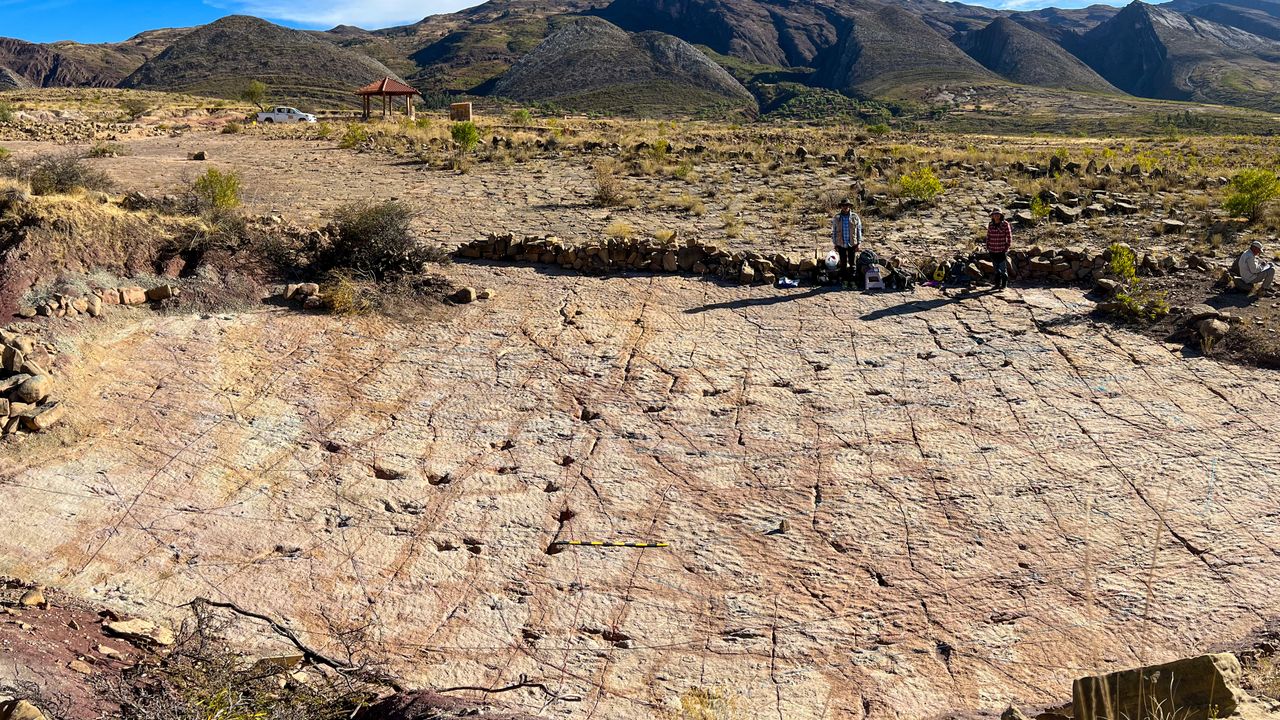
Scientists have discovered a record-breaking number of fossilized dinosaur footprints and swim tracks in a national park in central Bolivia.
The tracksite sits along what was once an ancient coastline, with ripple marks extending alongside the footprints and other imprints in a northwest-southeast direction, according to a new study. Most of the tracks belong to bipedal, three-toed dinosaurs known as theropods that lived at the end of the Cretaceous period (145 million to 66 million years ago), but many bird tracks are also preserved, the scientists noted in the paper, which was published Wednesday (Dec. 3) in the journal PLOS One.












