
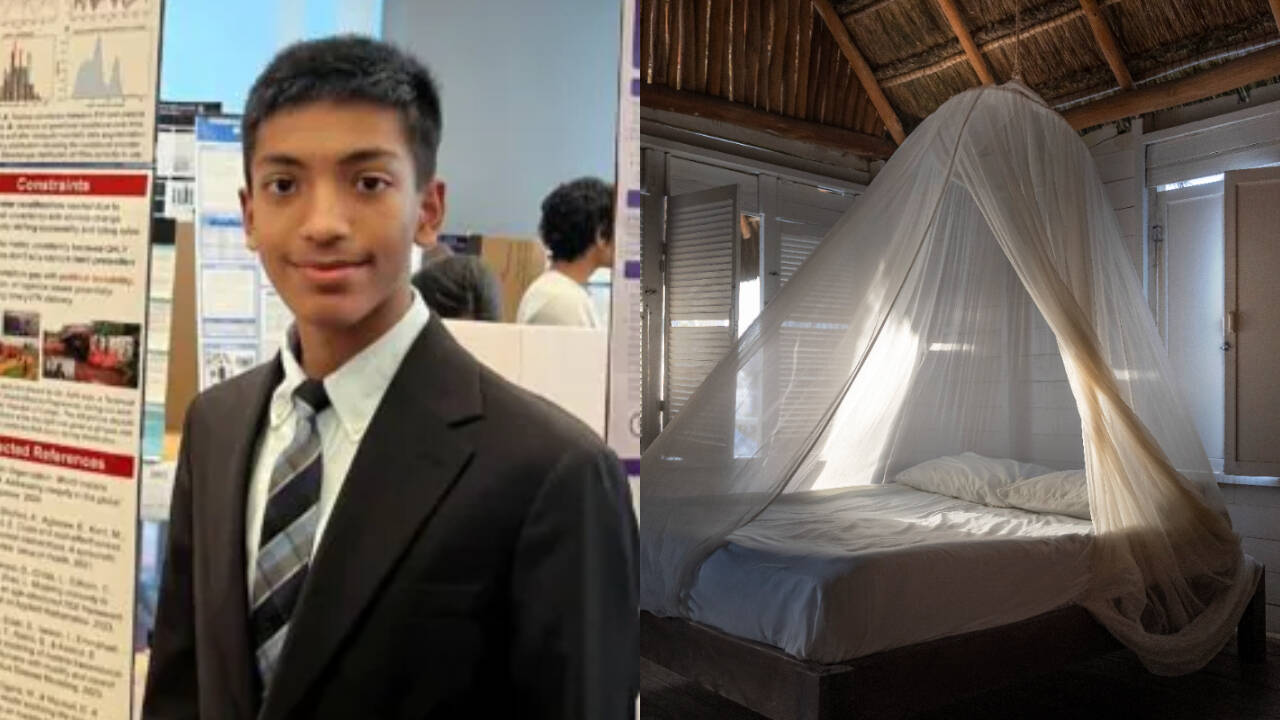
At 16, Rajarshi Mandal is already tackling a problem that has challenged public-health systems for decades: how to make limited malaria-prevention resources go further. The Lexington High School student built a mathematical model designed to determine where insecticide-treated mosquito nets could have the greatest impact, and his work earned him a $50,000 Davidson Fellows Scholarship, states an online report by the Davidson Institute. The report adds that Mandal, a rising junior from Lexington, Massachusetts, developed an ordinary differential equation model that simulates malaria transmission under conditions that more closely resemble the real world. His approach considers factors that standard population-based distribution can miss, including insecticide resistance, seasonal changes in transmission and the gradual deterioration of mosquito nets. Scroll down to read the details of his innovation.
Get breaking news anytime, anywhere. Download the TOI app now!














