
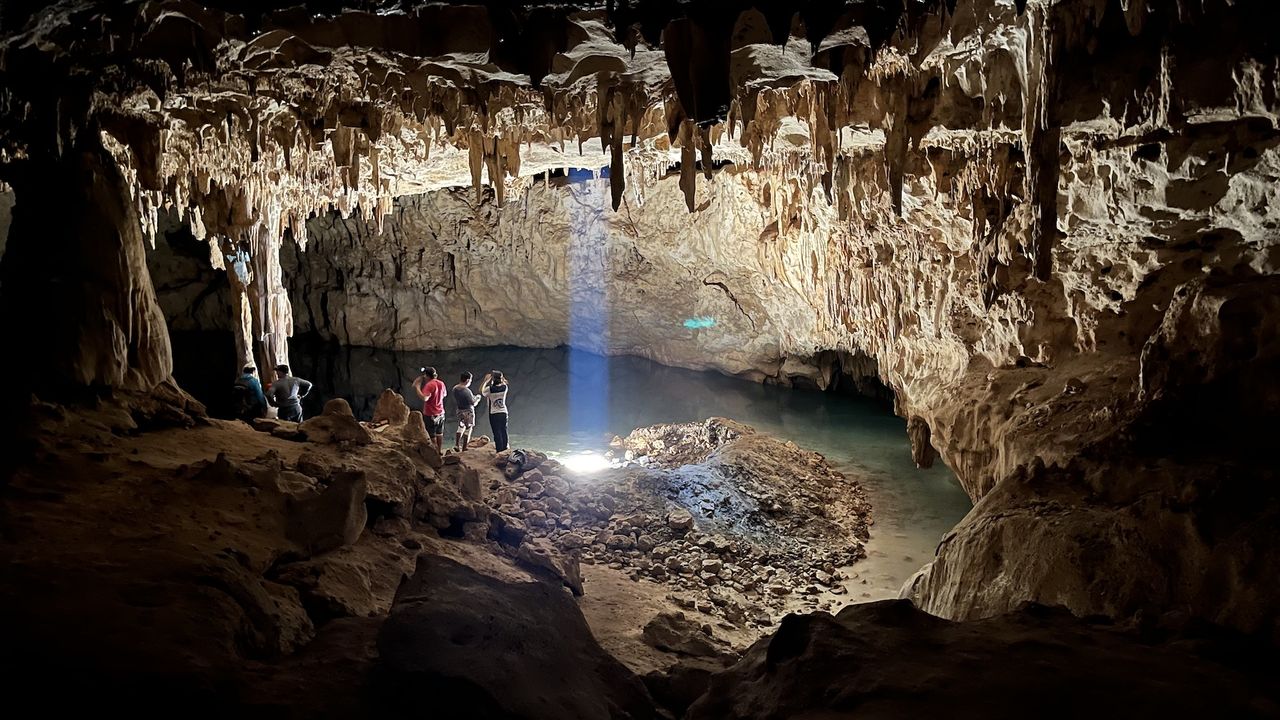
A stalagmite deep inside a cave in Mexico's Yucatán Peninsula suggests that multiple droughts, including one lasting 13 years, may have contributed to the decline of the Maya civilization in the area.
By studying the mineral formation, the researchers could paint a detailed picture of rainfall by season, which enabled scientists to closely compare climate records with archaeological evidence of instability, according to a study published Wednesday (Aug. 13) in the journal Science Advances.