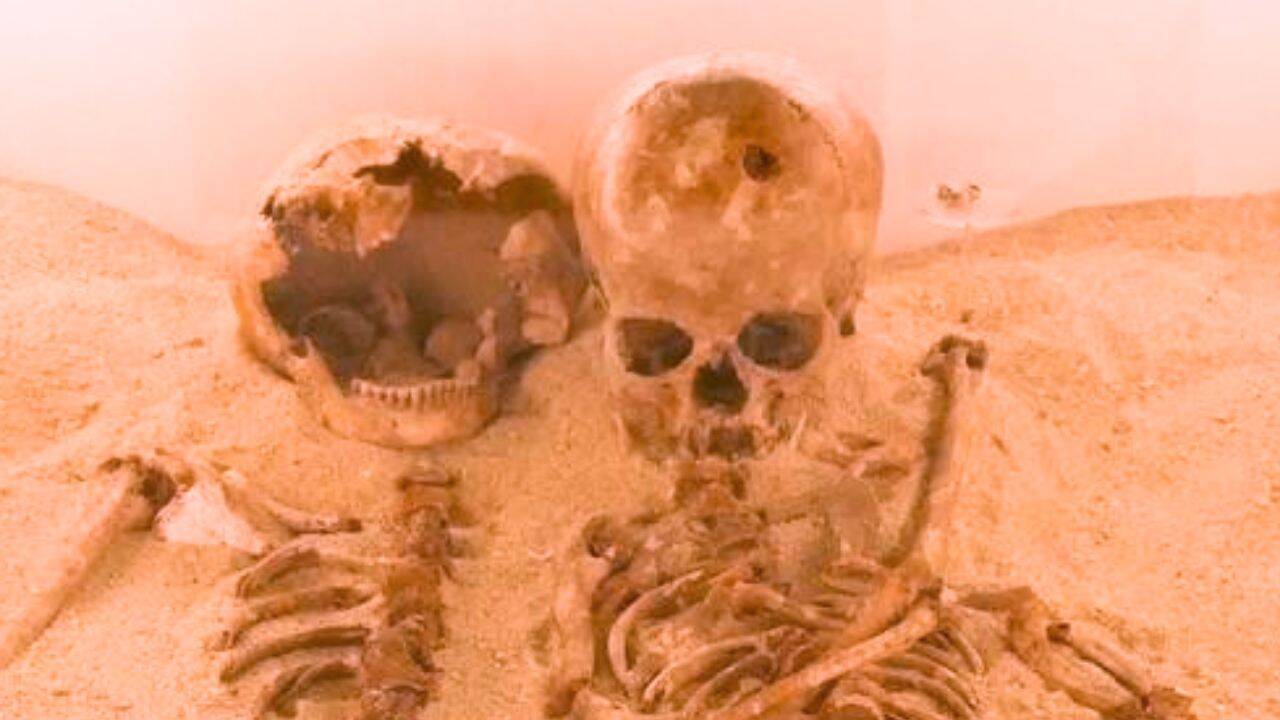
In 1963, archaeologists exploring Romito Cave in Calabria, southern Italy, uncovered an unusual Upper Palaeolithic burial in which two people lay together in an embrace more than 12,000 years ago. For decades, the remains were believed to belong to an adult male and an adolescent male, with their differences in body size adding to questions about their identity and relationship. As per Sapienza University of Rome, researchers found that both individuals were female and were first-degree relatives, most likely a mother and daughter. The genetic evidence also helped solve a long-standing medical mystery surrounding the younger individual, revealing a rare inherited disorder linked to the NPR2 gene. The discovery not only changes the identity of the two prehistoric individuals but also provides clues about genetic disease in ancient populations.
Get breaking news anytime, anywhere. Download the TOI app now!