
Get all your news in one place.
100's of premium titles.
One app.
Start reading
Motor1
Motor1
Business
Jeff Perez

10 Great Alternatives For People Who Hate SUVs

Sure, SUVs dominate the new-car market, but they aren’t the only way to get space, versatility, and everyday usability for the entire family. From roomy wagons and hatchbacks to minivans and even EVs, there are still alternatives out there for shoppers who simply don’t like SUVs, slim as they may be.

Whether you hate the high driving position or just want something a little different, these 10 vehicles prove you don’t have to buy an SUV to get the practicality you need.

Chevrolet Bolt

  • Cargo Space: 16.9 / 56.6 Cubic Feet
  • Seating Capacity: 5
  • EV Range: 262 Miles
  • Price: $29,990

Some people might say the Chevrolet Bolt is just another subcompact SUV—but that’s where you’re wrong. Chevy’s pint-sized EV is technically just a tall hatchback (it’s about as big as a Pontiac Vibe, fun fact). With that, it offers much of the practicality of a small SUV minus the unnecessary bulk.

The Bolt has 16.9 cubic feet of cargo space behind the second row and surprisingly decent passenger room for its size, especially in the second row. Its compact dimensions also make it easier to maneuver and park than most small SUVs, while the electric powertrain delivers 262 miles of range.

Why Buy One? The Bolt delivers SUV-like practicality and an elevated driving position in a smaller, more maneuverable package.

Read Our Review


Kia Carnival

  • Cargo Space: 40.2 / 87.0 / 145.1 Cubic Feet
  • Seating Capacity: 7 / 8
  • Fuel Economy: 33 MPG Combined
  • Price: $39,035 (V6) / $43,035 (Hybrid)

The Kia Carnival is technically a minivan, but its SUV-inspired styling and enormous interior make it an easy alternative for shoppers who still want space. With seating for up to eight people and plenty of room behind the second and third rows, it offers significantly more passenger and cargo flexibility than most three-row SUVs.

The low floor and sliding rear doors also make loading kids, cargo, and car seats considerably easier. For 2026, it gets either a 3.5-liter V6 or a turbocharged 1.6-liter hybrid, with the latter good for up to 33 miles per gallon combined.

Why Buy One? If maximum interior space and everyday practicality matter more than SUV styling, the Carnival gives you many of the same capabilities with a more family-friendly interior.

Read Our Review


Kia K4 Hatchback

  • Cargo Space: 22.2 / 59.3 Cubic Feet
  • Seating Capacity: 5
  • Fuel Economy: 30 MPG Combined
  • Price: $26,235

The normal Kia K4 is a compact sedan, and thus, not really a great SUV alternative. But the Kia K4 Hatchback makes a more compelling case, with nearly as much rear cargo and passenger space as an outgoing Kia Soul. Plus, it’s much nicer to drive.

The K4 hatch offers 22.2 cubic feet behind the second row, and still a solid 38.0 inches of rear legroom. Plus, since it’s based on the normal K4 sedan—a great car by any measure—the K4 hatch is still an excellent daily driver. You can get one in 2026 for just $26,235 with destination.

Why Buy One? The K4 delivers useful passenger and cargo space in a lower, more affordable package that's easier to drive and park than a small SUV.

Read Our Review


Hyundai Ioniq 5

  • Cargo Space: 26.3 / 58.5 Cubic Feet
  • Seating Capacity: 5
  • EV Range: 318 Miles
  • Price: Around $36,900

Much like the Chevy Bolt, the Hyundai Ioniq 5 looks like an SUV. But its low floor and long, open cabin make it closer to a hatchback by definition. That makes it an interesting middle ground option for shoppers who want the practicality and presence without committing to a traditional SUV.

The Ioniq 5’s boxy shape provides useful cargo space—up to 26.3 cubic feet behind the second row—while its long wheelbase and flat floor provide an exceptionally roomy interior. Opt for the Long-Range RWD model, and that gets you up to 318 miles between charges. The base model comes in at $36,900 with 245 miles of range.

Why Buy One? The Ioniq 5 offers SUV-like space and styling with the low-floor practicality, efficiency, and driving experience of an EV hatchback.

Read Our Review


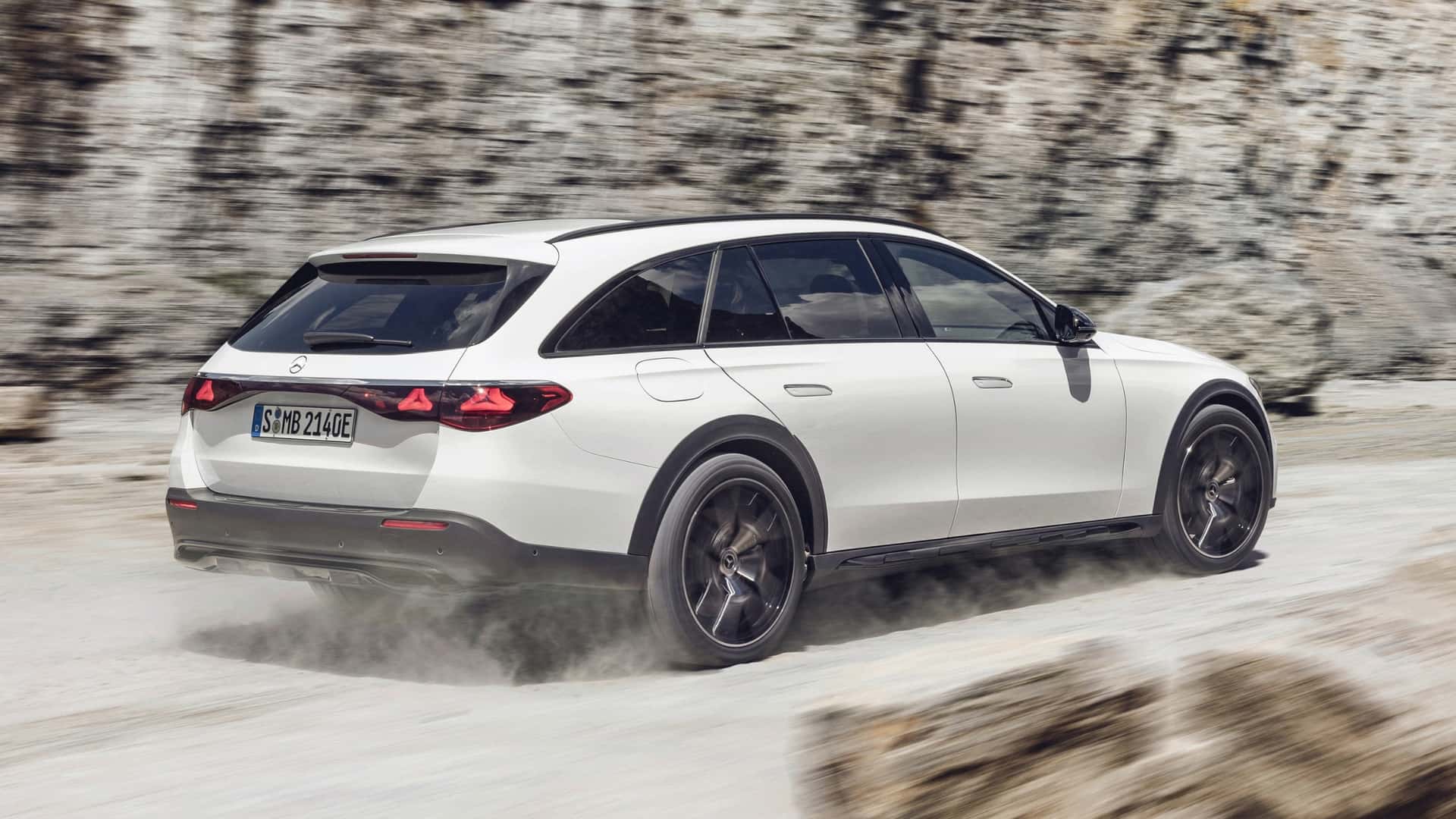
Mercedes-Benz E-Class All-Terrain Wagon

  • Cargo Space: 33.1 / 64.6 Cubic Feet
  • Seating Capacity: 5
  • Fuel Economy: 25 MPG Combined
  • Price: $81,450

Wagons are hard to come by these days, what with automakers swapping most of them out for SUVs. But the Mercedes-Benz E-Class All-Terrain still exists, and it takes the traditional station wagon shape and adds some SUV characteristics.

This E-Class rides higher than a conventional wagon, with up to 7.8 inches of ground clearance in the right driving mode, and it comes with standard all-wheel drive. At the same time, its lower roof and wagon body make it more aerodynamic and carlike than a typical luxury SUV. That said, they don’t come cheap; the base E-Class All-Terrain costs $81,450 with destination.

Why Buy One? You get the cargo capacity and all-weather capability of a crossover without giving up the sharper road manners and lower driving position of a luxury car.


Subaru Impreza

  • Cargo Space: 20.4 / 56.0 Cubic Feet
  • Seating Capacity: 5
  • Fuel Economy: 30 MPG Combined
  • Price: $25,840

With hatchbacks getting harder to find, it’s great to see that Subaru is still committed to the five-door Impreza. For 2027, it gets even cheaper with a new base trim starting at $25,840—$2,000 less than last year.

With room for five people, the Impreza offers a solid 20.4 cubic feet of cargo space behind the second row, or 56.0 cubic feet with the rear seats folded flat. Both of those figures are better than Subaru’s compact SUV, the Crosstrek (19.9 / 54.7 cubic feet). The Impreza also returns 30 miles per gallon combined.

Why Buy One? The Impreza is roomy, efficient, and now, for 2027, one of the most affordable hatchbacks on the market.

Read Our Review


Subaru Outback

  • Cargo Space: 34.6 / 80.5 cubic feet
  • Seating Capacity: 5
  • Fuel Economy: 27 MPG Combined
  • Price: $36,445

The Subaru Outback has long blurred the line between wagon and SUV—especially its most recent generation. Its raised ride height, standard all-wheel drive, and rugged styling give it lots of crossover appeal, but its long roof and wagon-like proportions make it easier to load with bulky cargo.

Whatever you want to call it, the Outback represents a unique alternative to traditional drab SUVs. It’s still more maneuverable than many similarly sized SUVs while retaining enough ground clearance for dirt roads and light trails. You can even get the off-road-focused Wilderness model with better off-road chops. The base model starts at $36,445 with destination.

Why Buy One? The Outback offers the perfect mix of high-riding station wagon and SUV, with some of the best off-road chops on this list.

Read Our Review


Toyota Corolla Hatchback

  • Cargo Space: 17.8 / 23.0 Cubic Feet
  • Seating Capacity: 5
  • Fuel Economy: 35 MPG Combined
  • Price: $26,075

The Toyota Corolla Hatchback proves you don't need a crossover to get useful everyday practicality. It may look small, but Toyota’s five-door Corolla has enough passenger and cargo space to keep up with some subcompact SUVs.

Behind the second row is a solid 17.8 cubic feet of space. Rear passengers, meanwhile, get a roomy 29.9 inches of rear legroom—just a few inches shy of the larger Corolla Cross (32.0). Plus, the Corolla Hatchback looks good and is great to drive. You can get a 2027 model for just $26,075.

Why Buy One? The Corolla Hatchback is affordable, adorable, and, with its large rear cargo area, still pretty roomy.

Read Our Review


Volkswagen ID. Buzz

  • Cargo Space: 30.8 / 48.9 / 145.5 Cubic Feet
  • Seating Capacity:
  • EV Range: Up to 234 Miles
  • Price: Around $61,000

Yes, the Volkswagen ID. Buzz is basically a cargo van with a retro wrapper and some upgrades, but its enormous interior makes it a fascinating alternative to a three-row SUV. The upright body provides excellent headroom, the sliding doors make loading things simple, and it’s available with three rows of seating.

The ID. Buzz is powered by two electric motors and a 91.0 kilowatt-hour battery pack (86 kWh usable) with up to 234 miles of range. Not the most impressive EV in the game, but more than enough to get you to soccer practice and back.

Why Buy One? The ID. Buzz trades SUV proportions for maximum interior space, making it a particularly interesting choice for families who want versatility.

Read Our Review


Volvo V60 Cross Country

  • Cargo Space: 18.3 / 60.5 Cubic Feet
  • Seating Capacity: 5
  • Fuel Economy: 27 MPG Combined
  • Price: Around $50,000

The Volvo V60 Cross Country might be the best all-weather wagon out there. With a lifted ride height and knobby tires, it can tackle the toughest winter the Midwest can throw at it. Yet, it’s still a unibody wagon base, which means it’s much nicer to drive than your next-best SUV.

There’s a decent-enough 23.2 cubic feet of cargo space behind the rear seats. Fold the 60/40 split-folding seats flat, and that number grows to 60.5 cubic feet. The V60 Cross Country starts at $53,595 with destination, but hurry, it may not be around for much longer.

Why Buy One? The V60 Cross Country gives you the all-weather capability and practicality of a small SUV while retaining the sleek proportions and carlike driving dynamics of a wagon.

Read Our Review

Sign up to read this article
Read news from 100's of titles, curated specifically for you.
Already a member? Sign in here
Related Stories
Top stories on inkl right now
One subscription that gives you access to news from hundreds of sites
Already a member? Sign in here
Our Picks
Fourteen days free
Download the app
One app. One membership.
100+ trusted global sources.